
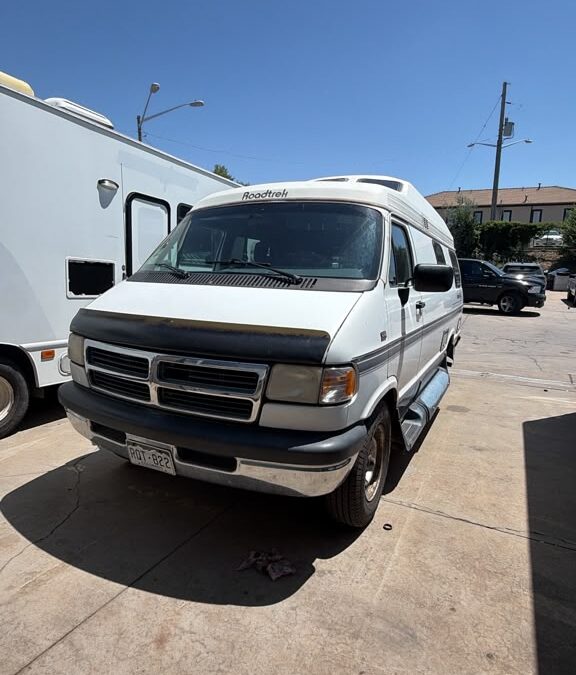
A Dodge Ram 3500 era Roadtrek 190 Popular came into our Front Range shop this week leaking water in more places than the owner could count. The fresh and gray water plumbing had been slowly failing for years. We pulled the runs apart, replaced most of the barb fittings and connectors that had gone brittle, and pressure tested the whole system until it held dry. Out the door at $1,320 including tax, and the van is back on the road with plumbing that will outlast the rest of the rig.
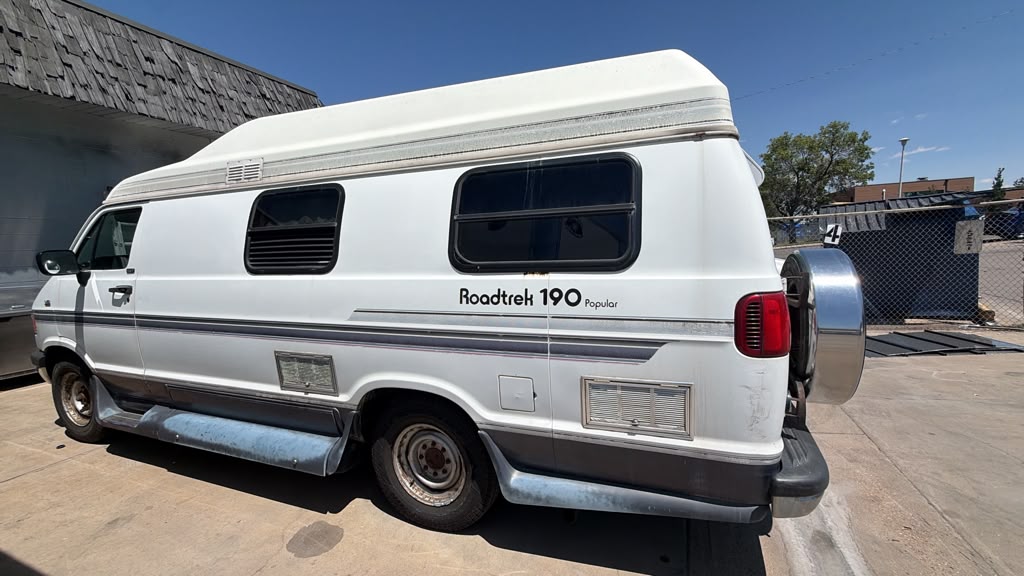
The van: a Roadtrek 190 Popular on the Dodge chassis
The Roadtrek 190 Popular is one of the best loved Class B campervans ever built. This one sits on the Dodge Ram 3500 van chassis, the version Roadtrek turned out through the 1990s before the switch to the Chevy and Sprinter platforms. They are tough, simple, and easy to work on, which is exactly why so many are still on the road three decades later. The catch is that the original plumbing was never meant to last thirty years, and this one had reached the end of its life.
The owner brought it in with the same story we hear on a lot of these older Class B vans. Water showing up under the bed. A damp cabinet floor. A fresh tank that drained faster than it should. Nothing dramatic on its own, but added together it meant the plumbing was leaking in several spots at once.
What was actually failing
On a rig this age, the leaks almost never come from the pipe itself. They come from the connection points. Roadtrek plumbed these vans with barbed fittings and hose clamps joining flexible water line, and those barb fittings are the part that gives out first.
Here is why they fail:
- Age and plastic fatigue. The original barbs and connectors are plastic. After enough years they get brittle and hairline crack, usually right at the barb ridge where the hose grips.
- Heat and cold cycling. A van that bakes in Colorado summers and freezes in the winter expands and contracts every single day. That constant movement works the fittings loose and opens tiny gaps.
- Vibration. Tens of thousands of road miles shake every joint. Clamps back off, barbs wallow out the hose, and a joint that was dry last season starts to weep.
Once one fitting starts leaking on a system this old, the rest are rarely far behind. Chasing a single drip on a thirty year old van is usually a waste of the owner money, because you fix one and another shows up a month later.
What we did
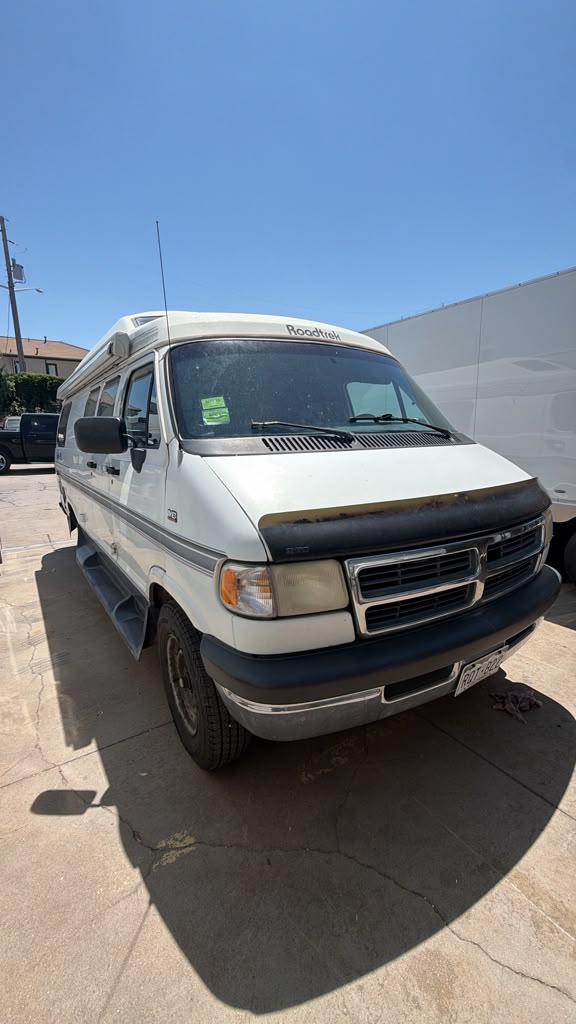
Rather than patch one leak and send it back out, we went through the water system and rebuilt the connections properly:
- Opened up the fresh and gray water plumbing runs and traced every line to its fittings.
- Replaced most of the barb fittings and connectors, swapping the tired original plastic for fresh parts at every joint that needed it.
- Re-clamped and secured each connection so the joints are not fighting road vibration.
- Pressurized the system with the water pump and checked every fitting until the whole van held pressure dry, with no weeping and no drips.
The result is a water system the owner does not have to think about. When you replace the connection points as a set instead of one at a time, you stop the leak whack-a-mole and the plumbing goes quiet for years.
What it cost
This job came to $1,320 including tax. That covered the diagnosis, the parts, and the labor to rebuild the connections across the fresh and gray water system, plus the pressure test to prove it out.
Every van is different, so treat that as a real number rather than a quote. A single isolated leak is far less. A full plumbing tear-out with new tanks, pump, and water heater is more. A whole-system fitting and connector rebuild on an older Class B like this Roadtrek tends to land right in this range, and it is money well spent when it buys you a leak free rig for the next decade.
Signs your RV plumbing is heading the same way
If your older Class B or motorhome is showing any of these, the fittings are talking to you:
- Water pooling under the bed, in a cabinet, or in the belly pan.
- A fresh water tank that empties faster than the taps explain.
- The water pump that used to shut off now cycles on its own while parked.
- A musty smell or soft, stained cabinet floors.
None of these fix themselves, and water damage on an RV gets expensive fast once it reaches the wood. Catching it at the fitting stage, like this Roadtrek owner did, is the cheap version of the problem.
Front Range RV plumbing repair
Mile High RV Works handles plumbing and water system repair on Class B vans, travel trailers, and motorhomes across the Colorado Front Range. Whether it is one stubborn leak or a full connector rebuild like this Roadtrek 190, we will find every drip and send you back out dry. Learn more about our RV plumbing and water system work, see everything we do at the Mile High RV Works repair shop, or check our Denver RV repair page.
Call or text 720-209-2653 to get your rig scheduled.
Recent Comments