
Food Trucks Built for Estes Park Operators
Mile High Food Trucks builds custom food trucks and concession trailers for operators working Estes Park and the gateway to Rocky Mountain National Park. We are a Denver-based shop at 3895 E 45th Ave, and we have completed more than 200 builds for vendors across the Front Range and Wyoming. If you are planning to serve visitors on Elkhorn Avenue, work the festival circuit, or park near a trailhead during the summer rush, call us at 720-209-2653 and we will scope a unit around how you actually plan to run.
Estes Park is a specific kind of market. The town sits at roughly 7,522 feet, the season is short and intense, and the crowds arrive in waves tied to the park and the event calendar. A truck that works here has to hold up to thin air, cold mountain mornings, long summer days, and the wear of a compressed operating window. That is the kind of build we plan for, and this page walks through the market, the licensing, and how we put a unit together for it.
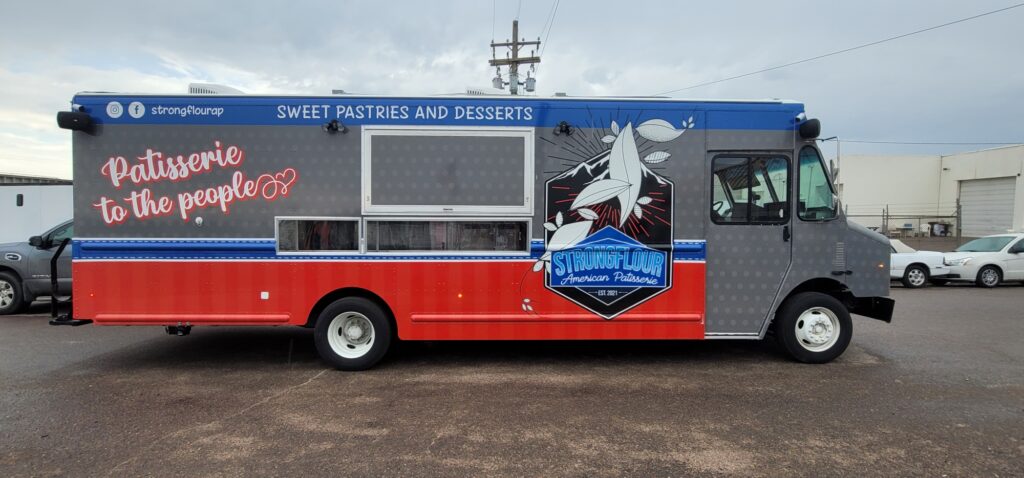
Why Estes Park Is a Strong Food Truck Market
Estes Park draws its business from Rocky Mountain National Park, which pulls millions of visitors a year and funnels most of them straight through town. That volume is the whole story. You are not building a customer base slowly over years the way you would in a residential neighborhood. You are serving a stream of hungry travelers who are already here, already spending, and looking for something quick and good between hikes.
The season is heavily weighted toward summer and early fall, which changes how you should think about a truck. Peak months bring wall-to-wall foot traffic downtown and packed parking near trailheads and lake access. On top of the everyday tourism, the event calendar creates its own spikes. The Scottish-Irish Highland Festival over Labor Day weekend, the Rooftop Rodeo in July, and Elk Fest in the fall each pull large, concentrated crowds into a small footprint. Those weekends are when a mobile vendor can do a serious share of the year’s sales in a few days.
Because the season is short, throughput matters more here than in a year-round market. Every slow ticket during peak weekends is money left on the table. When we build for an Estes Park operator, we lay out the interior around speed: a service window and prep flow that let two or three people move a line fast, cooking equipment sized to your peak rush rather than an average day, and enough refrigeration and dry storage to get through a busy stretch without leaving to restock. The goal is a truck that earns its keep in the months that count, then holds its value through the quiet ones.
How Licensing Works in Estes Park
Operating a food truck in Estes Park means clearing a few separate approvals, and it helps to know them before you build so the unit passes on the first look. Estes Park falls under Larimer County for food safety, the same jurisdiction that covers Fort Collins.
The core credential is a Retail Food Establishment License from the Larimer County Department of Health and Environment (LCDHE). A mobile unit is licensed as a retail food establishment, and the license is tied to the conditions it was approved under, meaning your menu, equipment, and water systems all have to match what the county signed off on. LCDHE reviews plans, licenses the unit, and inspects it. Building the truck to code from the start is what keeps that review short.
Nearly every mobile food operation in Colorado also has to work from a licensed commissary. That is a permitted commercial kitchen where you prep, refill fresh water, dump gray water, and store product. Health departments expect a commissary agreement as part of licensing, so line one up early. We build the truck’s tanks, sinks, and storage to make that daily commissary cycle clean and fast.
On top of the county food license, the Town of Estes Park requires operators inside town limits to hold a Town business license, and mobile vendors typically also need an operating permit from the Estes Valley Fire Protection District covering your cooking setup, fire suppression, and fuel. Fees apply at each step, and an inspection that turns up problems can cost you time you do not have during a short season. The cleanest path is a unit built to pass, so verify the current Town, fire district, and LCDHE requirements directly before you finalize a plan, and we will make sure the build lines up with them.
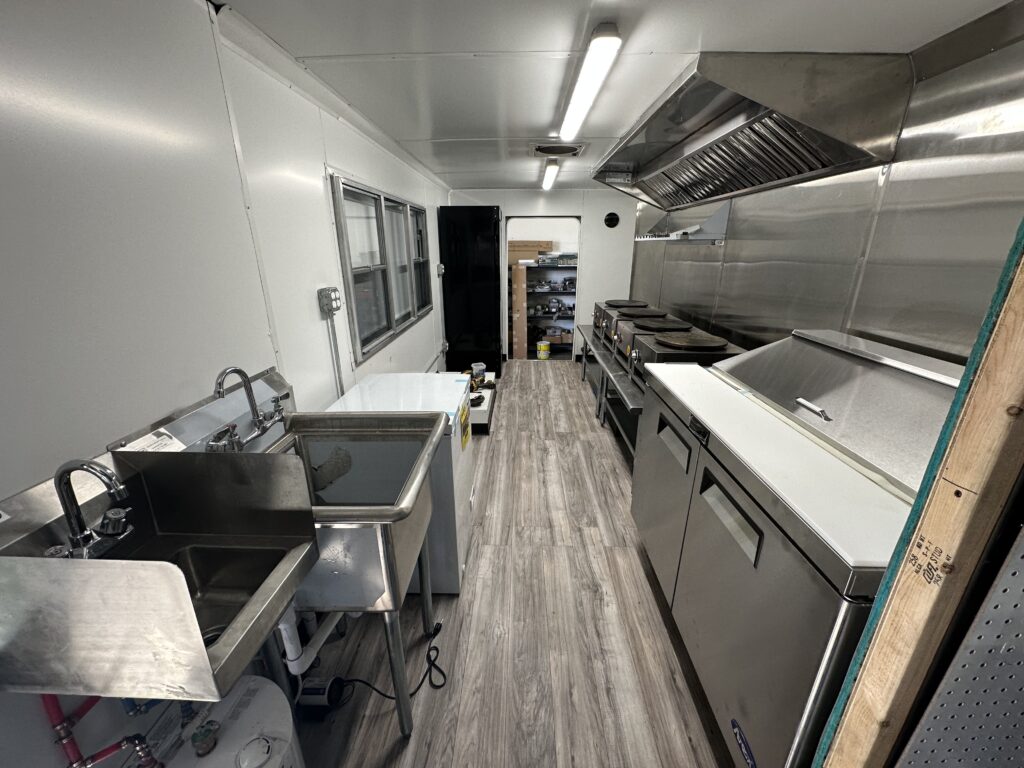
The 2026 Colorado Reciprocity Law
Colorado changed the rules for food trucks with HB25-1295, which took effect January 1, 2026, and it works in your favor if you plan to run beyond Estes Park. Before this law, every jurisdiction ran its own licensing and you often had to re-license in each town you wanted to work. The new law sets up statewide reciprocity.
Under HB25-1295, a state-issued mobile food license from the Colorado Department of Public Health and Environment is valid in every local jurisdiction across the state except Denver, and a Denver license is honored statewide. Instead of a fresh full application in each new place, you give the local jurisdiction 14 days notice before operating. For an Estes Park operator that opens up the whole region: you can work festivals in Fort Collins, private events down the Front Range, and stops in between without stacking up separate licenses.
The law also limits how towns can push food trucks around. A jurisdiction can no longer ban mobile vendors from any zone where a sit-down restaurant is already allowed, and distance rules that keep trucks away from other food businesses are capped at 50 feet. That gives operators more room to park where the customers actually are. We build every truck to the state mobile standard so you are set up to use this reciprocity from day one.
Built for High Altitude and Mountain Weather
At about 7,522 feet, Estes Park changes how equipment behaves, and a truck that was thrown together at sea-level assumptions will fight you. Thinner air means less oxygen for combustion, so gas burners, fryers, and griddles need to be set up and adjusted for altitude to run clean and hit the temperatures your menu depends on. We spec and tune cooking equipment for mountain elevation so your fryers recover fast and your griddle holds heat during a rush.
Weather is the other half of it. Mornings and shoulder-season days get cold fast up here, and afternoon storms roll through in summer. We insulate the box, seal it against wind and blowing rain, and route and protect the plumbing so lines and tanks are not exposed to a hard overnight chill. Water systems, wiring, and propane get installed to hold up to temperature swings rather than just a mild day. The electrical is built for real load so your refrigeration and equipment run steady whether you are on a generator or shore power.
Sun exposure at altitude is intense, and roads to and around the park are not always smooth. We build with materials and finishes that take UV and weather, and we frame and mount equipment to survive the vibration of mountain driving so nothing works itself loose on the way to a gig. The point of all of it is simple. During a short, high-stakes season you cannot afford a down day, and a truck built for this environment is a truck that keeps serving.
Builds We Have Delivered
What We Build
We build complete custom food trucks and concession trailers from the chassis out, designed around your menu, your crew size, and how you plan to serve. That covers the kitchen layout, cooking line, refrigeration, water and propane systems, electrical, serving windows, and the exterior finish and graphics. Every unit is built to Colorado mobile retail food code so it is ready for LCDHE and the state reciprocity license.
Start with our food truck builder to see how we approach a custom unit, and look at real project pricing on the custom food truck cost page.Custom food trucks start at $55,000 and custom food trailers start at $40,000, with a typical 16ft truck around $72,000 and a 22ft build with a full equipment package around $110,000, and most builds are delivered 8 to 12 weeks after design approval. Browse finished work in our gallery, and if you want to get started sooner, check the shop for pre-built and used inventory. We are licensed in Colorado, California, and Washington, and repairs and service run through our sister shop, Mile High RV Works.
Why Estes Park Operators Choose Mile High
Operators here pick us because we build for the conditions they actually work in. We are a real Denver shop with more than 200 completed builds, close enough to Estes Park that meeting in person, checking progress, and handling service later is straightforward. We are not shipping you a generic unit from across the country and hoping it fits a mountain market.
We plan the truck around your season. That means throughput for peak festival weekends, equipment tuned for altitude, and a build that shrugs off cold mornings and summer storms. It also means we set you up to take advantage of the 2026 reciprocity law so one unit can chase work across the region, not just in one town. And because we own our service side through Mile High RV Works, you have a place to bring the truck when something needs attention. When your season is short and every good weekend matters, that combination of local build quality and local support is what keeps you running.
Nearby Markets We Serve
Estes Park is one stop in a region we know well, and many operators work several markets across a season. If you also plan to run down the canyon or across the region, see our Fort Collins food truck builder page, our broader Northern Colorado food truck builder coverage, and our Denver food truck builder page. With statewide reciprocity now in effect, a single truck built to the state standard can move between these markets on 14 days notice, so it is worth planning the unit around everywhere you intend to work.
Frequently Asked Questions
How much does a custom food truck for Estes Park cost?
Custom food trucks start at $55,000 and custom food trailers start at $40,000, with a typical 16ft truck around $72,000 and a 22ft build with a full equipment package around $110,000. Where you land depends on the size of the unit, the cooking and refrigeration equipment your menu needs, and the finish. For an Estes Park operator we usually spec for peak-season throughput and altitude-tuned equipment, and we will give you a clear line-item quote so you know exactly what drives the number. See the custom food truck cost page for real examples.
How long does it take to build a food truck?
Most builds are delivered 8 to 12 weeks after design approval. If you are targeting the Estes Park summer season, start early so the truck is licensed, inspected, and dialed in before the crowds arrive. If you need to be operating sooner, ask us about pre-built and used inventory in the shop.
What license do I need to run a food truck in Estes Park?
You need a Retail Food Establishment License from the Larimer County Department of Health and Environment, a commissary agreement, and, inside town limits, a Town of Estes Park business license plus an Estes Valley Fire Protection District operating permit. We build every truck to Colorado mobile retail food code so it is ready for county and state review. Confirm current requirements with each office before you finalize your plan.
Can I run seasonally in Estes Park and store the truck the rest of the year?
Yes, and most Estes Park operators do exactly that. We build units that hold up to seasonal use and mountain storage, with water and propane systems that are straightforward to winterize. A durable, well-built truck that sits through the off-season and starts strong every summer is the whole point of buying quality up front.
Should I get a trailer instead of a truck?
It depends on how you plan to work. A concession trailer gives you more square footage and kitchen space for the money and lets you drop the unit at a spot and use a separate tow vehicle, which suits vendors who set up for events and stay put. A truck is more mobile for daily location changes. We build both and will walk you through the tradeoffs for Estes Park’s mix of festivals and downtown traffic. Browse the gallery to see examples of each.
Get Started
If you are planning a food truck or trailer for Estes Park, let us talk through your menu, your season, and your budget. Call Mile High Food Trucks at 720-209-2653 or visit our shop at 3895 E 45th Ave, Denver, CO 80216. Start with the food truck builder, review real numbers on the custom food truck cost page, and see finished work in our gallery. We will build you a unit that is ready for the altitude, the weather, and the short, busy season that makes Estes Park worth it.
Recent mountain town builds
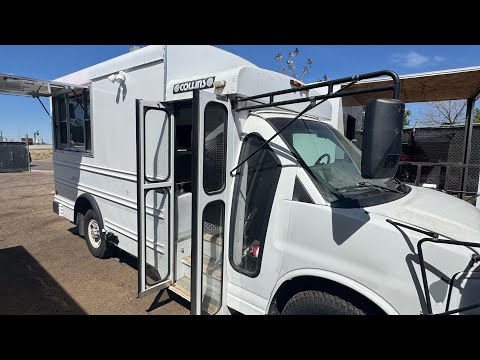
A 14ft Collins shuttle bus rebuilt as a mobile espresso bar for a mountain town.
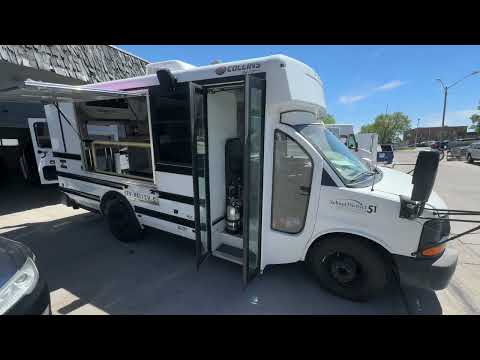
A district shuttle bus converted into a food bus for Mesa County Valley School District.
Recent Comments