
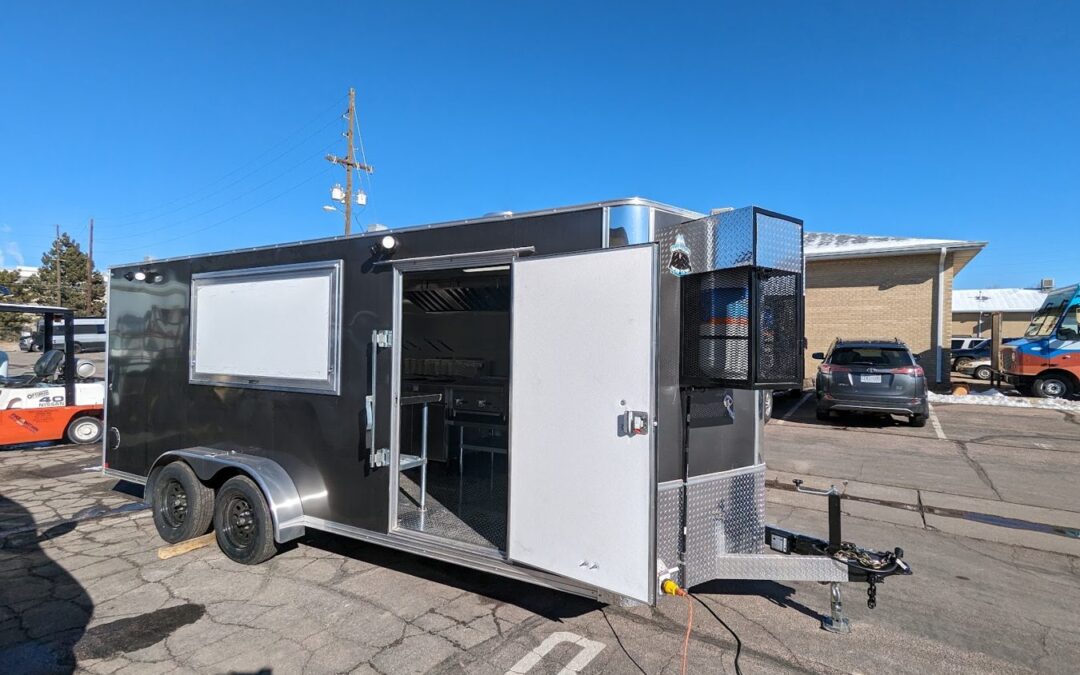
Three fryers, and none of them the same.
That is the whole brief for a tempura kitchen, and it is the thing most people get wrong when they try to run one out of a trailer. They buy two identical basket fryers because that is what a burger truck has, and then they discover that a light battered shrimp does not want a basket. It wants a wide, shallow bath where it can float, be turned once, and come out before the batter goes heavy. A chicken thigh wants the opposite. So when Ten Tempura in Lander, Wyoming came to us for an eighteen foot trailer, the fryer line was the first drawing and everything else was arranged around it.
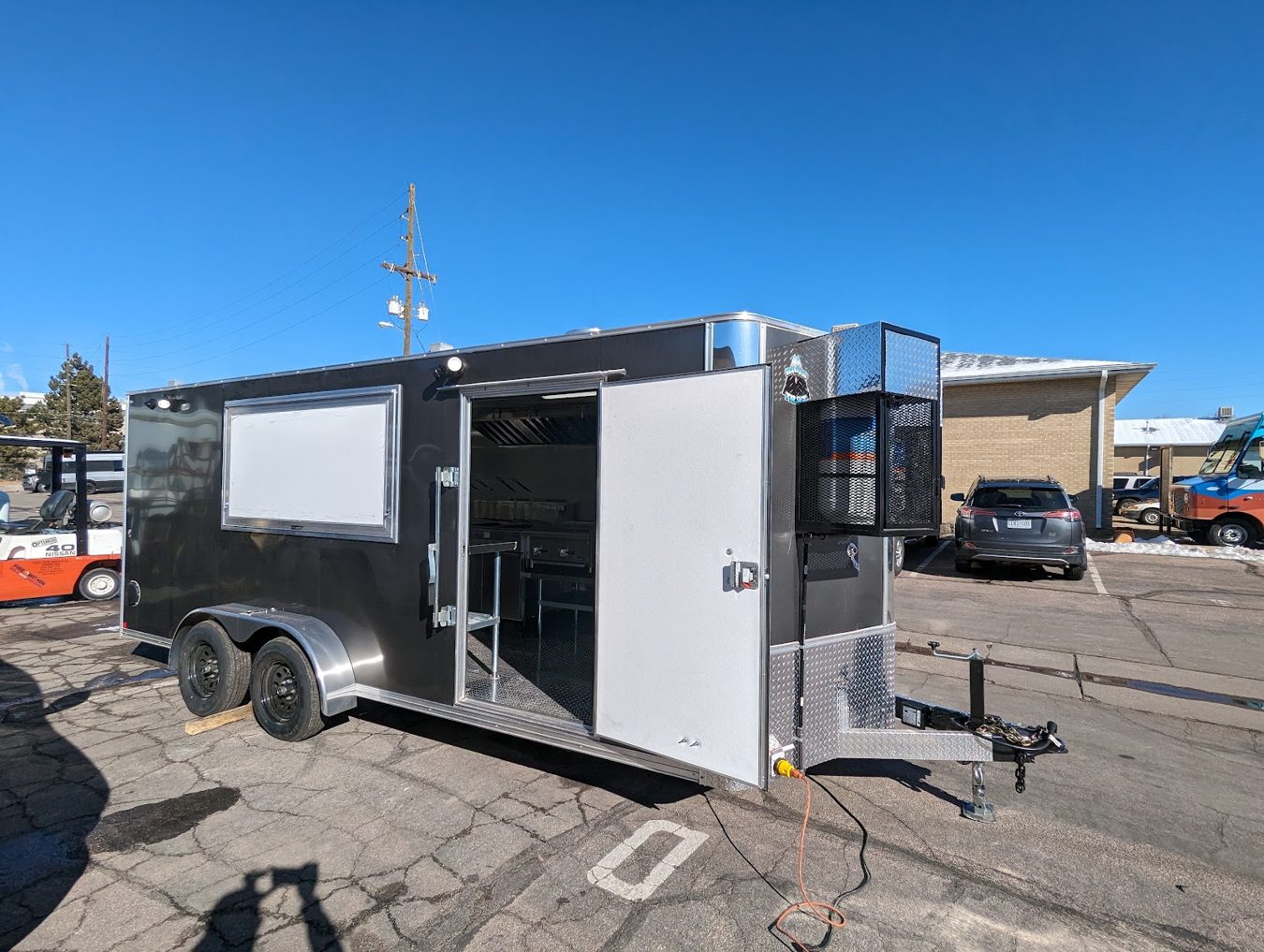
Ten Tempura is Jacob Wells and his sister Jennifer Brennan. Wells cooked in the Navy, trained in Portland, helped open a burger chain there, and came home to Lander with a plan for a ramen place that turned into a tempura trailer once it became clear the frying was the part people came back for. The menu is shrimp, chicken and tofu tempura with rice and sauces, skewers, seasonal ramen, and sides like squash bites, onion rings and sweet potato, with as much of it as possible grown in Fremont County. It soft opened in Lander City Park in March 2024 and in the fall of 2026 it has a regular slot at Pushroot Brewing on Main Street three evenings a week.
Here is what we built, why the line is laid out the way it is, and what licensing a trailer in Lander involves, which is a different process from Cheyenne or Casper.
The fryer line
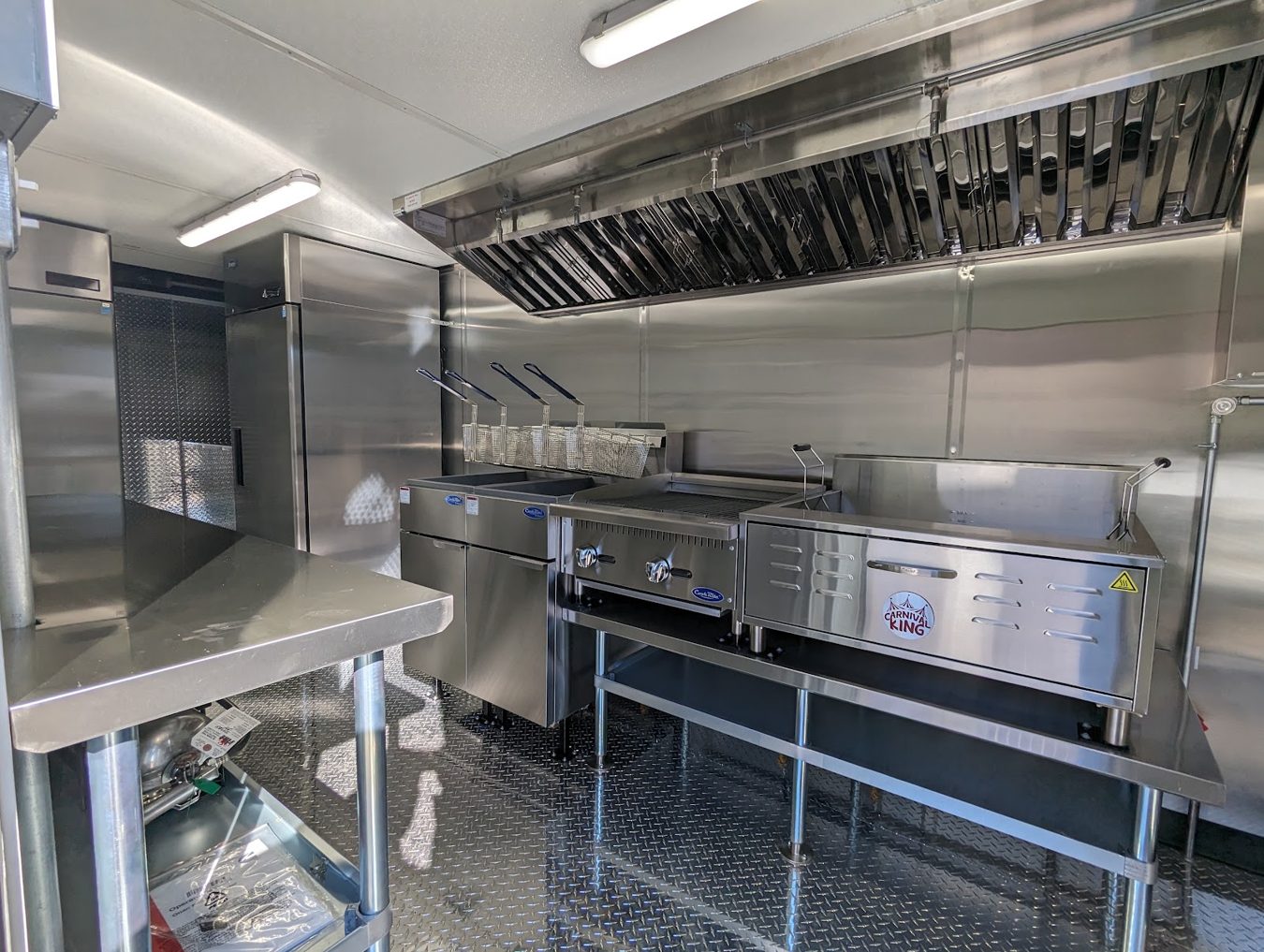
Under the hood, left to right: an Atosa forty pound deep fryer, a second one beside it, a twenty four inch Atosa radiant charbroiler, and a thirty pound flat bottom fryer rated at 54,000 BTU. Four gas appliances in a row, all under one eight foot exhaust hood with wet chemical suppression nozzles over each one and a Class K extinguisher within reach for oil.
The two deep fryers do the volume. Chicken, sweet potato, Brussels sprouts, onion rings: anything that can go in a basket and come out in a batch goes there, and a forty pound fryer recovers its temperature fast enough that a line at the window does not slow the oil down. Running two means one can be kept for seafood, which matters to anyone with a shellfish allergy and to anyone who does not want their apple fritter tasting of shrimp.
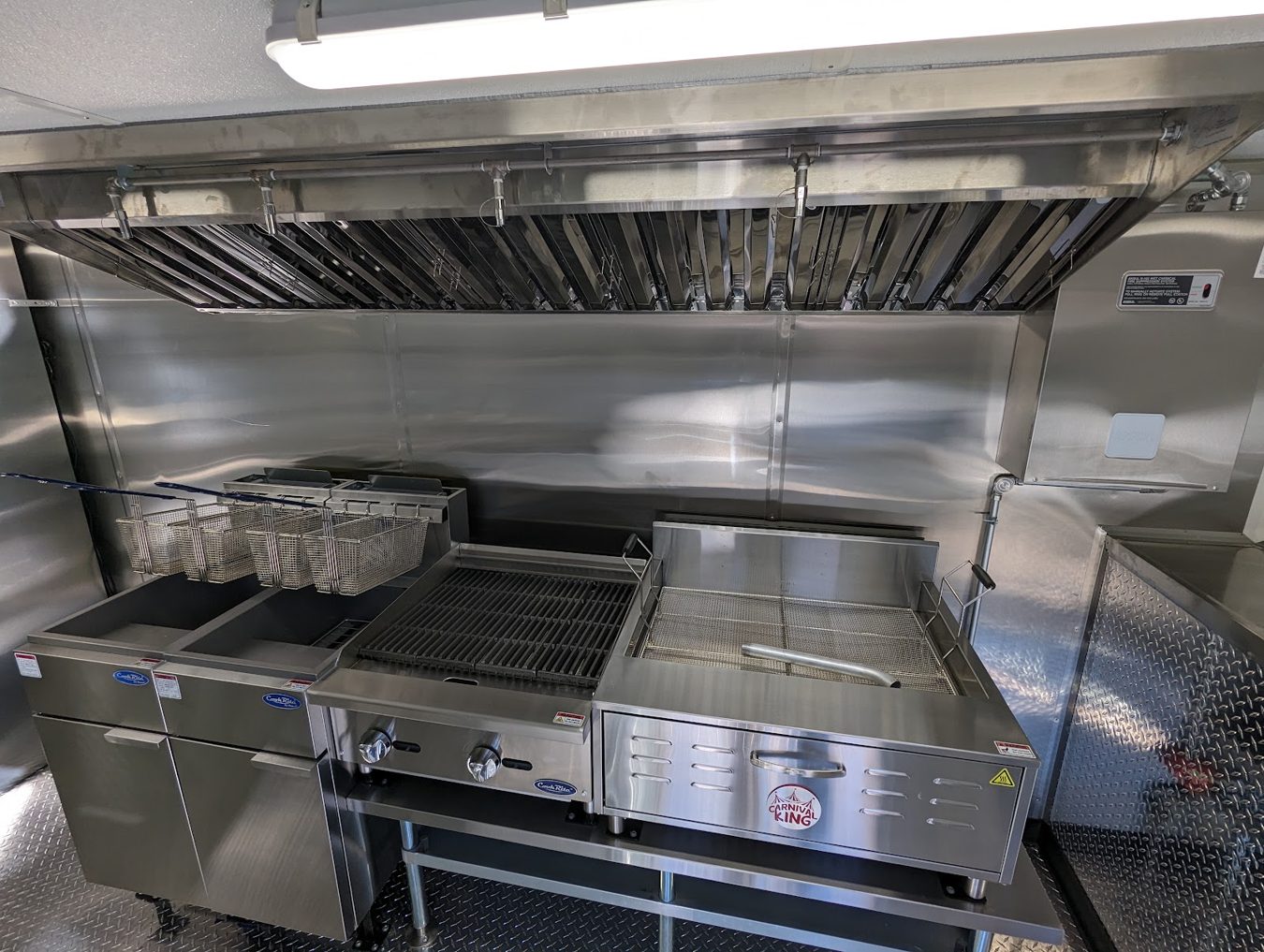
The flat bottom fryer is the one that makes this a tempura trailer rather than a fried chicken trailer. It is the same appliance a funnel cake stand uses: a wide, shallow bath with no basket and no deep well, so a piece of battered shrimp floats on the surface, gets turned with tongs, and comes out light. It converts between propane and natural gas in the field, which does not matter on a trailer but tells you it is a commercial unit rather than a countertop toy. Beside it the charbroiler handles the skewers, which are grilled rather than fried, and gives the cook a place to finish anything that needs a mark on it.
An eight foot hood is a long hood for an eighteen foot trailer. It is there because all four appliances produce grease laden vapor and the state’s mobile food unit rules are explicit that a unit with a grill or a deep fat fryer has to have a filtered hood vented to the outside. Running one hood over the whole line, rather than two shorter ones, means one fan, one duct through the roof and one suppression system, and it leaves the owner room to swap an appliance later without touching the hood.
Everything else in eighteen feet
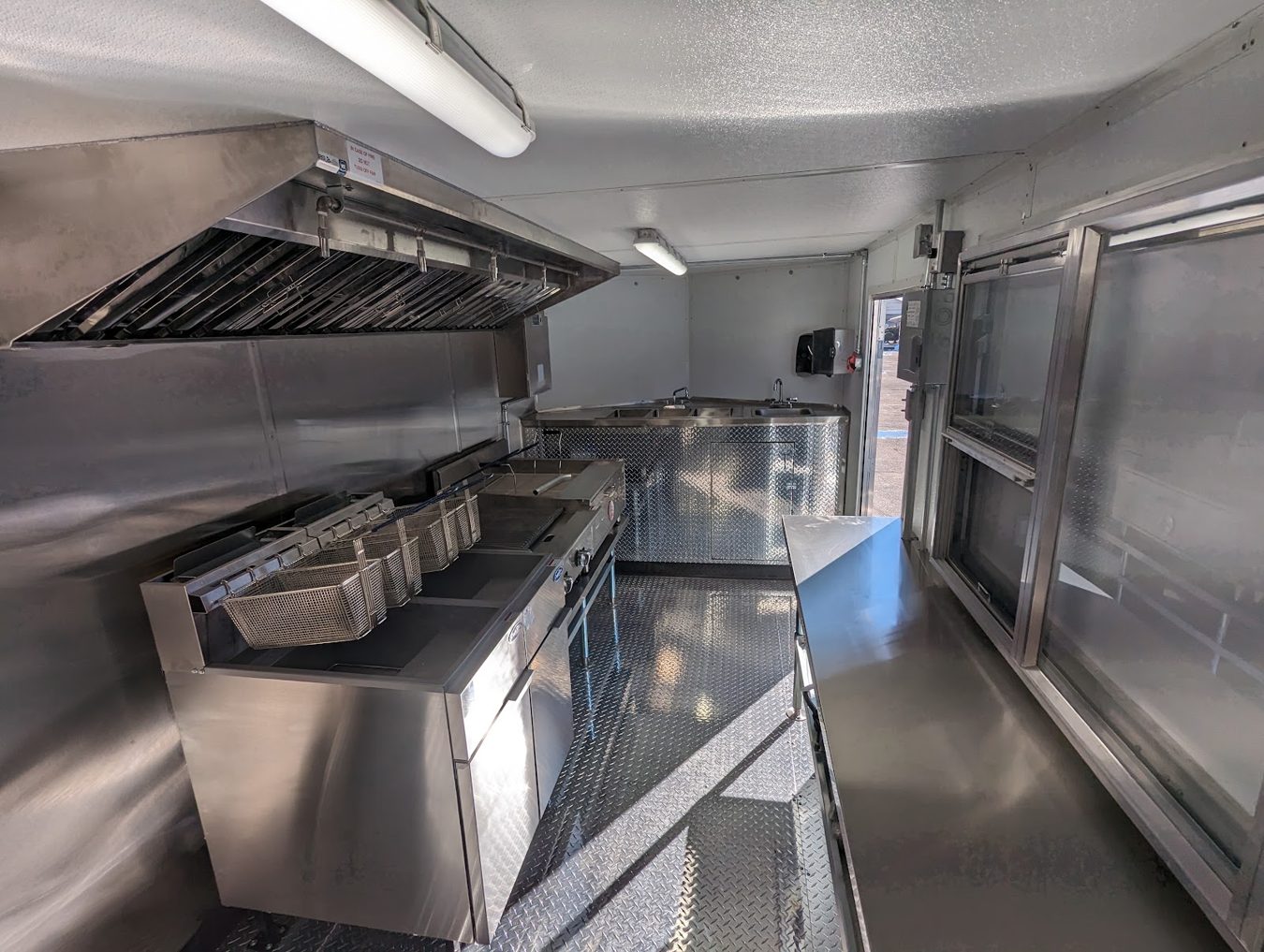
The cook wall is stainless steel and the rest of the walls and the ceiling are FRP, which is the combination we use on most builds: stainless where the grease lands, a lighter, cheaper food safe panel everywhere else. The floor is diamond plate. Lighting is two interior fixtures and two exterior, on a 100 amp panel with twelve outlets, which is more than a four gas appliance kitchen needs today and is there for the rice cooker, the holding equipment and whatever gets added in year two.
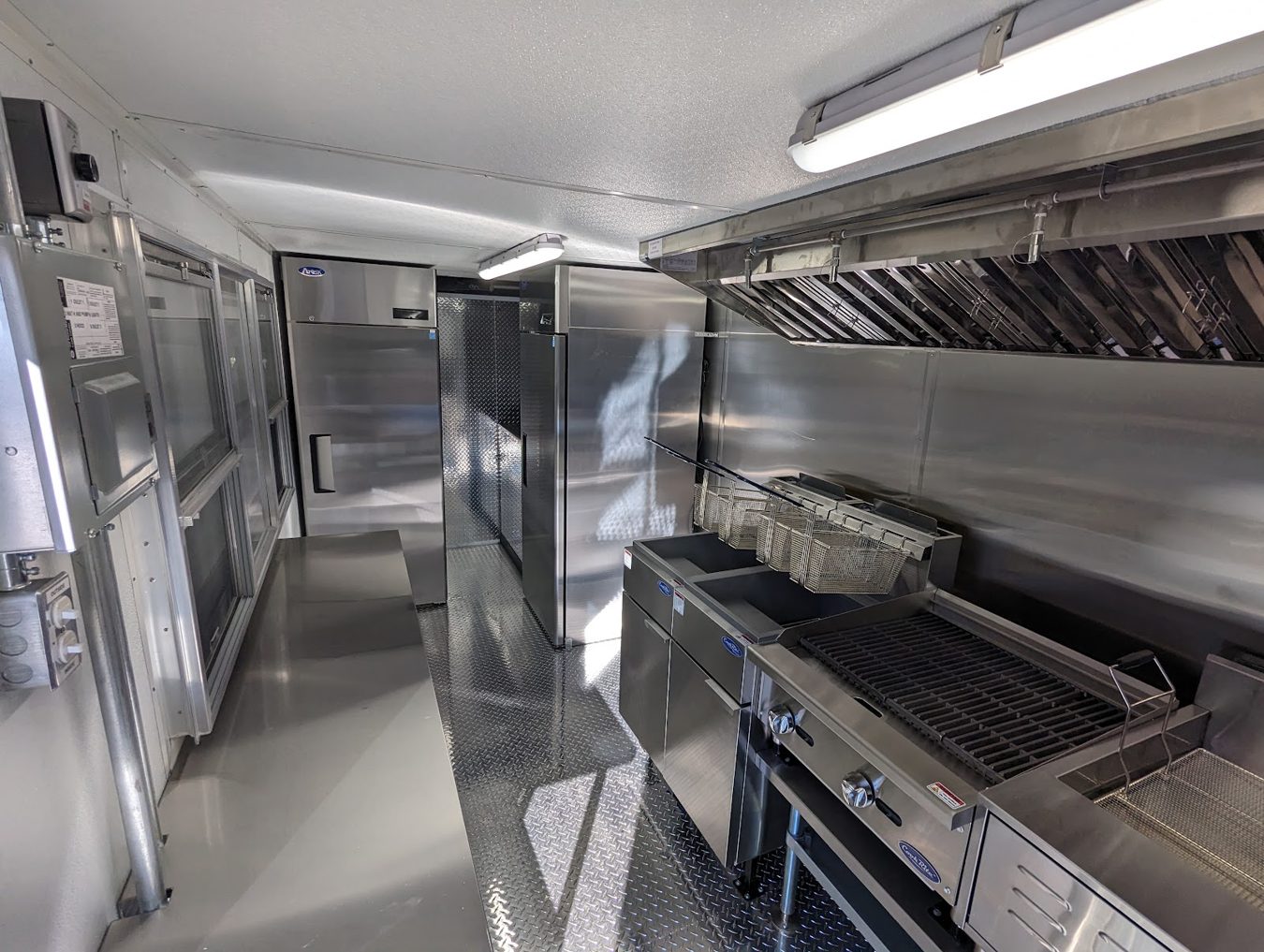
Cold storage is a single door Atosa reach in refrigerator and a matching reach in freezer at the back of the trailer, away from the hood. Tempura batter has to be cold to fry light, and the proteins and vegetables that go into it have to be held cold until the moment they are battered, so the refrigerator is as much a part of the fryer line as the fryers. The freezer carries the shrimp and the backup stock for a weekend at a festival.
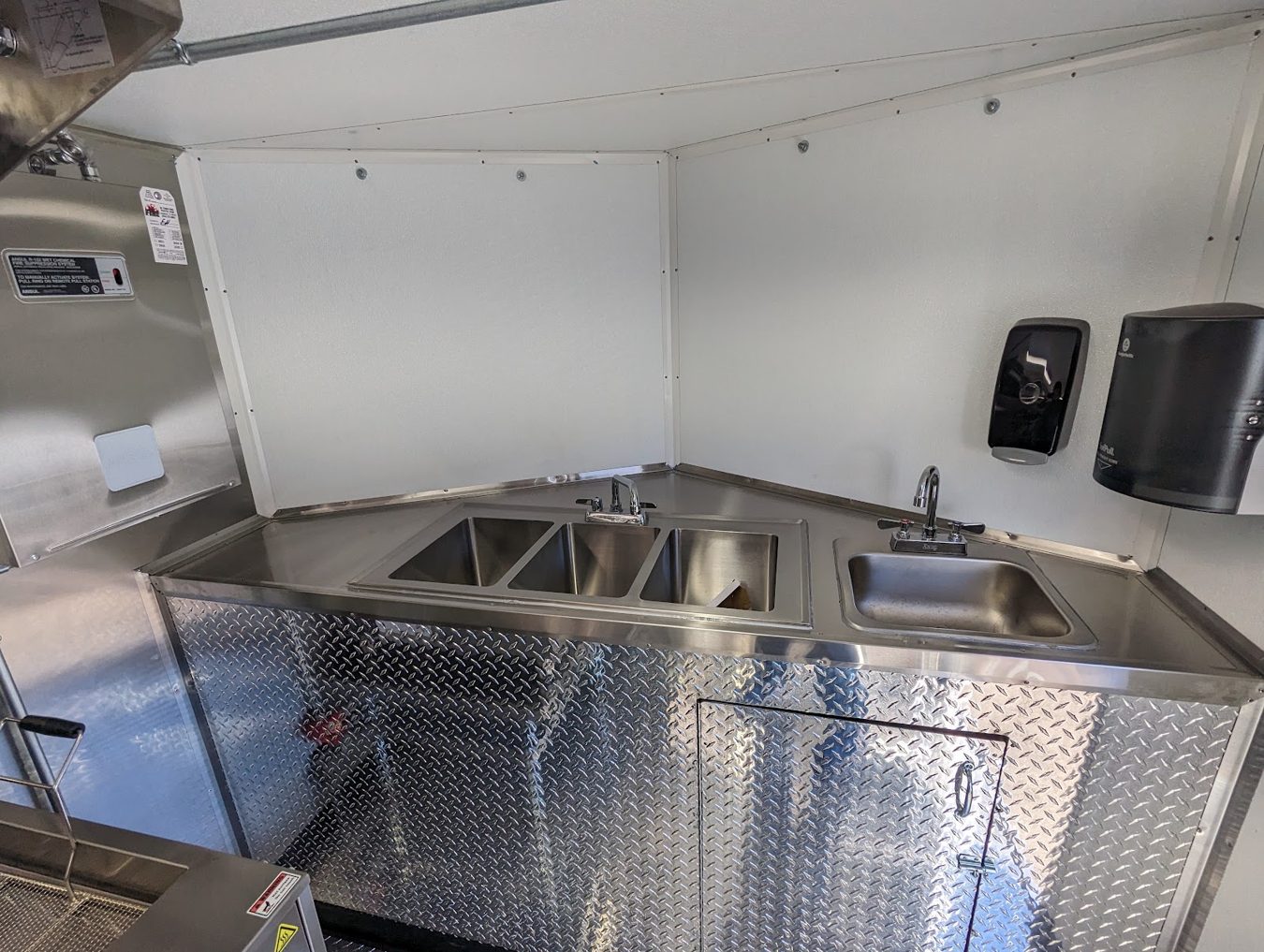
Water is forty gallons fresh and fifty gallons waste, with a water heater and a pump feeding a three compartment sink and a separate hand sink. The waste tank is larger than the fresh tank by more than the fifteen percent the state requires, which is the rule that keeps a sink from backing up before the fresh water runs out. Frying makes a particular kind of mess, oil and batter on every tray and tool, and the three compartment sink earns its place.
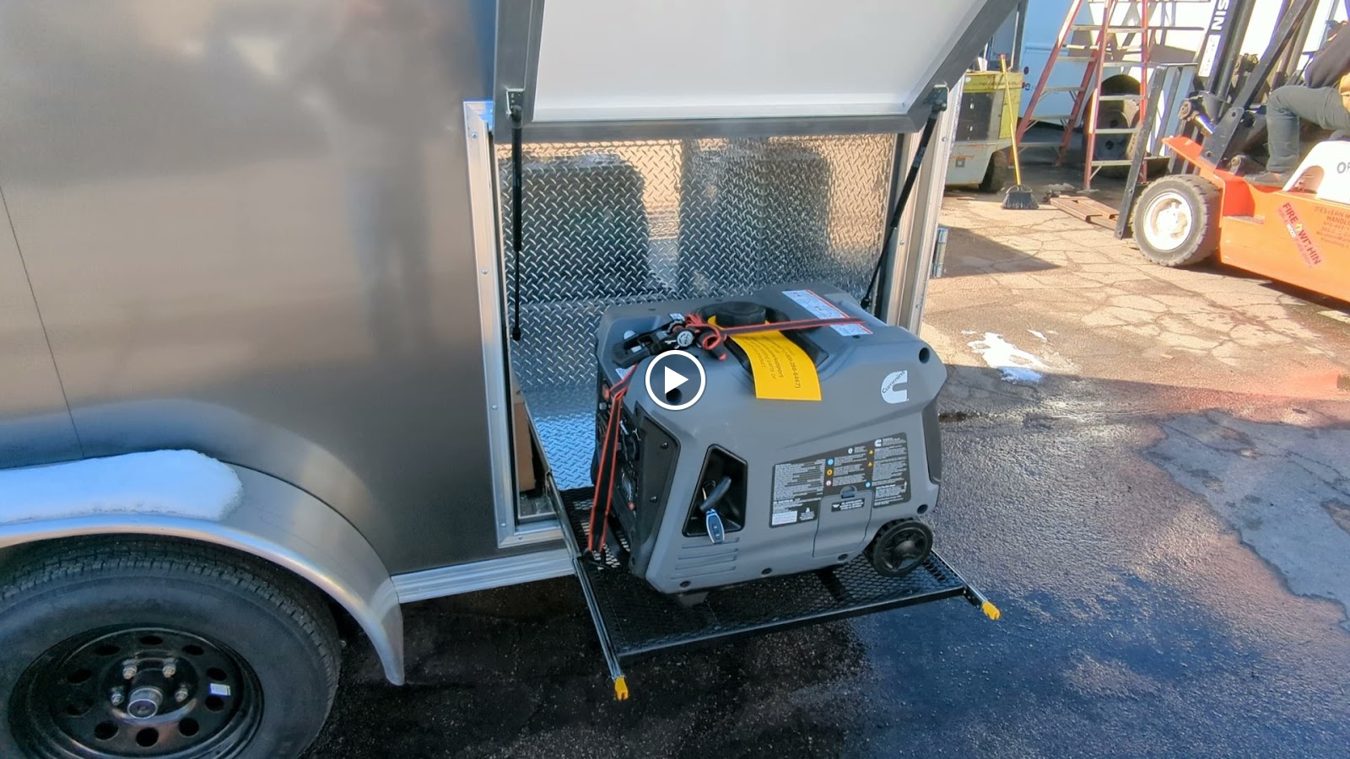
Power is a Cummins 4500 watt inverter generator in a box at the front of the trailer with a louvred door, rather than strapped to the tongue. The electrical load on a gas kitchen is small: refrigeration, the hood fan, lights, the water pump and a few outlets, so a 4500 watt inverter is enough and is quiet enough to park beside a brewery patio. Two propane tanks feed the four appliances and the water heater.
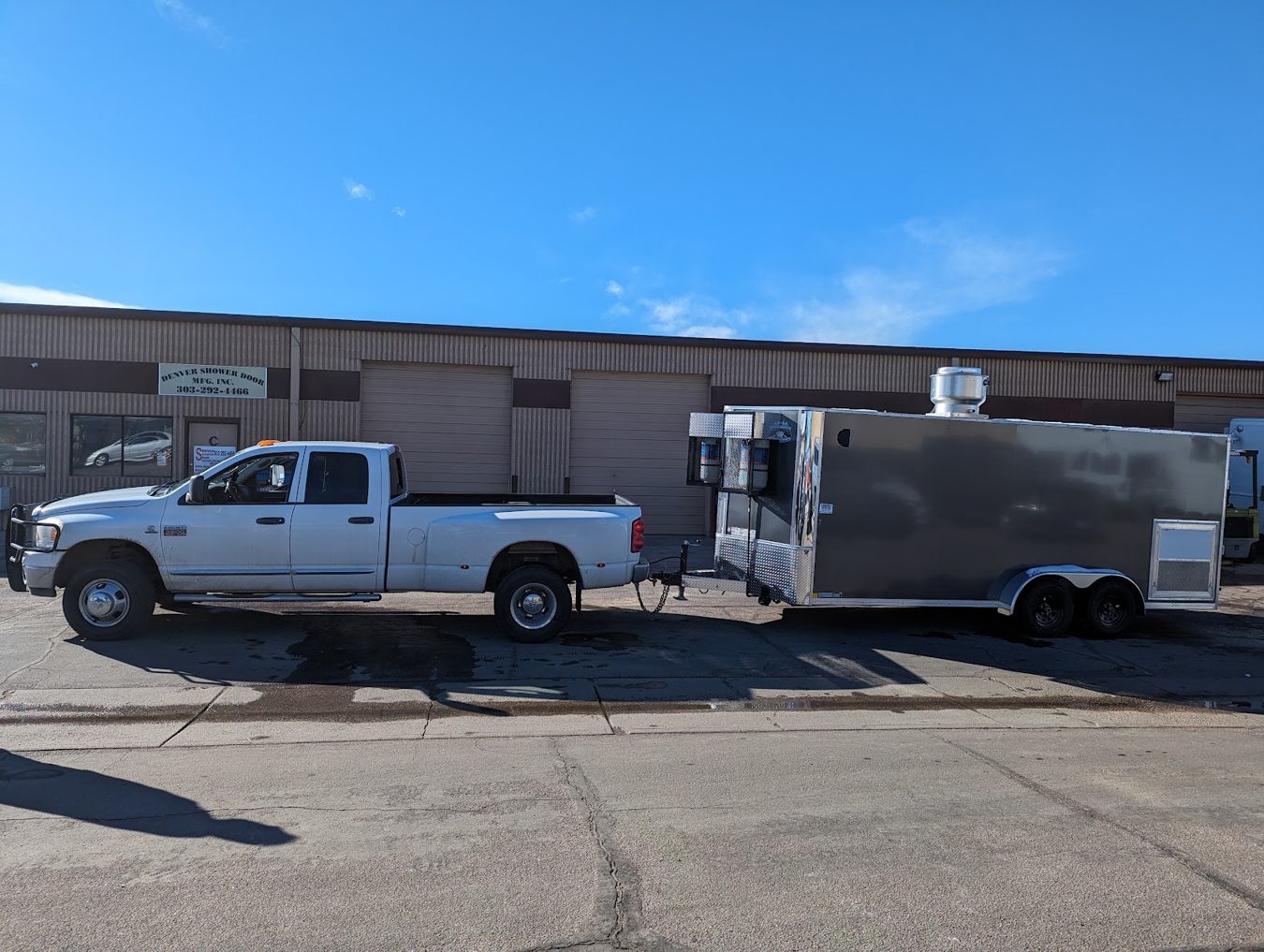
The trailer was delivered in winter, which is worth saying because it shows in the photos. An eighteen foot enclosed trailer on a tandem axle tows behind a three quarter ton pickup, and Lander is most of a day’s drive north of our Denver shop by way of I-25, Casper and Shoshoni.
Licensing a food trailer in Lander
Fremont County is different from the two Wyoming cities we write about most. Cheyenne and Casper sit in counties that run their own health departments. Fremont County does not, so a trailer based in Lander is licensed directly by the Wyoming Department of Agriculture through its Consumer Health Services inspectors. Here is how it works as of this writing; fees are set by statute, but confirm the process with the department before you budget.
The state licence
The Department of Agriculture publishes a mobile unit plan review packet. It wants the menu, the food handling procedures, a scaled floor plan with the equipment layout, the finish schedule for the walls, floor and ceiling, the ventilation, the equipment spec sheets, the plumbing and warewashing details, refrigeration and hot holding capacity, the water heater and tank sizes, a restroom agreement and, if you need one, a commissary agreement. It has to be submitted at least 30 days before construction starts, which in practice means as soon as the layout is agreed with us, and a menu change later needs a fresh approval. After the build there is a pre opening inspection, the licence is issued, and a routine inspection follows within the first 30 days of operation. Inspections after that run at least every six months, stretching to once a year on a risk based schedule.
The licence is $200 new and $100 to renew, with a $50 temporary licence for events, all fixed by state statute since 2021. The department’s own rule book still prints the older $100 and $50 figures in one place; the statute controls.
Self contained or commissary
The state requires a commissary only for units that cannot meet its mobile food unit requirements on their own: a three compartment sink and a separate hand sink, both with hot and cold water; a waste tank at least fifteen percent larger than the fresh tank; a filtered hood vented outside over any grill or fryer; smooth, light coloured, cleanable floors, walls and ceilings; shielded lights; screened openings. This trailer meets all of that, so it is licensed as a self contained unit and needs only an approved servicing location for filling the fresh tank and dumping the waste tank.
The city and the fire department
The City of Lander does not publish a mobile food vendor ordinance or fee schedule online in a form we could verify, so the honest advice is to call the City Clerk at 240 Lincoln Street before you commit to a spot, particularly for City Park, where the Lions shelter and the gazebo are reserved through Parks and Recreation. The Lander Volunteer Fire Department does fire safety inspections on request; Wyoming adopted the 2024 International Fire Code statewide in June 2024, and for a mobile unit that means the hood and suppression system, the propane system and its annual leak check, and the extinguishers. Sales tax in Fremont County is five percent.
Where a trailer earns in Lander
Lander is a town of about 7,400 people at the foot of the Wind River Range, the county seat of a county of 39,000 spread over 9,000 square miles, with a median household income around $75,000. NOLS is headquartered here and SageWest Health Care is one of the larger employers, and the summer brings climbers, hikers and people on their way to Sinks Canyon.
The calendar for a trailer is short and dense. Lander Brewfest fills City Park on the second weekend of June. Pioneer Days runs the rodeo and the Main Street parade over July 3 and 4. The International Climbers’ Festival follows the next week, July 9 to 12 in 2026. The Lander Valley Farmers Market runs Saturday mornings from the end of May to early October on Main Street, with a vendor space that cost $10 a week or $200 a season at last published pricing. Riverton, twenty five miles away, has the balloon rally in mid July, and the Taste of Wyoming food truck festival in Rawlins moved to September for 2026. Between events, a standing evening slot at a brewery, which is what Ten Tempura has at Pushroot, is what carries a trailer through a Fremont County winter.
Winter is the design constraint. Lander’s January mean low is about ten degrees, the town gets close to ninety inches of snow a year with a third of it in March and April, and a trailer that is going to work in that has to have its water drained or heated between shifts and its generator out of the weather. Our high altitude page covers what changes for gas appliances and generators above five thousand feet.
What a build like this costs
Custom food trailers start at $40,000 and custom food trucks start at $55,000. A typical 16ft trailer comes in around $72,000 and a 22ft around $110,000, so an eighteen foot trailer sits between those before anything unusual is added.
On a fryer heavy build the lines that move the number are the eight foot hood and its suppression system, the three fryers and the charbroiler, and the pair of reach ins. The trailer shell itself, the stainless cook wall, the 100 amp electrical, the tanks and sinks and the generator are the standard package. A plain grey trailer with no wrap, which is what Ten Tempura chose, keeps the finish line small, and a wrap can always be added later once the menu and the brand have settled.
Build time is about six weeks, and most builds are delivered 8 to 12 weeks after design approval.
Frequently asked questions
What equipment does a tempura food trailer need?
Fryers first, and more than one kind. This trailer carries two forty pound deep fryers for volume and a wide, shallow flat bottom fryer for the pieces that need to float and be turned, plus a twenty four inch radiant charbroiler for skewers. All of it sits under an eight foot hood with wet chemical suppression, with a reach in refrigerator and freezer for the batter, proteins and vegetables, and a three compartment sink and hand sink for the cleanup that frying produces.
Why would a trailer have three different fryers?
Because frying is not one process. A deep basket fryer is right for pieces that can sink, like chicken and sweet potato, and it recovers heat fast enough to run all service. A flat bottom fryer has a wide, shallow bath with no basket, which is how funnel cakes and donuts are made and also how light battered tempura is handled, floating and turned with chopsticks or tongs. Putting both on the line means the cook does not compromise one for the other, and the two deep fryers mean one can be reserved for seafood.
Who licenses a food trailer in Lander, Wyoming?
The Wyoming Department of Agriculture, through its Consumer Health Services inspectors. Fremont County does not run its own health department for food, so unlike Cheyenne or Casper the licence comes straight from the state. The licence is $200 new and $100 to renew, set by statute, with a $50 temporary licence for events, and the plan review packet has to be in at least 30 days before construction starts.
Does a food trailer in Lander need a commissary?
Not if it is self contained. The state’s mobile food unit requirements say a commissary is needed only for units that cannot meet the requirements on their own: a three compartment sink and a separate hand sink with hot and cold water, a waste tank at least fifteen percent larger than the fresh tank, a hood over any grill or fryer, and cleanable walls, floor and ceiling. This trailer meets all of that, so it was licensed on its own.
Does Wyoming require a hood over a fryer in a food trailer?
Yes. The Department of Agriculture’s mobile food unit requirements state that a unit containing a grill or a deep fat fryer must install a hood with filters vented to the outside, and the fire code adds an automatic suppression system over it. This trailer has an eight foot hood, which covers the two deep fryers, the flat bottom fryer and the charbroiler in one run, with the suppression nozzles above each appliance.
Can a food trailer work through a Lander winter?
It can if it is built for it and the owner looks after the water. Lander sits at about 5,360 feet, the January mean low is about ten degrees and the town gets close to ninety inches of snow a year, most of it in March and April. Water lines and tanks have to be drained or heated when the trailer is parked, and a generator in an enclosed box keeps running in weather that would stall one sitting on the tongue. This one was delivered in winter and opened in March.
How much does a food trailer cost?
Custom food trailers start at $40,000 and custom food trucks start at $55,000. A typical 16ft trailer comes in around $72,000 and a 22ft around $110,000, so an eighteen foot trailer sits between those before the equipment is chosen. On a fryer heavy build the hood and suppression system and the fryers themselves are the lines that move the number most.
How long does a build like this take?
About six weeks of build time, and most builds are delivered 8 to 12 weeks after design approval. The state plan review runs in parallel if the packet goes in as soon as the layout is agreed, which is why we send the owner the equipment spec sheets and floor plan before the trailer is ordered.
More reading
- Food truck permits in Wyoming
- How we build food trailers
- Running a food truck at high altitude
- Sourdough donut trailer for Casper, Wyoming
- Hospital food truck for Cheyenne, Wyoming
- Jerk chicken food truck for Laramie, Wyoming
If your menu is built around a fryer, or three, call or text and we will go through the line, the hood and the state plan review before anything gets drawn. We have built around 500 food trucks, trailers, bus conversions and van conversions, and we deliver across Wyoming and Colorado.
Jacob Varghese
Mile High Foodtrucks
720-209-2653
Recent Comments