
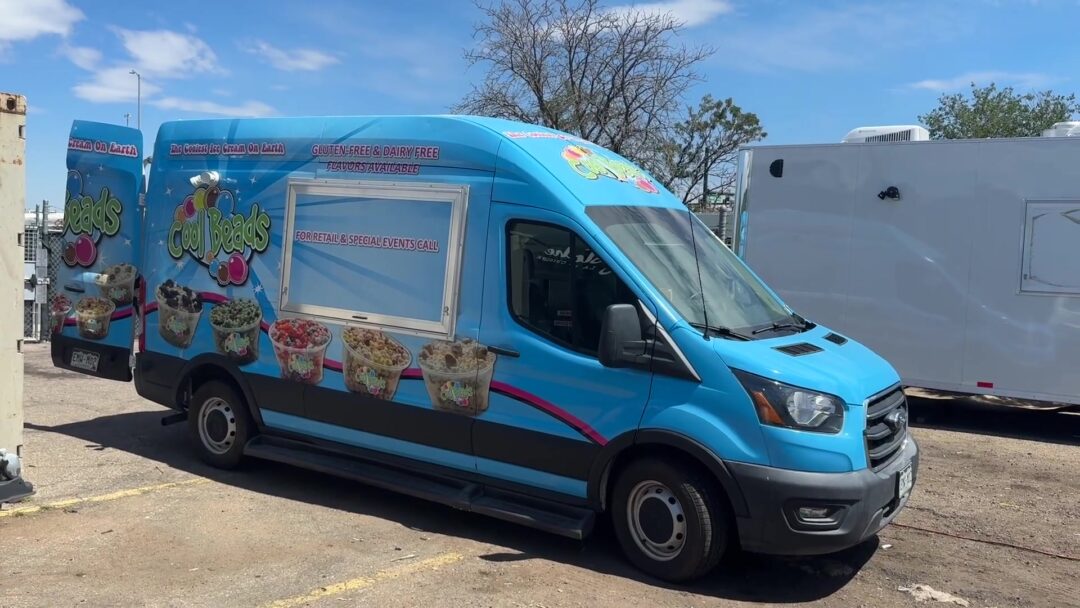
Cool Beads sells beaded ice cream in Rapid City, South Dakota. When they came to us, they did not want a truck that cooks. They wanted a van that keeps product frozen all day, pulls up quietly at a park or a wedding, and gets a scoop into a kid’s hand fast. We built it on a 2020 Ford Transit high roof, and it has no generator on board at all.
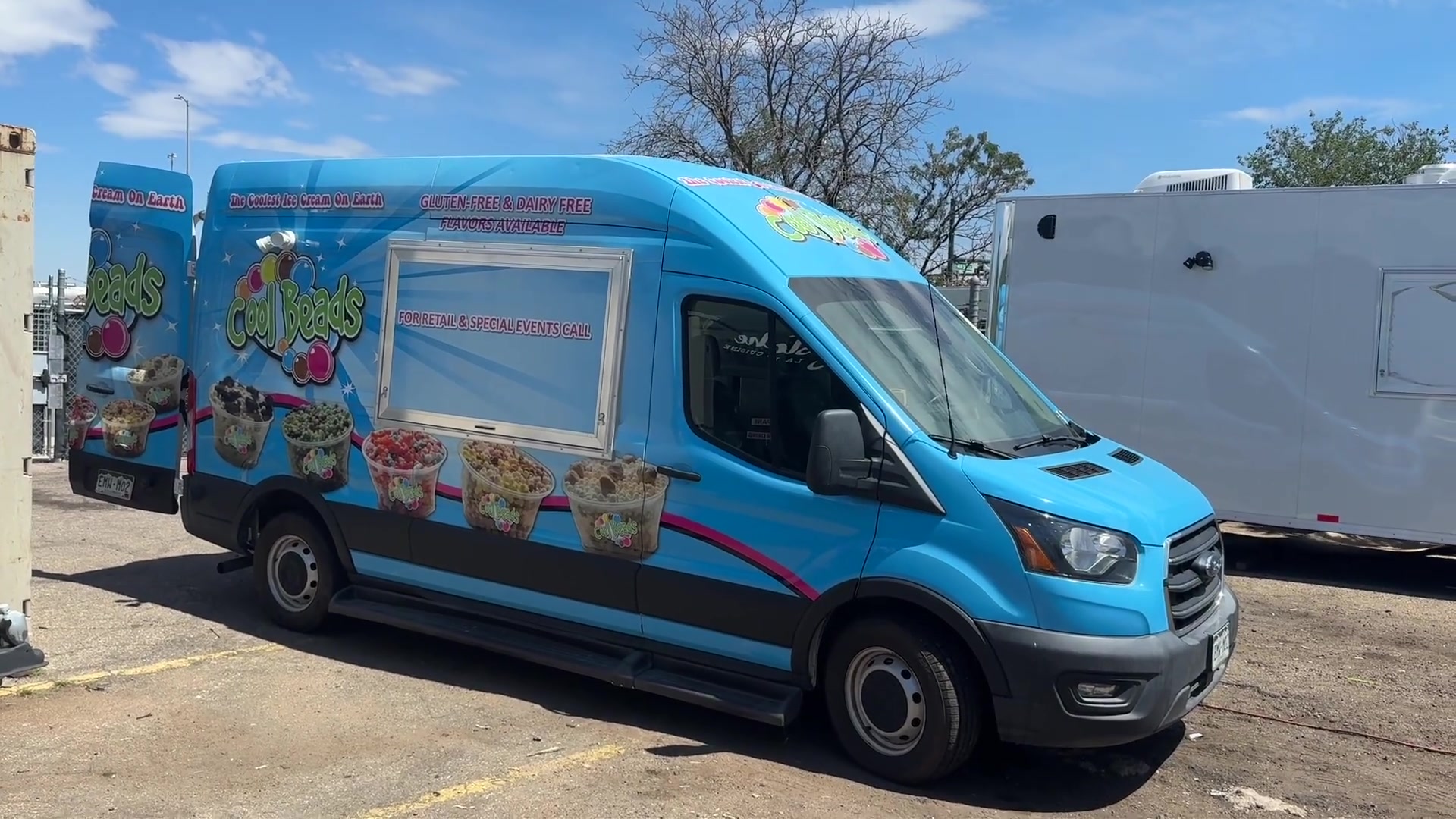
This page walks through how we approached it from our shop in Denver, what went inside, and what the licensing looks like in Rapid City. If you are thinking about an ice cream van of your own, most of the decisions here will apply to you too.
What they needed the van to do
Every ice cream business runs into the same problem sooner or later. Most trucks only need power while they are open. Freezers full of stock need it around the clock. They have to stay cold while the van is parked overnight, while it drives across town, and while it sits at an event waiting for the line to build.
So the first requirement was simple to say and harder to build: power that never stops, whatever the van is doing. The second was about where an ice cream van makes its money. Schools, parks, neighborhoods, birthday parties and weddings are all places where a running engine or a noisy generator next to the window is a real problem. Nobody wants fumes drifting toward a line of kids, and a wedding couple does not want a motor droning through their first dance.
Going all electric answered both at once.
How we laid it out
Picture yourself climbing in to start a shift. There are doors at the front and on the side, so whoever is working the window can always get out without squeezing past the counter. In a space this tight, a second way out is a safety question first.
The service window is 5ft by 3ft, framed into the side wall. Behind it are two six foot work tables, which is where scooping, cups and toppings happen. The rest of the floor is set up for two 12.5 cubic foot angled top chest freezers. Cool Beads is putting those freezers in themselves. They came as part of the build, and when an operator already has a clear picture of the display they want, letting them handle that last step makes sense. Our job was to plan the floor space, outlets and circuits around them so they drop straight in.
Then there is the wash station: a three compartment sink and a separate hand wash sink. Even a van that only scoops ice cream needs both to pass a health inspection, and in South Dakota the full sink setup also matters for the commissary question we cover below.
Power, water and the cold
Running on batteries
The heart of this van is an 8,000Wh battery bank. We fabricated a cage to hold it so it cannot shift on the road and nothing dropped or rolled into it can do damage. One switch, mounted next to the panel, decides whether the van is drawing from shore power or from the batteries.
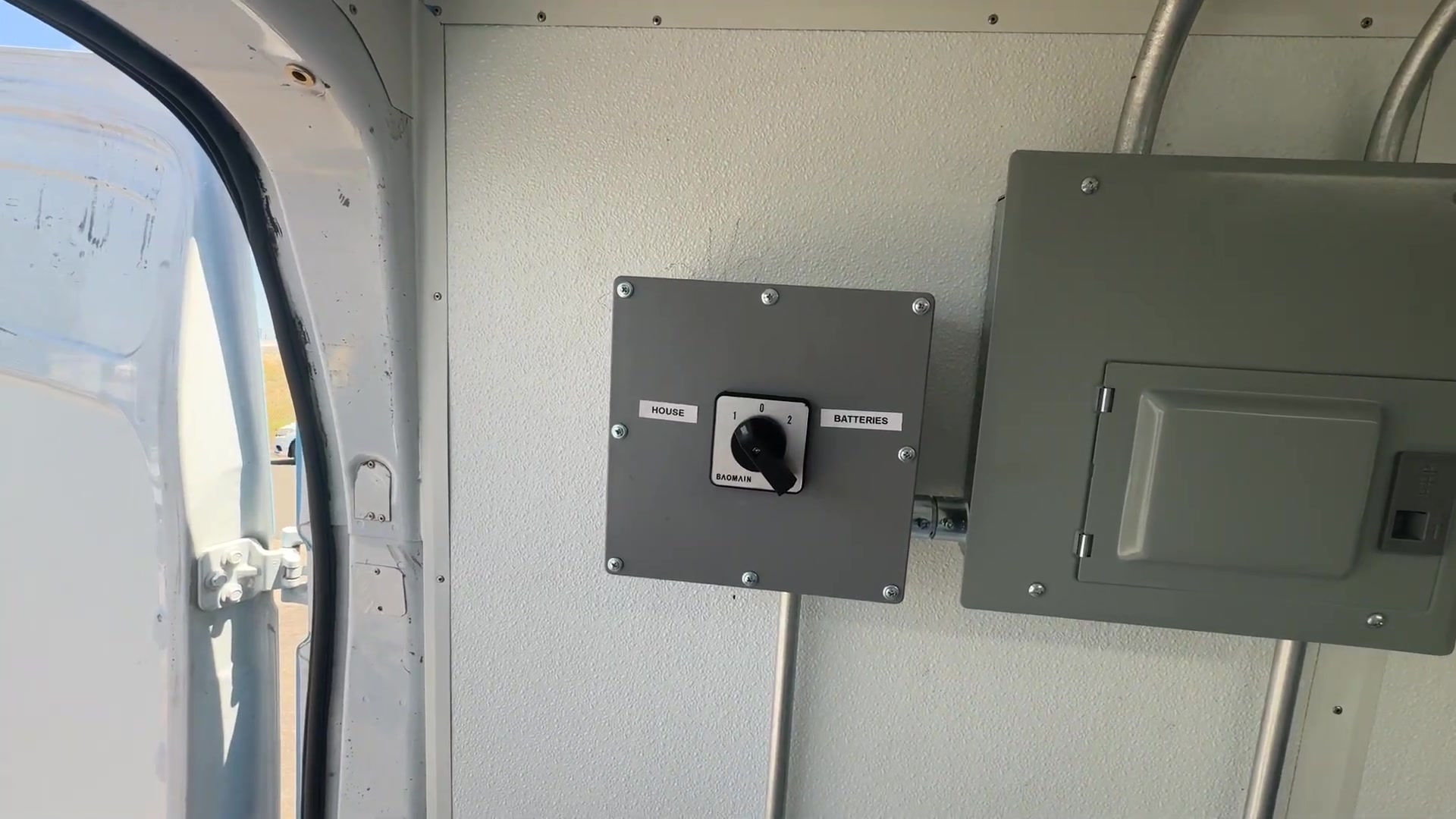
Day to day, the routine is easy to learn. At night the van gets plugged in and the batteries charge. Come morning, the cord comes out, the van heads off, and the batteries take over without the freezers ever noticing. There is no engine idling at the curb and no generator to fuel or listen to.
The van is wired to a 125 amp panel feeding twelve outlets, plus lighting inside and outside. Each piece of equipment has its own breaker, and the wiring is run in conduit. If something goes wrong with one freezer, it trips one circuit and the rest of the van carries on.
Water
The water system is a water heater and a pump with two tanks, 30 and 40 gallons. South Dakota says the waste side has to hold at least 15 percent more than the fresh side, so the 40 gallon tank is the waste tank. Both the fill point and the dump valve are on the exterior, so nobody carries water in or out through the work area.
Built for Rapid City winters
Rapid City averages a January low of 13 degrees, so this van got our cold climate build. That means inch and a half insulation in the walls where we would normally use an inch, and 9/16 inch plywood backing in place of half inch. Thicker walls help in two directions here. They make it easier for the freezers to hold temperature when it is bitter outside, and they keep the crew from working in a cold metal box.
We finished the walls and ceiling in FRP and laid aluminum diamond plate on the floor. Every panel seam gets trim, which keeps dirt out of the joints.
The wrap
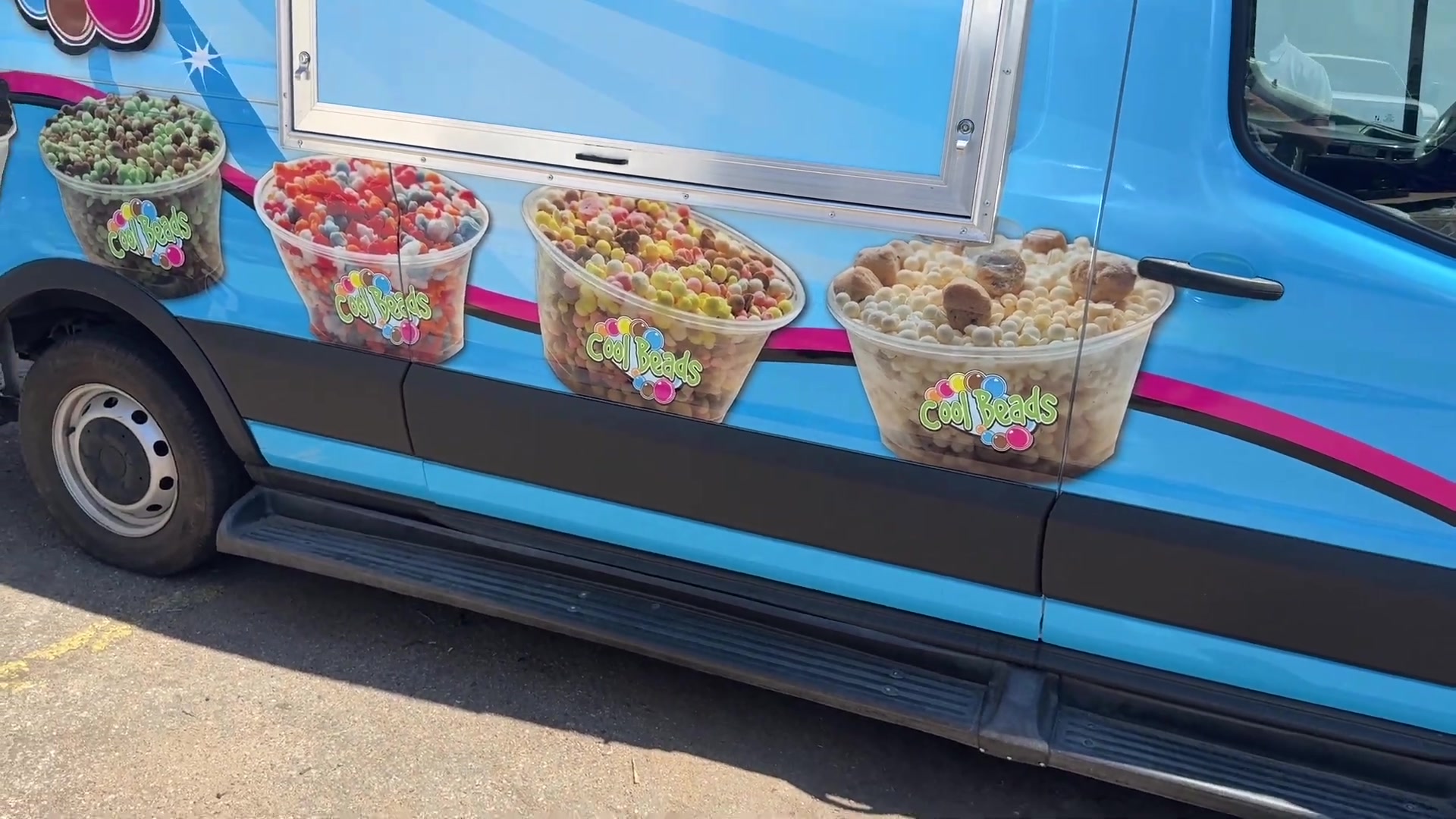
Bright cups of beaded ice cream cover the van. The Cool Beads logo is up front, and the window side tells people the business does retail and special events. From the far side of a playground, a kid knows exactly what is for sale, and that is what a wrap on an ice cream van is for. You can see more finished wraps in our build gallery.
Getting it licensed in Rapid City
There are two separate approvals to plan for here, one from the state and one from the city. Rules and fees change, so check with each office before you lock in a budget or a launch date.
The state food license
Start with the South Dakota Department of Health, which issues the food service license. Send your plans in at least 30 days before construction starts. You will need a certified food manager, and the unit has to pass an inspection before the license is issued. Licenses run to December 31 each year. You will also need a commissary, unless the van itself has approved dishwashing and adequate storage. That rule is a large part of the reason we put a full three compartment sink on board.
The city ice cream vendor license
Rapid City does not let food trucks sell on the street in general. Ice cream is the exception: the city has its own mobile ice cream vendor license, and the rules are written around keeping kids safe. Here is what it asks for:
- A two year license term, a police background check, and 1 million dollars of liability insurance with the city named on the policy.
- On the van itself: a convex mirror up front, a backup alarm, and CAUTION CHILDREN signage.
- You can sell from 10am to dusk. Music and sound stop at 8pm or half an hour after sunset, whichever comes first.
- Stay off truck routes and any street with a limit of 30 mph or higher, and keep away from school zones and public parks.
- Pull over on the right hand side, run your flashers, and do not reverse to reach a customer.
Applications go through the city’s Finance department. Even with the license, an event like the ones at Main Street Square still needs a yes from whoever is organizing it.
Sales tax
Every vendor needs a South Dakota sales tax license. Add it up and you are looking at about 7.2 percent: 4.2 percent state, 2 percent city, and an extra 1 percent on prepared food. The Department of Revenue can tell you exactly how that lands on your menu.
If you are planning something similar
Design the power around the freezers first. On an ice cream van, the freezers decide everything. Know which freezers you are running and how you will charge overnight before you think about anything else.
Read the city ordinance before you order the van. Rapid City’s mirror, backup alarm and signage rules are things you want on the build sheet from day one, not added after the wrap is on.
Do not skip the sinks because you do not cook. A scoop only menu still needs a three compartment sink, a hand sink and properly sized tanks to pass inspection.
If you are supplying your own equipment, say so early. Cool Beads fitted their own freezers, and that worked well because we knew the sizes up front and planned the space and circuits around them.
Questions we get about this build
Can an ice cream van run without a generator?
Yes. Cool Beads has no generator. An 8,000Wh battery bank, held in a cage we built for it, powers the freezers all day, and a switch beside the panel lets the van charge from shore power overnight.
Why go all electric on an ice cream van?
Because freezers need power every minute, including the drive between stops. Batteries supply that without an engine running or a generator making noise and fumes, which matters at schools, parks and weddings.
Does a van that only scoops ice cream still need sinks?
Yes. Scooping still counts as food service. This van carries a three compartment sink, a hand wash sink, a water heater, a pump, and 30 and 40 gallon tanks, with the bigger tank on the waste side as South Dakota requires.
Is street vending allowed for ice cream in Rapid City?
It is, under a dedicated mobile ice cream vendor license. Regular food trucks do not get street sales, but licensed ice cream vendors can sell between 10am and dusk, as long as they avoid 30 mph streets, school zones and parks and stop on the right side of the road.
How is this van set up for South Dakota winters?
It has our cold climate build, with inch and a half wall insulation instead of an inch and 9/16 inch plywood backing instead of half inch. That helps the freezers hold temperature and keeps the van comfortable to work in.
Planning an ice cream van, or any build that has to stay cold while it drives? We build out of our Denver shop at 3895 E 45th Ave Suite E for owners across the Mountain West, and we are happy to work through the power with you before anything gets built. Request a quote through our form or call us at 720-209-2653.
Planning a build like this?
Tell us what you want to cook and where you will park. We will send a layout and a written quote.
Get a free quoteCall 720-209-2653
Recent Comments