
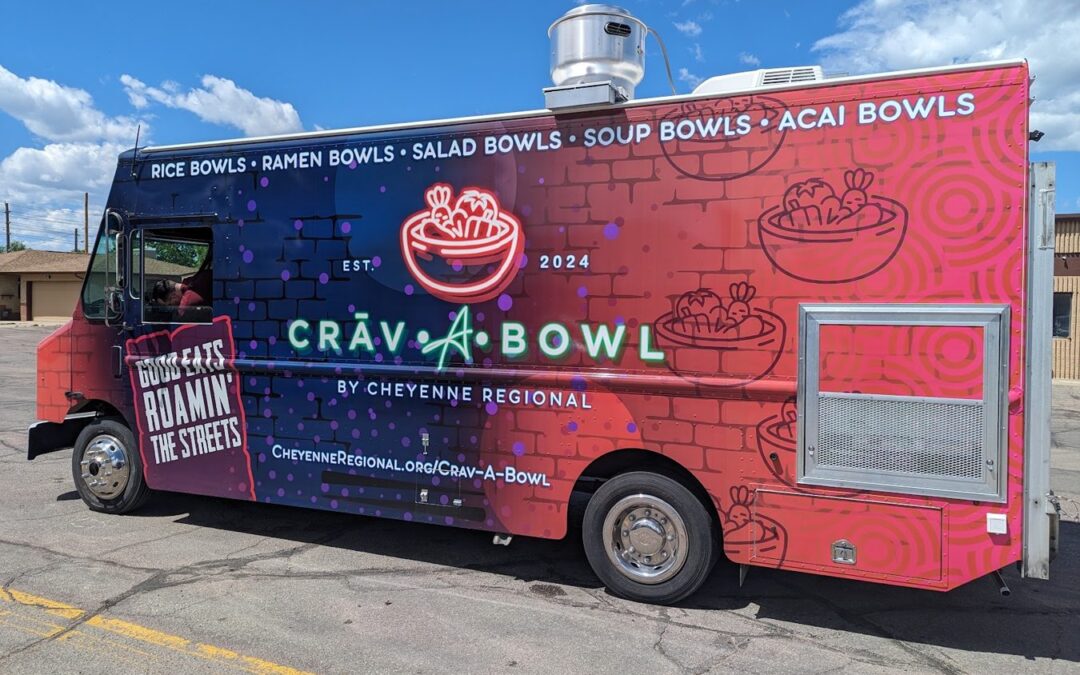
The customer was a hospital.
That changes almost everything about a food truck build except the welding. A hospital does not open a truck to chase festivals. It opens one because it has nurses on a twelve hour shift who cannot leave the floor, clinics across town with no cafeteria, and a food service team that already cooks for hundreds of people a day and wants to take that cooking to where the people are. So when Cheyenne Regional Medical Center and its food and nutrition services partner, Sodexo, came to us for a sixteen foot truck, the brief was not a menu. It was a route.
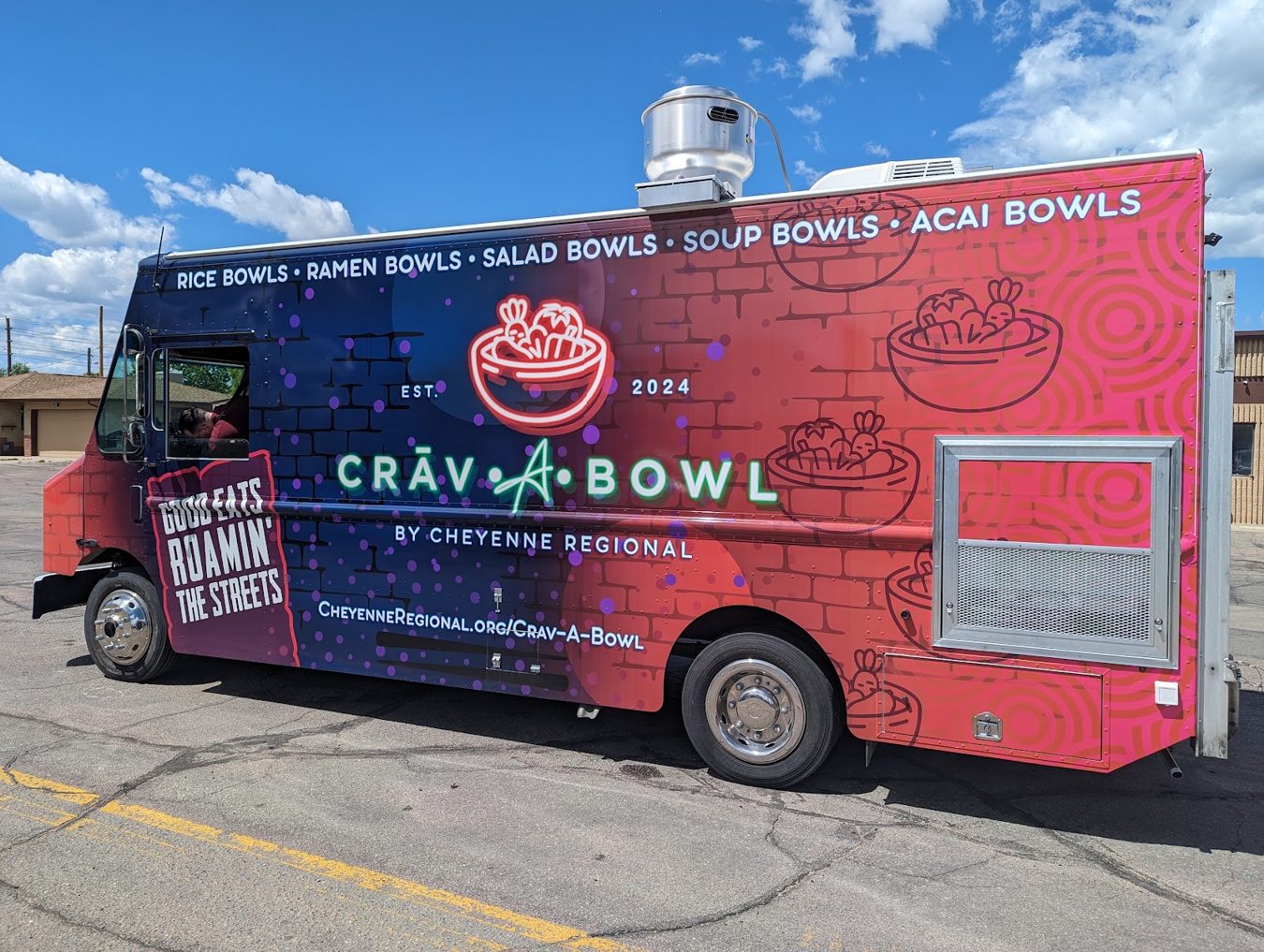
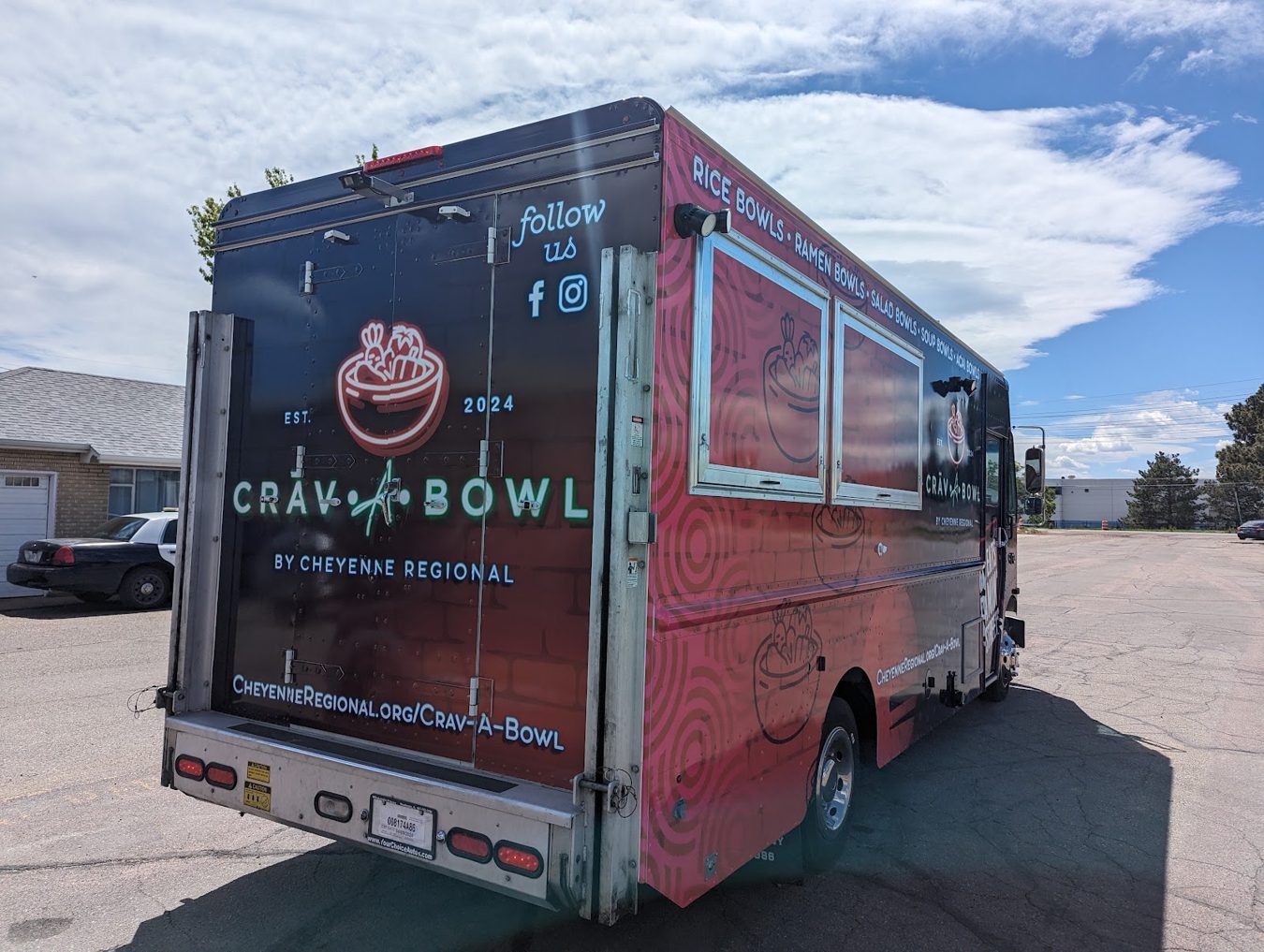
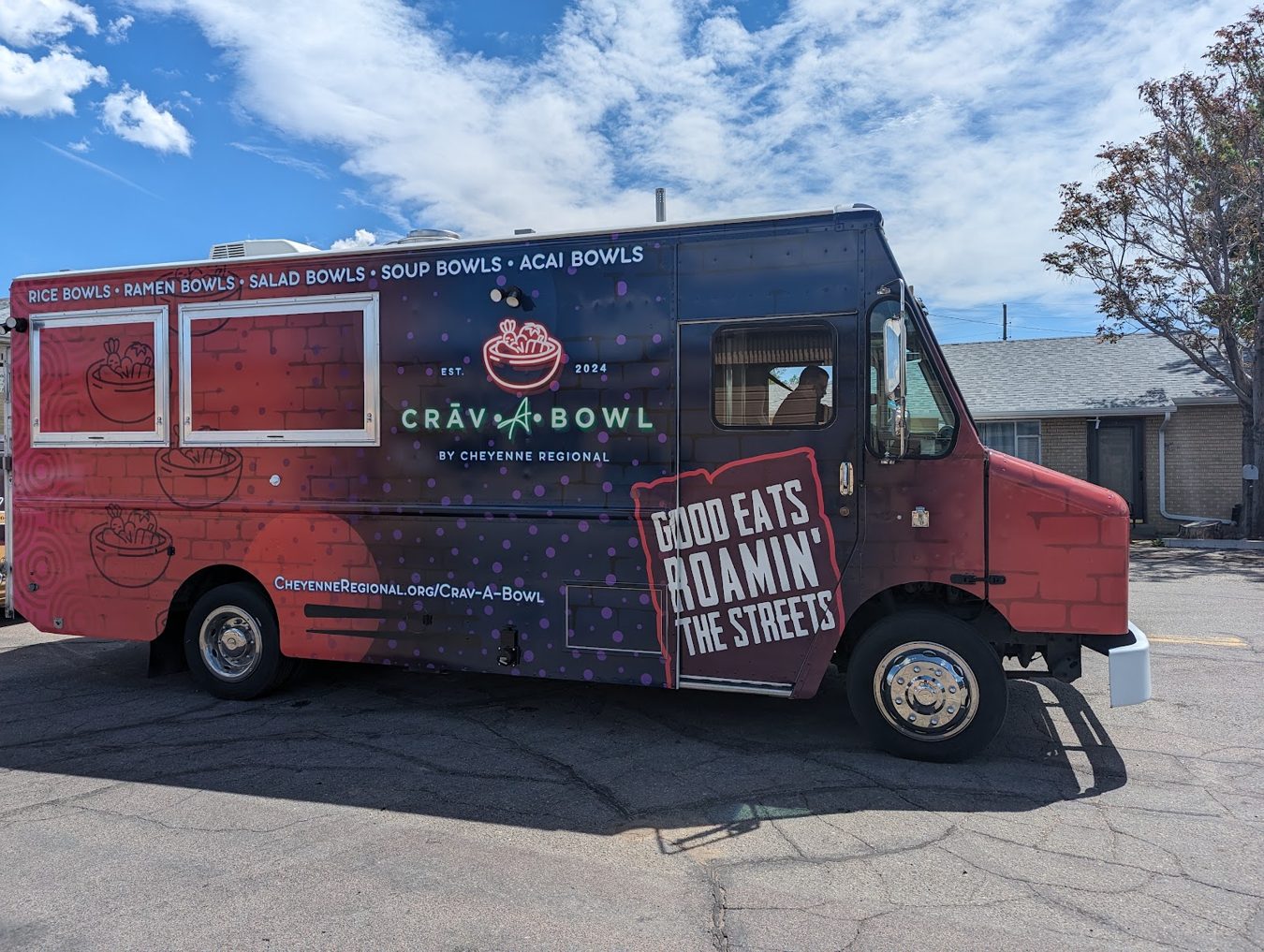
The truck is Crav-A-Bowl. Rice bowls, ramen bowls, salad bowls, soup bowls and acai bowls, which is a smart menu for a truck that has to feed people at seven in the morning and again at two in the afternoon from the same kitchen. It opened at the hospital’s main campus in Cheyenne in June 2024, parked on 24th Street between House and Warren avenues, and it has been working the city’s food truck circuit since: the weekly Food Truck Tuesdays at Blue Federal Credit Union, Cheyenne Restaurant Week, and the outlying clinics and offices that have no food service of their own.
Here is what we built, why an institutional truck is laid out differently from an owner operated one, and what licensing a truck in Cheyenne involves.
Walkthrough video
Jacob walks the finished truck from the service window to the generator. The equipment list in the video description is the build sheet.
A bowl kitchen is a batch kitchen
Most food trucks cook to order: a burger hits the griddle when the ticket prints. A bowl truck does not work that way. Rice is steamed in batches, proteins are roasted in batches, soups and ramen broth are held hot, and the only thing that happens to order is the assembly. That shapes the equipment, and it is why the most important appliance on this truck is a combi oven rather than a fryer.
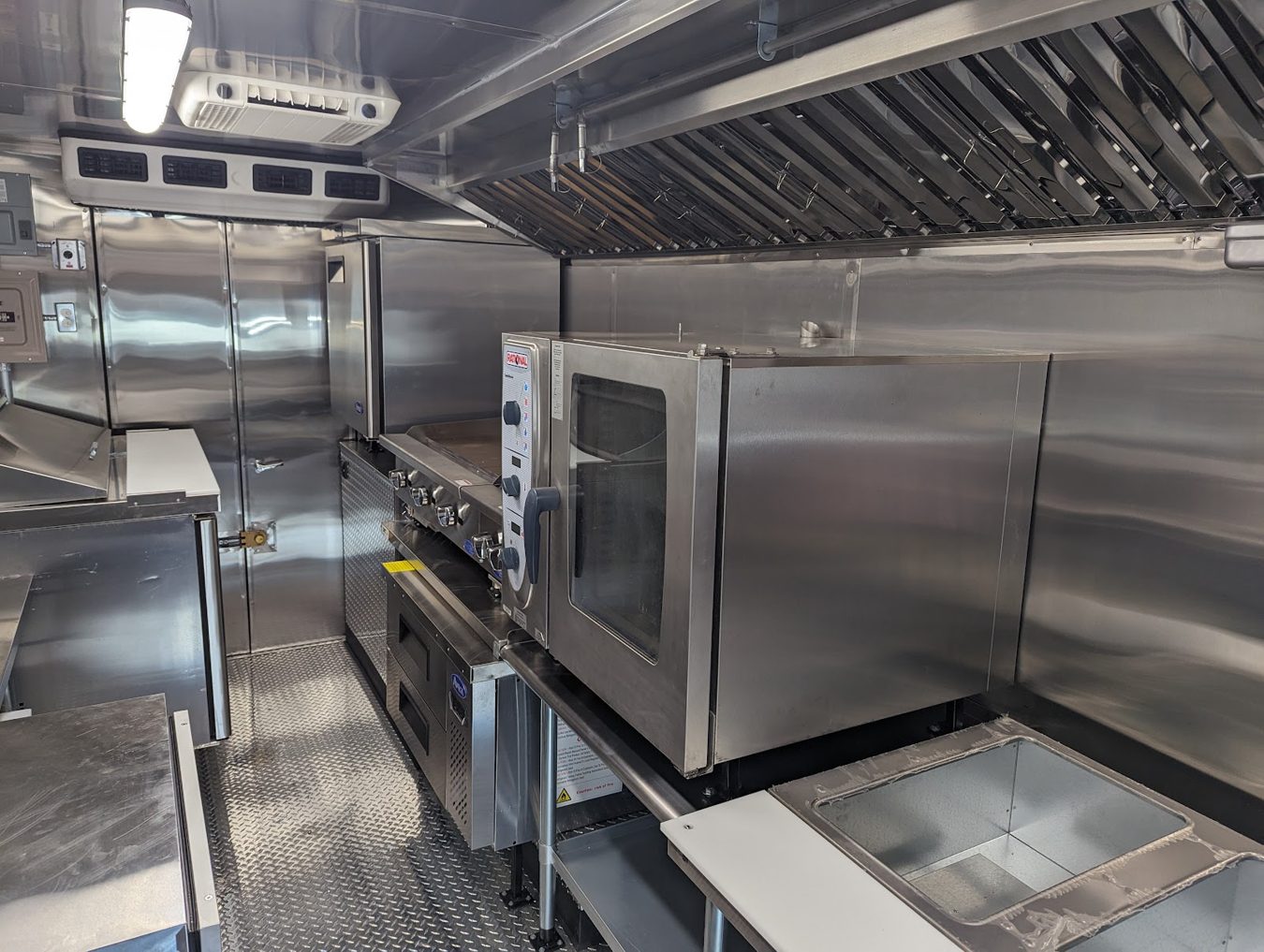
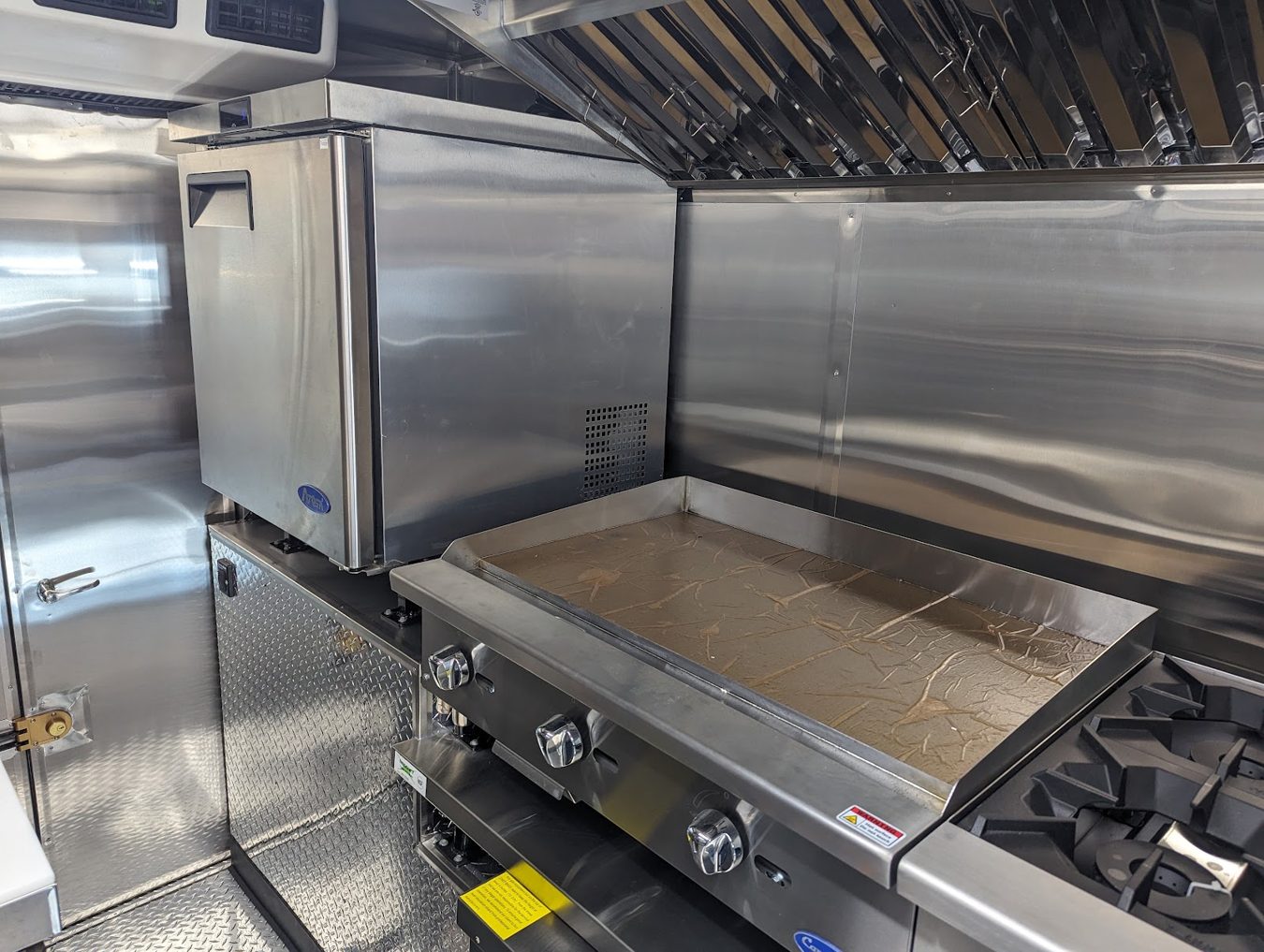
A combi oven steams, roasts and does both at once, so it cooks a hotel pan of rice, a tray of chicken thighs and a batch of roasted vegetables without a separate rice cooker, a separate oven and a separate steamer taking up wall space. In a sixteen foot body that matters. It sits under the hood on its own stand, with the thirty six inch griddle and the two burner stove beside it for the things that still need direct heat: searing, eggs for the breakfast bowls, and a stock pot for broth.
Holding is the other half. A three pan propane steam table keeps the hot components at serving temperature at the window, and a nine pan proofer and hot box behind the line holds the next batch of rice and protein so the steam table never runs empty mid rush. On an owner operated truck a hot box is a nice to have. On a truck that has to serve a shift change in twenty minutes it is the difference between a line that moves and a line that does not.
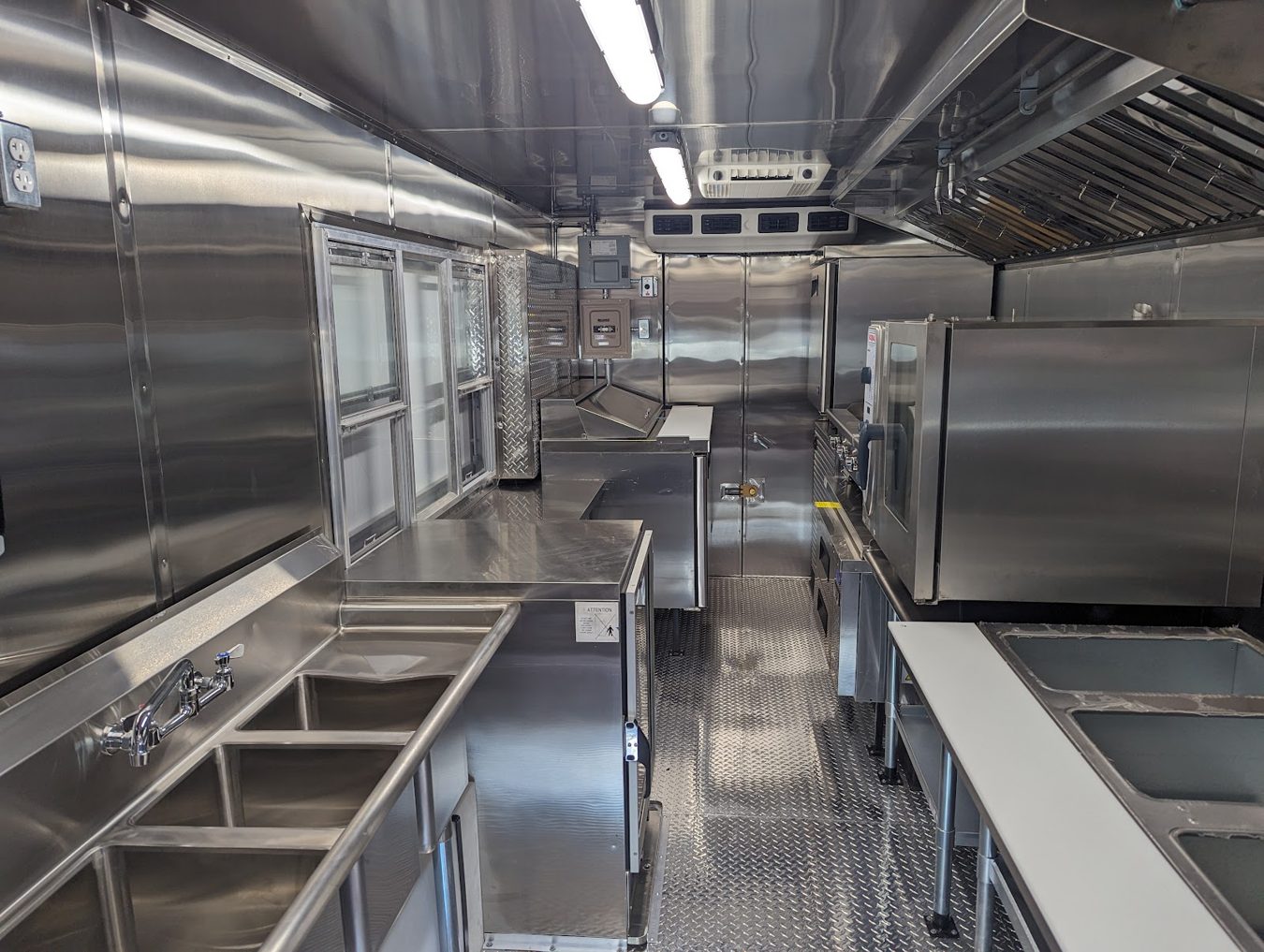
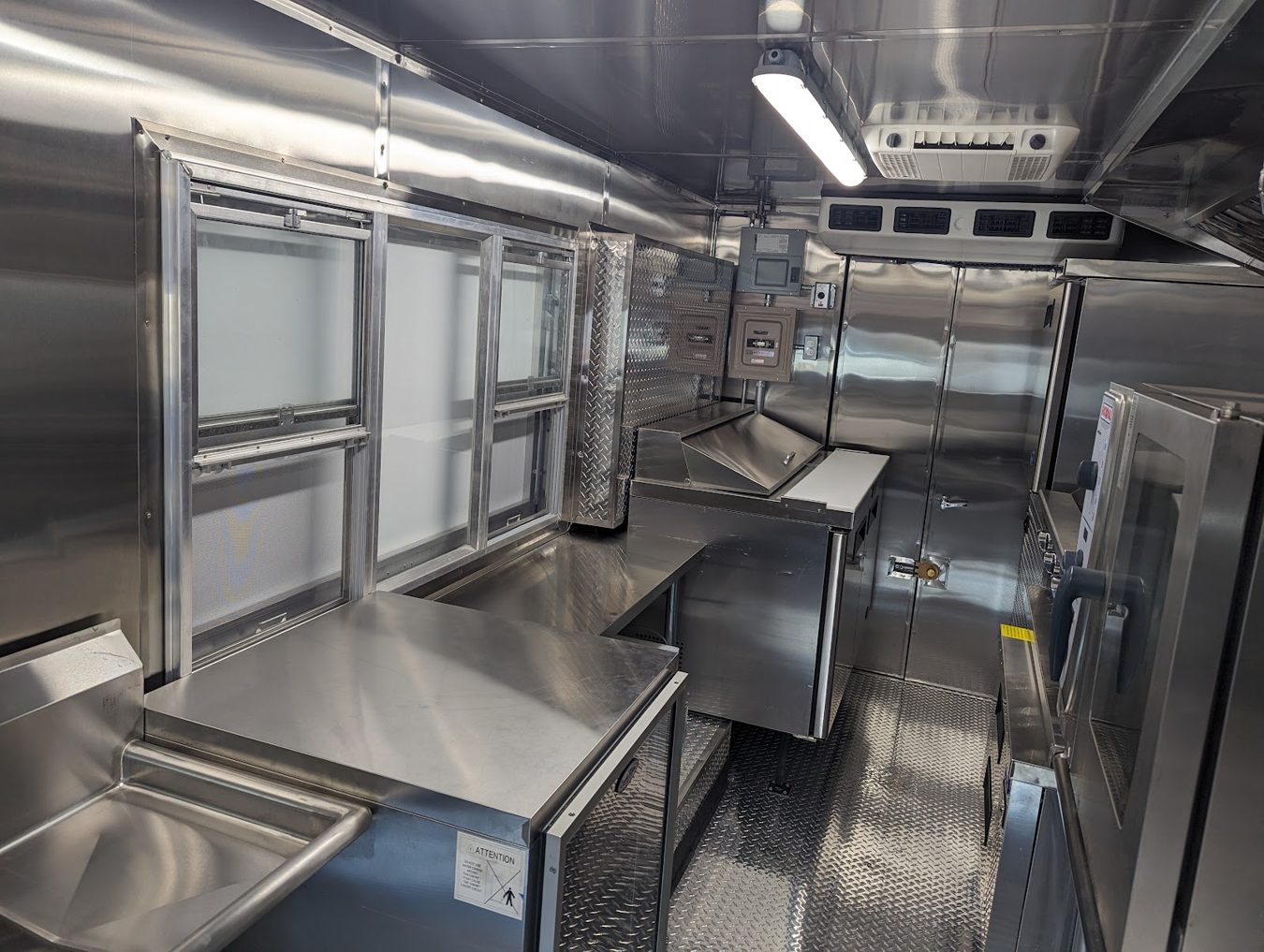
The cold side runs under the service window: a thirty six inch refrigerated sandwich prep table holding the toppings, sauces and salad components in pans at the top, with refrigerated storage underneath, and stainless work tables either side of it. Bowls are built facing the customer, which is how a bowl concept sells. A full height refrigerator and a freezer at the back of the kitchen hold the day’s stock, and a TV box above the window carries a digital menu, which a hospital operator can change from a laptop when the week’s bowls change.
What an institutional truck gets that a first truck often does not
Three things on this build are standard for us and still worth pointing out, because they are the things a health department and a hospital food safety team both look for.
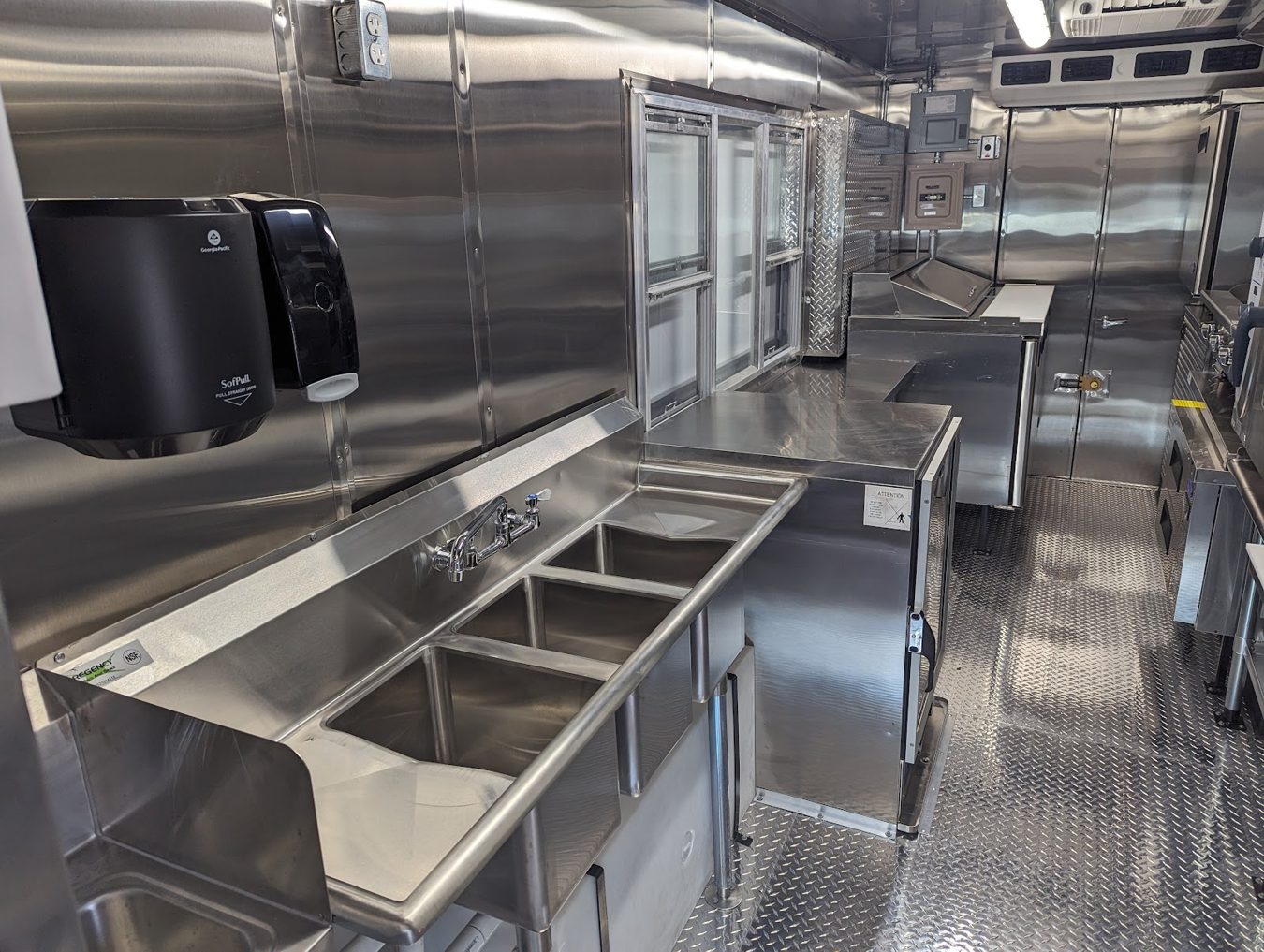
Sinks, all three of them. A three compartment sink with integral drainboards for wash, rinse and sanitize, a separate hand sink with its own hot and cold supply and a towel dispenser mounted on the wall beside it, and a mop sink, which most trucks skip and most inspectors notice. A food service contractor runs its trucks to the same sanitation standard as its hospital kitchen, and that standard includes somewhere to dump a mop bucket that is not the hand sink.
Stainless steel walls throughout rather than FRP. FRP is a perfectly good food safe wall and we use it on plenty of builds, but stainless takes a chemical sanitizer every night for years without clouding, and it is what a hospital kitchen is lined with. The floor is aluminum diamond plate.
A five foot service window with an awning door, self closing doors and a bug screen. The self closing part is what the health department wants to see: the kitchen is sealed when nobody is at the window. Lighting is LED inside and out, so the truck can serve a night shift in a hospital parking lot in January without a work light propped in the window.
Water, power and 6,100 feet
Water is thirty gallons fresh and forty gallons waste, both mounted under the truck with the fills and drains on the outside, and an eight gallon water heater feeding the three sinks. The waste tank is larger than the fresh tank, which Cheyenne Laramie County Public Health requires by at least fifteen percent and which we do on every build regardless, so the sinks never back up before the fresh water runs out.
Power is a Cummins generator, sized for everything on the truck running at once, which is also a published requirement of the county’s mobile unit rules and a practical one at Cheyenne’s elevation. The city sits at about 6,100 feet, and a generator loses roughly three percent of its rated output for every thousand feet above sea level, so a unit that is marginal in Denver is short in Cheyenne. The combi oven, the refrigeration, the hot box and the lights all run on it when the truck is away from shore power.
Cheyenne’s weather is the other design input. The January mean low is about 18 degrees, the city gets over sixty inches of snow in a normal year with the heaviest of it in March and April, and the wind averages twelve miles an hour across the year with a record gust of 89. A hospital truck does not get to park for the winter, so the water system is built to be drained and the window is built to latch open in a gust rather than slam.
Licensing a food truck in Cheyenne
Wyoming licenses most of its food trucks through the state Department of Agriculture, but Laramie County is one of six local jurisdictions that run their own program, so a truck based in Cheyenne deals with the county, the city and the fire department. Here is how it fits together as of this writing. Fees change, so confirm them before you budget.
Health: Cheyenne Laramie County Public Health
Environmental Health at Cheyenne Laramie County Public Health reviews the plans and inspects the unit. Plan review for a self contained mobile unit is $277 for a simple menu (two hours included) or $364 for a complex one that cools, reheats or cooks raw meat (three hours included), with additional time billed at $87 an hour, on the fee schedule effective July 2025. The application has to be in at least 30 days before construction starts or changes are made, with a menu, an operating plan, a floor plan, equipment spec sheets, cooling and reheating procedures and a food protection manager certificate. The food licence itself is $200 new and $100 to renew, which is set by state statute and paid at the opening inspection. Routine inspections run at least every six months.
The county’s rules are specific about the build: a water heater of at least fifteen gallons or an on demand unit, a waste tank at least fifteen percent larger than the fresh tank, a hand sink with hands free water at 100 degrees, a three compartment sink with drainboards, a Type I hood over grease producing equipment, a generator that can run everything at once, and no fryer outside the unit. A self contained unit that meets all of that can be licensed without a commissary; if one is used for extra storage, the truck has to report to it every 24 hours it operates.
The city
Cheyenne has no general business licence. It licenses food trucks specifically, under Chapter 8.40 of the municipal code, for $75 a year per truck or $50 for a fourteen day period, applied for through the City Clerk’s online portal. Before the clerk will issue it you need to have applied for the county health licence, hold a Wyoming sales tax licence ($60), and show proof of a Cheyenne Fire Rescue inspection. On public streets the code keeps trucks 100 feet from a restaurant entrance without written consent, 15 feet from hydrants and 10 feet from crosswalks and transit stops, and off the right of way between 3 and 5 in the morning. Downtown, a monthly on street food truck parking permit runs $60 through the police department’s parking office. On private property, including a hospital campus, you need the owner’s written consent and the rest is between you and them.
Fire
Cheyenne adopted the 2024 International Fire Code in February 2025. Under the 2024 code mobile food units fall under section 4106 and NFPA 96: a hood over the cook line, a suppression system with its manual pull between 42 and 48 inches off the floor, an annual leak check on the propane piping, and a Class K extinguisher for cooking oils. Cheyenne Fire Rescue does not publish a checklist or a fee; you call the administration office to book the inspection, and the City Clerk wants that inspection done before the food truck licence is issued.
Events
Fridays on the Plaza, the free summer concert series at the Depot Plaza, takes food trucks at $100 a week for an eleven week season from early June to mid August, with applications due at the end of March and a quiet generator required because the plaza offers one outlet. Temporary event licences from the county are $50 for up to fourteen consecutive days at one event. The county sales tax rate is five percent as of October 2026, after the previous sixth penny expired in the spring; voters approved a new sixth penny package in August 2026, so expect it to return to six percent at a future quarter.
Where a truck like this earns in Cheyenne
For an owner operator the Cheyenne numbers are these: about 66,500 people in the city and 103,000 in Laramie County, a median household income near $79,000, F.E. Warren Air Force Base and the state government as the two largest employers, a community college with about 6,200 students, and a hospital with more than 2,000 staff. Cheyenne Frontier Days drew 283,000 people across ten days in July 2026, and the Cheyenne Farmers Market reports over 30,000 visitors and $600,000 in vendor sales a season.
For a hospital the arithmetic is different, and it is worth spelling out because more institutions are doing this. A truck lets a food service team serve a campus of 2,000 employees without building a second cafeteria, reach clinics and offices across the city that will never justify their own kitchen, and show up at community events as the hospital rather than as a sponsor logo. Colleges have been doing the same thing with their dining contractors for a few years; Cheyenne Regional’s truck is the hospital version, and it is the first one we have built for a health system. If you run food service for a hospital, a campus or a base and you are weighing a truck against a satellite kitchen, our campus food truck page and institutional builds page cover the questions that come up.
What a build like this costs
Custom food trucks start at $55,000 and custom food trailers start at $40,000. A typical 16ft truck comes in around $72,000 and a 22ft around $110,000, so a sixteen foot body like this one sits at the lower end of the truck range before the equipment package is added.
What moves this one is the equipment and the finish rather than the size: a combi oven is the single most expensive appliance on the list, the nine pan proofer and hot box, the refrigerated prep table and the full height refrigerator and freezer are all catalogue items that add up, stainless walls throughout cost more than FRP, and a full wrap with a TV menu display is its own line. Three sinks, undermount tanks and a Cummins generator are standard on our builds.
Build time is about six weeks, and most builds are delivered 8 to 12 weeks after design approval. On an institutional build the design stage is the longer part, because the menu, the brand and the operating plan go through a committee rather than one owner, and it is worth giving that stage the time it needs.
Frequently asked questions
Can a hospital operate a food truck?
Yes. Cheyenne Regional Medical Center runs this one with its food and nutrition services partner, Sodexo. It is licensed like any other mobile food unit in Laramie County, through plan review and inspection with Cheyenne Laramie County Public Health, a Cheyenne food truck licence from the City Clerk and a fire inspection from Cheyenne Fire Rescue. The difference is who it serves: a hospital campus, its outlying clinics and offices, and the public at events, on a schedule the hospital controls.
What equipment does a bowl concept food truck need?
A combi oven does most of the work, because it steams rice and grains, roasts proteins and reheats batches in the same box. This truck pairs it with a thirty six inch griddle, a two burner stove, a three pan steam table, a nine pan proofer and hot box for holding, and a thirty six inch refrigerated prep table where the bowls are assembled. Cold storage is a full height refrigerator and a freezer.
Who licenses a food truck in Cheyenne, Wyoming?
Three agencies. Cheyenne Laramie County Public Health reviews the plans and licenses the unit, because Laramie County is one of six local health jurisdictions in Wyoming that handle food licensing instead of the state. The City of Cheyenne issues a food truck licence through the City Clerk, which requires the health licence application, a Wyoming sales tax licence and proof of a fire inspection first. Cheyenne Fire Rescue does that inspection.
How much does it cost to license a food truck in Cheyenne?
As of the health department’s July 2025 fee schedule, plan review for a self contained mobile unit is $277 for a simple menu or $364 for a complex one, with extra hours billed at $87. The food licence itself is $200 new and $100 to renew, set by state statute. The City of Cheyenne food truck licence is $75 a year. A Wyoming sales tax licence is $60. Confirm all of these with the offices before you budget, because fee schedules change.
Does a food truck in Cheyenne need a commissary?
Not if it is self contained. Cheyenne Laramie County Public Health licenses self contained mobile units that carry all of their own equipment, water and waste, and only require a servicing location for filling and dumping. A commissary agreement can be added for extra storage, and if one is used the unit has to report to it every 24 hours during operation. This truck carries its own fresh and waste tanks, water heater, three compartment sink, hand sink and mop sink, so it qualifies on its own.
What does the fire department check on a food truck in Cheyenne?
Cheyenne adopted the 2024 International Fire Code in early 2025. For a mobile food unit that means the hood and its suppression system, the propane system and its leak test, the extinguishers, and how the fuel is stored and secured. The city does not publish a checklist or a fee, so the practical step is to call Cheyenne Fire Rescue to book the inspection before the City Clerk application, since the clerk wants proof of it.
How big is the Cheyenne food truck market?
Cheyenne has about 66,500 people and Laramie County about 103,000, with a median household income near $79,000. The city sits at 6,100 feet, with an F.E. Warren Air Force Base workforce, the state government, a community college, and a regional hospital with more than 2,000 employees. Cheyenne Frontier Days drew 283,000 people over ten days in July 2026, and the city runs Fridays on the Plaza through the summer with a $100 a week food vendor fee.
How long does a build like this take?
About six weeks of build time, and most builds are delivered 8 to 12 weeks after design approval. On an institutional build the drawing stage takes longer than usual, because the menu, the branding and the operating plan all go through more than one person, and that is time well spent.
More reading
- Custom food trucks in Cheyenne, Wyoming
- Food truck permits in Wyoming
- Food trucks for schools and campuses
- Corporate and institutional food trucks
- Running a food truck at high altitude
- Sourdough donut trailer for Casper, Wyoming
- Jerk chicken food truck for Laramie, Wyoming
If you run food service for a hospital, a campus or a base and want to talk through a truck, call or text and we will go through the route, the menu and the equipment before anything gets drawn. We have built around 500 food trucks, trailers, bus conversions and van conversions, and we deliver across Wyoming and Colorado.
Jacob Varghese
Mile High Foodtrucks
720-209-2653
Recent Comments