
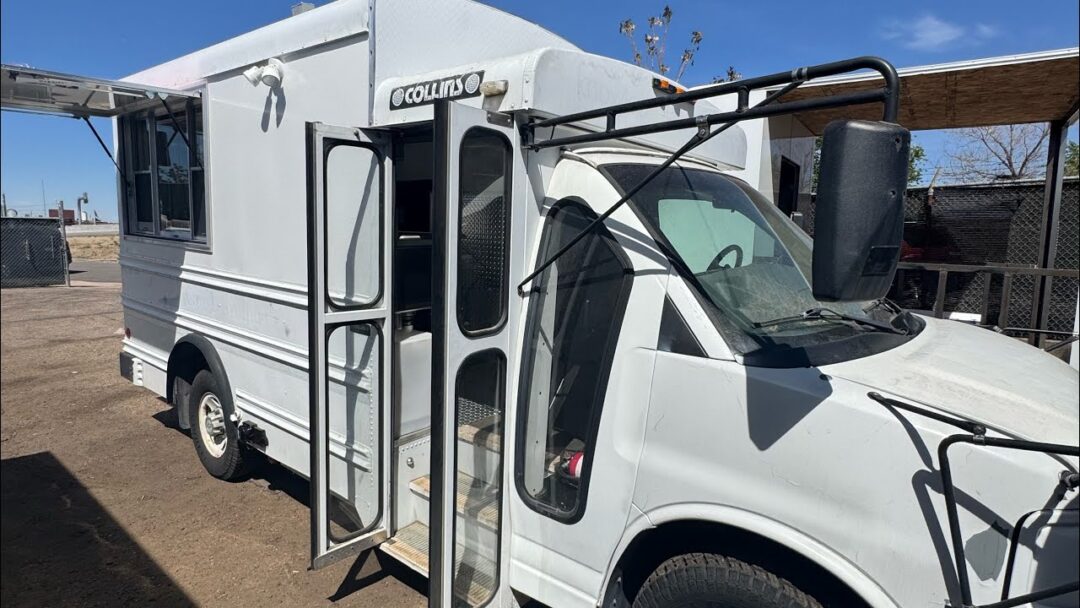
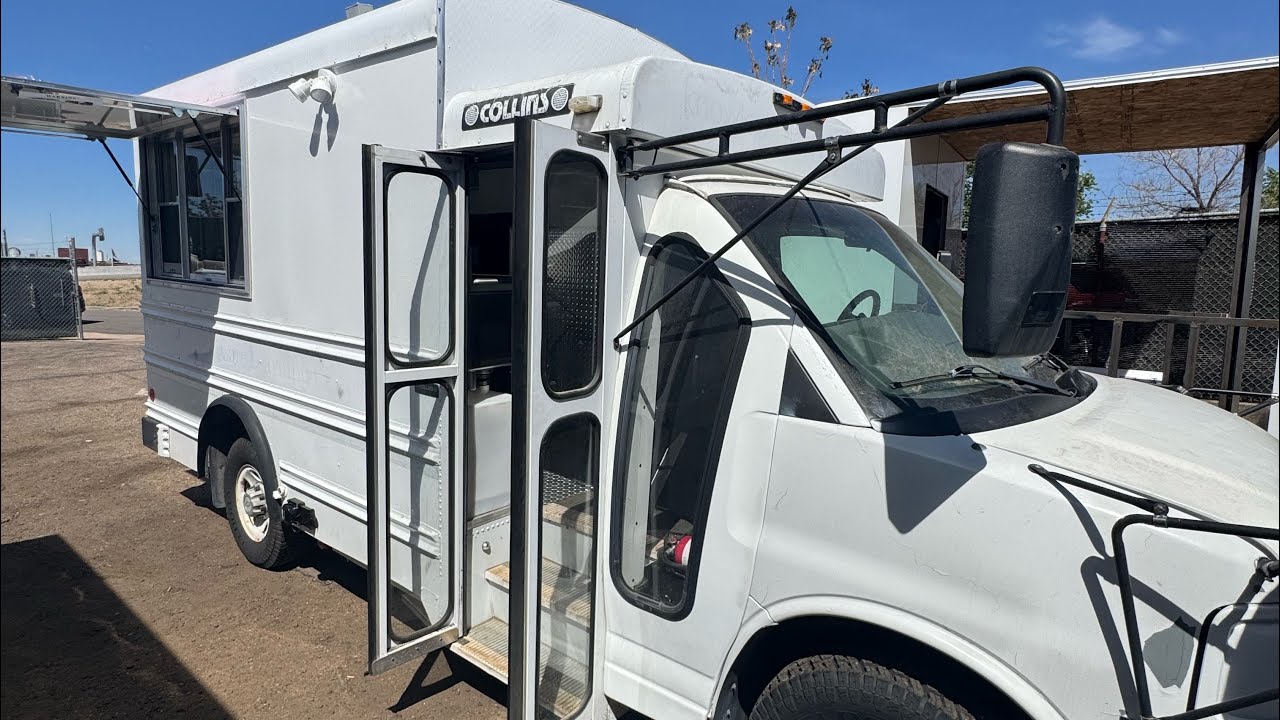
Some of our favorite projects start with a vehicle that was never meant to serve food. This one rolled into our Denver shop as a 14ft Collins shuttle bus sitting on a Chevy chassis. The owner had a clear plan for it: a mobile espresso bar that could work the busy streets and trailheads around Estes Park.
Estes Park is a town we know well. It sits at roughly 7,500 feet, right at the doorstep of Rocky Mountain National Park, and millions of park visitors pass through it every year. Most of that traffic lands in the summer and early fall. A coffee business up there gets a short, intense season, cold mornings, and lines of people who want a good drink before they head into the park.
So the owner did not need a showpiece. They needed a dependable coffee bar on wheels that could handle altitude, mountain weather, and a crowd that shows up all at once.
What they needed the truck to do
Before we touched a single panel, we sat down and worked out what a normal service day would look like for this owner. A few needs kept coming up.
Pull espresso all day without running out of power. The whole menu runs through one commercial espresso machine, and that machine is hungry for electricity. The truck had to carry a power source big enough for it plus everything else on board.
Keep plenty of milk and cold items close. Running back to restock during a summer weekend means lost sales, so cold storage had to be generous.
Give one barista room to move. A shuttle bus body is wider and taller inside than a lot of truck boxes, and we wanted to use every bit of that for the person working the counter.
Pass inspection. Washing stations, water capacity, and wall and floor surfaces all had to line up with what health and fire officials look for in a mobile food unit.
How we laid it out
A bus conversion is not like building in an empty box. The shell, the frame, and the factory doors are already there, so every choice about where equipment goes has to respect that structure. We started by taking the passenger area down to bare metal. The seats came out, the factory rubber flooring came up, and the subfloor was cleaned right down to the steel.
From there we rebuilt it as a working kitchen. The walls are lined with FRP, the same fiberglass panel you find in restaurant kitchens. It is smooth, it does not soak up moisture, and it wipes clean in a few minutes. That matters in a town that swings from hot July afternoons to single digit January nights. The floor is aluminum diamond plate, which keeps its grip when wet and shrugs off dropped pitchers and heavy foot traffic.
Now picture walking the line the way the barista does during a rush. The counter follows the order a drink is actually made in: beans first, then the grinder, then the espresso machine, then the milk station, and finally the pickup point. Nobody has to double back or reach across a coworker.
The centerpiece is a Rancilio commercial espresso machine, set right at the service window. That spot lets the barista pull shots and talk with customers at the same time, which keeps the line friendly and moving. Close by sits a full size refrigerator that holds the milk, cream, and cold brew, plus whatever food the owner decides to sell.
The service window itself is five feet wide with an awning door that lifts up and out. Once it is open, it throws shade and cover over the people waiting at the counter, which is handy when an afternoon storm rolls over the mountains. The window has self closing doors and a bug screen, so the barista can turn away without worrying about flies wandering in on a warm evening. LED lights run the length of the interior for those dark early starts.
Key systems
Power
We put a 12kW generator on this bus. That number came straight from the altitude. Combustion engines give up roughly 3 percent of their rated output for each 1,000 feet of elevation, so a 12kW unit at sea level delivers something closer to 9.5 to 10kW up in Estes Park. Choosing a larger generator meant the espresso machine, refrigerator, water heater, and lights still have room to spare once that loss is counted.
That margin also helps the generator itself. A unit that is not pinned at full output all day tends to run quieter, use less fuel, and last longer.
Water
Coffee uses a surprising amount of water between brewing, rinsing pitchers, washing hands, and cleanup. This truck carries a 30 gallon fresh water tank and a 40 gallon grey water tank. Both hang under the bus, tucked along the frame, which is one of the real perks of starting with a shuttle chassis. On many trailers those tanks would take up floor space inside.
Inside there is a dedicated hand wash sink and a separate three compartment sink for washing, rinsing, and sanitizing tools. An 8 gallon water heater supplies hot water to both sinks and to the espresso machine.
Getting it licensed in Estes Park
We always tell Estes Park clients to learn the approval steps before the build starts, because a truck designed to pass the first time saves weeks during a short season. Here is how it breaks down.
County food license. Estes Park falls under Larimer County for food safety. The Larimer County Department of Health and Environment reviews plans, issues the Retail Food Establishment License for a mobile unit, and inspects it. The license is tied to the menu, equipment, and water setup the county approved, so the truck has to match what was submitted.
A commissary. Nearly every mobile food business in Colorado works out of a licensed commercial kitchen for prep, fresh water refills, grey water dumping, and storage. Plan on lining one up early.
Town and fire approvals. If you vend inside town limits, you need a current business license from the Town of Estes Park and an operating permit from the Estes Valley Fire Protection District. Mobile vendors are allowed in the A, CD, CO, CH, and I1 zoning districts.
The statewide license. Colorado’s HB25-1295 took effect January 1, 2026. A state mobile food license from the Colorado Department of Public Health and Environment now works in every local jurisdiction except Denver, and a Denver license is honored across the state. You give a new jurisdiction 14 days notice before you operate there.
Rules change, so check the current requirements with the county, the town, and the fire district before you lock in your plan. We will make sure the build lines up with what they ask for.
If you are planning something similar
Size your generator for the elevation, not the brochure. If you are serving above 7,000 feet, count on losing a real slice of rated power. This build planned for that from day one.
Let the drink set the layout. Lining the counter up in the order a coffee is made is a simple idea, and it does more for speed than almost anything else we can add.
A shuttle bus has hidden space. Mounting the water tanks below the floor kept the inside open for the barista. If you have a bus or are shopping for one, that undercarriage room is worth a lot.
Build for the weather you will actually see. FRP walls, a slip resistant floor, and a window awning are not glamorous, but they keep a mountain truck working through heat, cold, and summer storms.
Want to see more of our work? Browse the Mile High Food Trucks gallery, or read more about how we approach mountain town projects on our Estes Park food truck builder page. If your route also runs down the canyon, our Northern Colorado food truck builder page covers the wider region.
Questions we get about this build
What vehicle did this coffee truck start as?
It started as a 14ft Collins shuttle bus on a Chevy chassis. We stripped the passenger area to bare metal and rebuilt it as a mobile espresso bar.
Why does this truck use a 12kW generator?
Generators lose about 3 percent of their rated power for every 1,000 feet of elevation. At roughly 7,500 feet in Estes Park, a 12kW unit produces closer to 9.5 to 10kW, which still leaves headroom for the espresso machine, refrigerator, water heater, and lighting.
How much water does the truck carry?
It has a 30 gallon fresh water tank and a 40 gallon grey water tank, both mounted under the bus. An 8 gallon water heater feeds the hand wash sink, the three compartment sink, and the espresso machine.
What permits does a food truck need in Estes Park?
Plan on a Retail Food Establishment License from the Larimer County Department of Health and Environment and a commissary. Inside town limits you also need a Town of Estes Park business license and an Estes Valley Fire Protection District operating permit. Confirm current requirements with each office before you build.
Can a shuttle bus really work as a food truck?
Yes. A shuttle bus gives you a wide stance, a low center of gravity, and good interior height, plus room under the frame for water tanks. You are working inside an existing shell, so the layout takes careful planning, but this build shows how well it can turn out.
Thinking about a coffee truck, a bus conversion, or another mobile kitchen for Estes Park or anywhere along the Front Range? Request a quote or call us at 720-209-2653. You are always welcome to visit the shop at 3895 E 45th Ave Suite E in Denver and see a build in progress.
Planning a build like this?
Tell us what you want to cook and where you will park. We will send a layout and a written quote.
Get a free quoteCall 720-209-2653
Recent Comments