
Mile High RV Works runs out of our Denver-area shop, so for Denver owners we are the shortest tow in the metro. Most service jobs go on the schedule the same week you call. We work on Class A, B, and C motorhomes, fifth wheels, travel trailers, toy haulers, Sprinter and Transit conversions, and almost anything else that rolls. Whether the rig is a 40-foot diesel pusher coming home from Moab covered in road grime or a 19-foot Class B that needs the roof resealed before hail season, you bring it in to one shop and we handle every system.
The Denver metro RV scene is unusual. The city sits at 5,280 feet, in the middle of “Hail Alley,” at the foot of the Continental Divide. Owners here put more miles per year on rough roads, deal with more hail damage, and replace more roof sealant from UV than owners almost anywhere else in the country. That shapes what we see come through the bays.
How Denver owners actually use their RVs
Most Denver customers use their rigs from May through October on a mix of mountain trips and desert runs. The Arkansas River corridor through Buena Vista and Salida runs strong for whitewater season from mid-May through Labor Day, with Browns Canyon and Numbers as the main draws (River Runners). Rocky Mountain National Park stays busy all summer. Moraine Park Campground takes rigs up to 40 feet but only has electric in B and C loops, no water or sewer hookups, and runs a seven-night summer cap (NPS). Crested Butte during the mid-July wildflower festival is roughly five hours from Denver and stays popular all summer (Gunnison-Crested Butte tourism).
Longer trips define the Denver fleet. We see rigs in for service after Moab spring breaks, Glenwood Springs winter weekends, Sand Hollow in Hurricane UT, Yellowstone and the Tetons in July and August, Sturgis runs in early August, and Baja Mexico winter migrations. Those trips beat up a rig differently than weekend Front Range camping. Long highway miles take a toll on bearings, brakes, and roof seams. Washboard Forest Service roads loosen cabinetry and crack grey-tank straps. Salt and magnesium chloride from I-70 winter driving rots brake lines under the chassis.
The Denver van scene deserves its own paragraph. The metro is one of the largest custom van conversion clusters in the country, anchored by Contravans in Arvada, Geotrek Vans, DM Vans, Colorado Adventure Vans, and Rossmonster, with The Vansmith and Titan Vans up in Boulder. Most builds sit on Mercedes Sprinter, with Ford Transit and Ram Promaster filling out the rest. That changes the repair mix because van builds have different propane configurations, different battery setups (most are lithium with a high-amp inverter and DC-DC charger), and use roof systems that diverge significantly from a traditional motorhome. We handle van service alongside the traditional RV work.
Climate at 5,280 feet and what it does to your RV
Denver gets a punishing mix of weather. UV at altitude runs about 25 percent higher than at sea level, which means chalking and cracking that takes 12 years to ruin a TPO membrane at sea level can show up in 7 or 8 here. Dicor lap sealant on the seams around vents, skylights, A/C shrouds, and antennas dries out, shrinks, and cracks. Annual reseal is not optional in this climate; it is what stands between you and a slow roof leak that ruins floor and cabinets.
Hail season runs May 15 to June 25 at its peak, with a second bump into July, per the NWS Boulder office. The National Severe Storms Lab ranks the Denver-Boulder-Cheyenne triangle as the highest US frequency for damaging hail. We see roof skin (TPO and EPDM) tear and pit, skylights crack, A/C shrouds shatter, max-air vent covers split, and front fiberglass caps dent badly enough that the gel coat crazes.
Winter brings hard freezes November through March. Water lines on un-winterized rigs split routinely. We see cracked pumps, ruined water heaters, and slide seals that age fast from the freeze-thaw cycling. Winterization season in Denver runs through late October. We also see corrosion from road salt and magnesium chloride on chassis after winter mountain driving. Wash the undercarriage after every winter mountain trip; it adds years to brake lines and frame steel.
Wind matters too. The chinook events that funnel down off the Front Range produce gusts over 80 mph; the NWS Boulder office records them every winter. Awnings tear out of their tracks, slide toppers rip, and roof seams pull loose. We keep a stock of standard awning fabric sizes for fast replacement during peak storm cleanup season.
What we repair
We are a full-service shop. The list:
- Roof repair and resealing (TPO, EPDM, fiberglass)
- Hail damage repair: skylights, vents, shrouds, full roof replacement
- Slide-out service: seal replacement, adjustment, motor and gear rack repair, water-damage rebuilds
- Awning fabric, motor, and arm replacement
- Plumbing: freshwater, grey, and black tanks, pumps, faucets, water heaters
- Electrical: 12V and 120V diagnosis, inverter and converter work, lithium upgrades, solar
- Refrigerator service (absorption Norcold/Dometic and 12V compressor)
- Furnace, A/C, and water-heater repair
- Generator service for Onan and Cummins units
- Appliance repair (range, oven, microwave)
- Hitch and wiring installation
- Pre-trip and pre-sale inspections
- Winterization and de-winterization
- Rodent damage remediation
- Mobile service at major storage yards
Every job starts with a documented inspection. You get a written quote before parts get ordered. No surprise add-ons.
Storage in Denver: the rules and where owners actually park
Denver city code is strict. Municode 54-485 caps residential-zone right-of-way parking at 22 feet and limits it to 24 hours. Elsewhere in the city the 72-hour rule applies, and after 72 hours the vehicle must move 100 feet or more. A 2023 ordinance update added a 2-hour limit on large vehicles citywide unless the rig is actively serving the area, with a 700-foot move requirement after the 2 hours expires (Denver Parking Ordinances).
HOAs across the metro enforce stricter rules than the cities themselves. Aurora, Lakewood, Centennial, and Highlands Ranch HOAs typically ban any visible driveway storage of RVs and trailers. The Colorado HOA Information and Resource Center inside DORA can confirm specifics for a given community.
The practical result: most Denver-metro owners use paid storage. Open-lot outdoor storage runs roughly $50 to $130 per month per Blue Compass RV and Neighbor.com. Covered storage runs $80 to $150 and indoor climate-controlled runs $250 to $450. Named facilities cluster in Henderson, Brighton, Commerce City, Aurora, and along E-470. If you store at one of the major yards, we run mobile service days at most of them. Ask when you call and we will schedule a visit.
Real pricing in the Denver metro
These ranges reflect what 2025 and 2026 Denver-area shops actually quote on common work. Final cost depends on the rig, the parts, and what we find on inspection.
- Annual roof reseal: $400 to $900
- Slide-out adjustment and seal service: $350 to $1,200
- Slide-out repair with water damage: $1,500 to $4,000+
- Awning fabric replacement: $600 to $1,400
- Hail roof spot repair: $300 to $1,500
- Full TPO or EPDM roof replacement: $3,000 to $8,000 (Fiberglass Worx, Ziollo)
- Winterization: $90 to $180
- De-winterize and sanitize: $150 to $250
- Generator service (Onan-style): $250 to $450 for standard service
- Furnace or water-heater repair: $150 to $600 plus parts
- Rodent remediation and wiring harness repair: $400 to $2,500
For the full repair-by-repair breakdown, see our 2026 RV repair cost guide.
Other Denver-area shops worth knowing
If we cannot fit your rig in this week and you need it sooner, these shops do good work in the metro. Not paid placements, just being honest about the landscape.
- Transwest Truck Trailer RV, Frederick, 7550 E I-25 Frontage Rd, (303) 684-3400. Fifteen service bays, certified for Newmar, Winnebago, Tiffin. Mobile service across CO, WY, and UT (transwest.com/rv).
- Windish RV Center, Lakewood, 11225 W 6th Ave, (303) 274-9009. Twelve oversized bays, body shop, hitches and wiring (windishrv.com).
- Camping World, Wheat Ridge, 9870 W 48th Ave. Multi-brand warranty work and recalls.
- Fiberglass Worx for specialty hail and roof work along the Front Range (fiberglassworx.com).
Frequently asked questions
How much does RV hail damage repair cost in Denver?
Spot work to patch a damaged section of roof and replace a couple of vents runs $300 to $1,500. Moderate damage covering most of the roof with multiple components affected runs $3,000 to $8,000 for a full roof replacement plus skylights, vents, and A/C shrouds. Severe damage that includes sub-roof rot or fiberglass cap dents pushes past $10,000 and takes several weeks. Always file an insurance claim before scheduling; many comprehensive policies cover hail in full minus deductible.
Can I park my RV in my driveway in Denver?
The city allows it within length and time limits per Municode 54-485, but most HOAs ban it outright. If you live in an HOA neighborhood in Aurora, Highlands Ranch, Centennial, or Lakewood, confirm your covenants before assuming you can leave a rig at home. Paid off-site storage is what most metro owners end up using.
When should I winterize my RV in Colorado?
Get the rig winterized by mid to late October. Hard freezes can land any time after that, and a single hard freeze on un-winterized lines costs more in repair than ten years of fall winterization service. We book up fast in October. Schedule by mid-September if possible.
How long does an RV slide-out repair take?
Seal service and minor adjustments are a one-day job. If the slide has water damage in the floor or wall, expect 1 to 3 weeks once parts are ordered. Slide motors and gear-rack issues vary; typical turnaround once we have the part is 3 to 5 business days.
Do you do mobile RV service at Denver storage yards?
Yes, for most of the major storage yards along E-470 and through Henderson, Brighton, Commerce City, and Aurora. Some work (roof replacement, slide rebuilds, generator drop) has to happen at the shop, but routine service, winterization, awning fabric, and most appliance work happen at your storage spot. Call to schedule.
Get your RV scheduled
The fastest way to get on the schedule is to call. We give a real timeline before parts get ordered and document every inspection. If you are between trips and not sure what the rig needs, book a deep inspection and we will tell you straight.
Recent Denver area repair
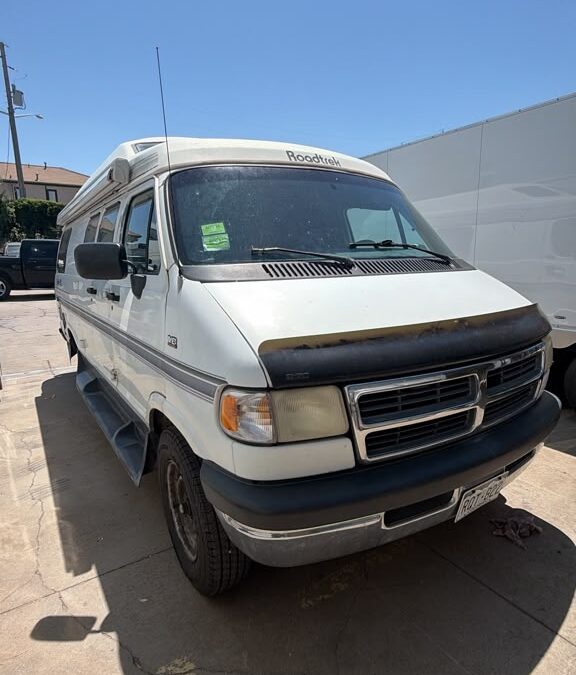
See a recent job from the bench: our full plumbing rebuild on a Roadtrek 190 Popular, from leaking everywhere to pressure tested dry, for $1,320 including tax.
Recent Comments