
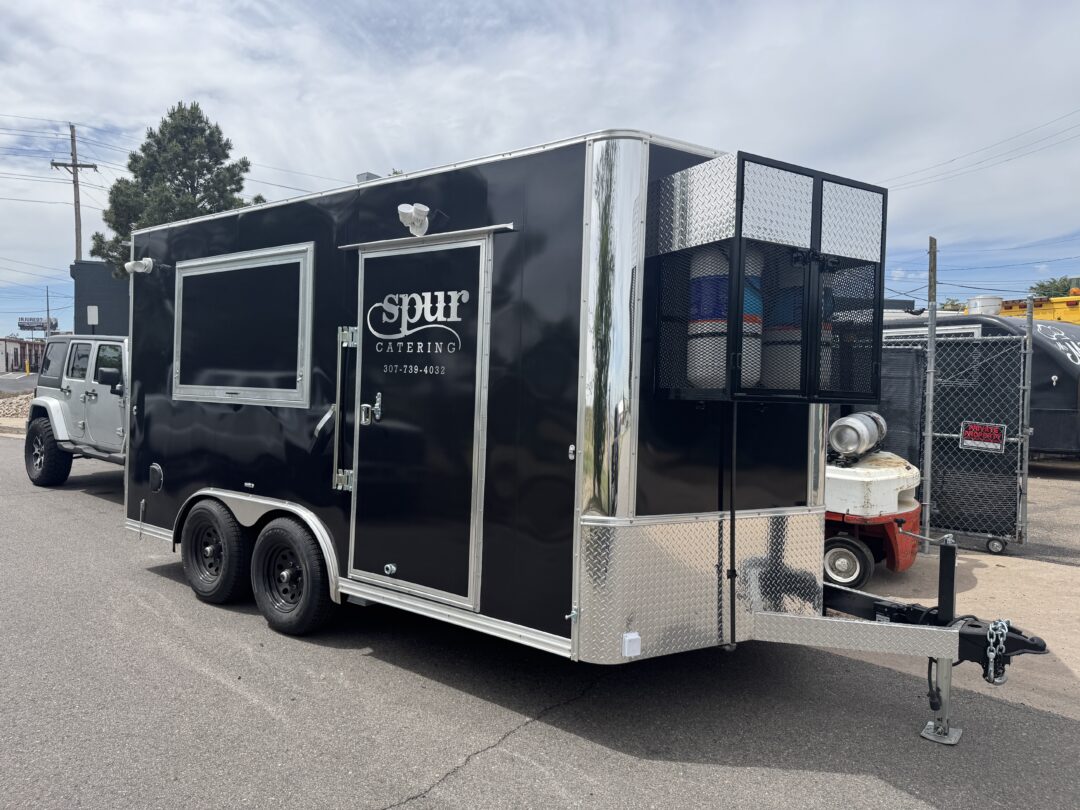
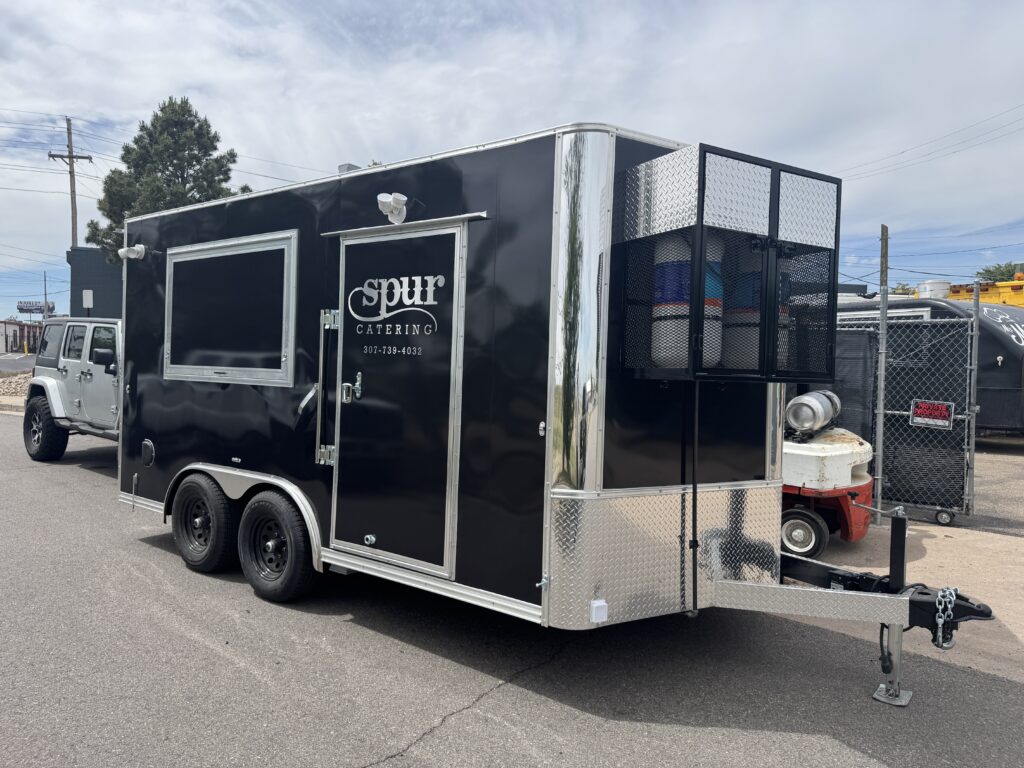
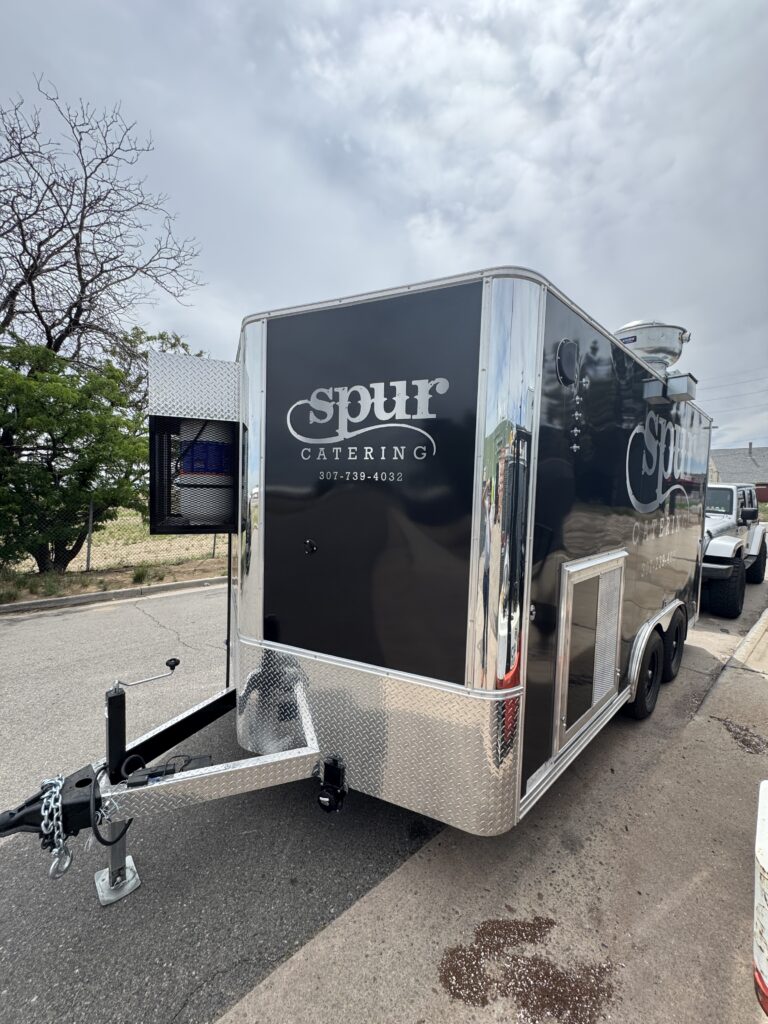
Most food trailers are built for a summer season. This one was built to work when the mountain is cold. It is a 14ft food trailer we finished for Spur Catering, headed to Jackson Hole, Wyoming, to serve at a Teton-area ski resort, and the whole build is set up to put out hot, fast food through a Jackson winter and a short, busy summer alike. The piece that makes that possible is a diesel heater, and it changes what this trailer can do compared to a standard build.
Jackson Hole is a serious market with serious operating conditions. It sits above 6,200 feet, the winters run well below zero, and it draws millions of visitors a year to one of the wealthiest communities in the country. A trailer that can hold up here has to be built for the cold and the altitude from the start. Here is how we set this one up, and what it takes to run a food trailer in Teton County.
A diesel heater, and why it matters on a ski-slope trailer
The diesel heater is the defining choice on this build. A lot of trailers heat the crew space with a propane furnace, which works, but it burns through the same propane you are cooking with and means more tank swaps in the middle of a cold shift. A diesel heater draws from its own fuel supply instead, vents combustion outside, runs efficiently at altitude, and puts out steady dry heat for hours. On a mountain in January, that is the difference between a crew that can work a full day and one that is fighting the cold and running out of propane. It is the right call for an all-season Wyoming trailer, and it is why we spec’d it.
Cold changes the plumbing too. Jackson winters will freeze an unprotected water line solid, so a trailer here needs insulated, freeze-protected tanks and lines to keep running when it is below zero outside. We build for that so a resort shift does not end with a frozen supply line.
The cook line: built for fast mountain food
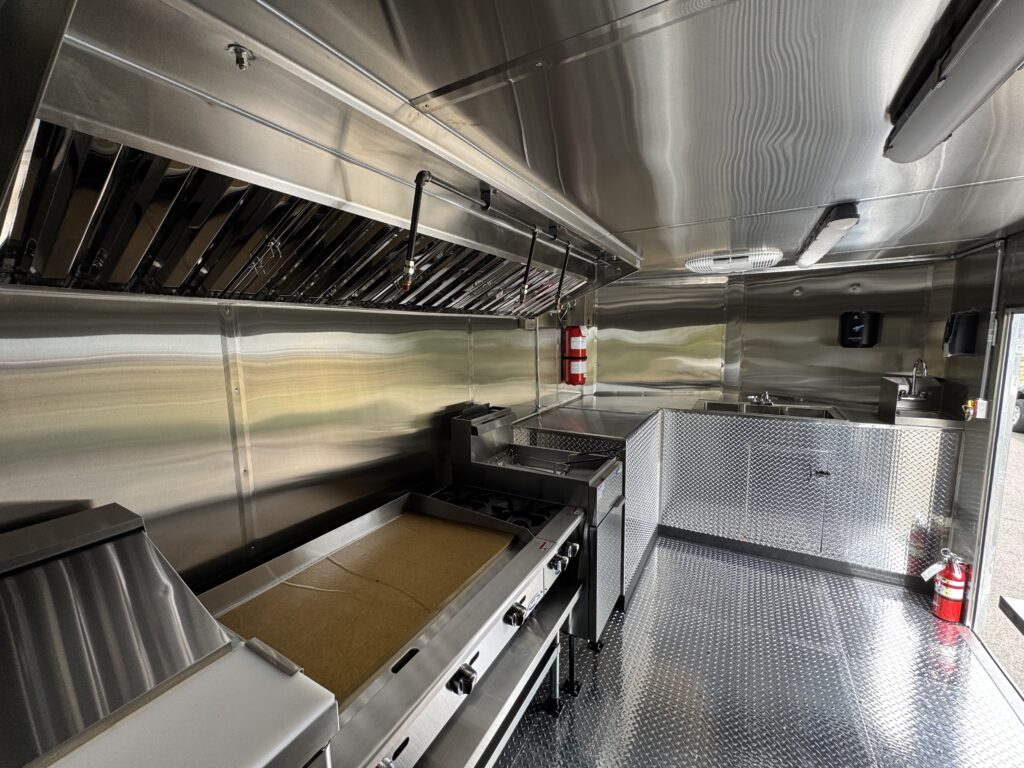
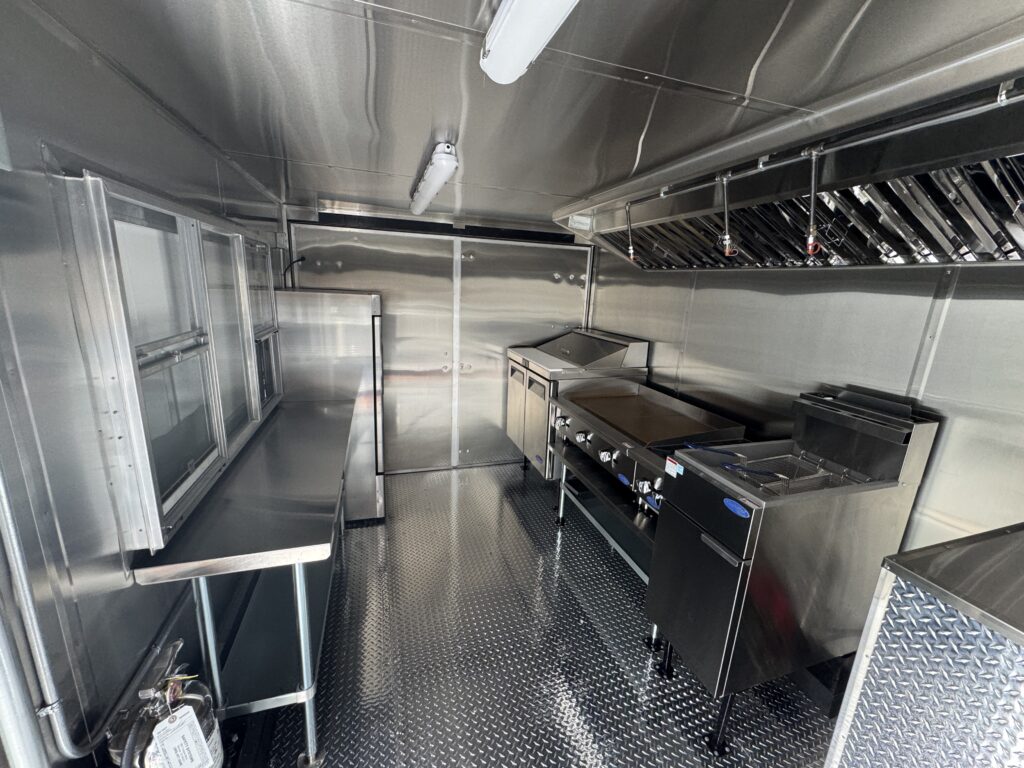
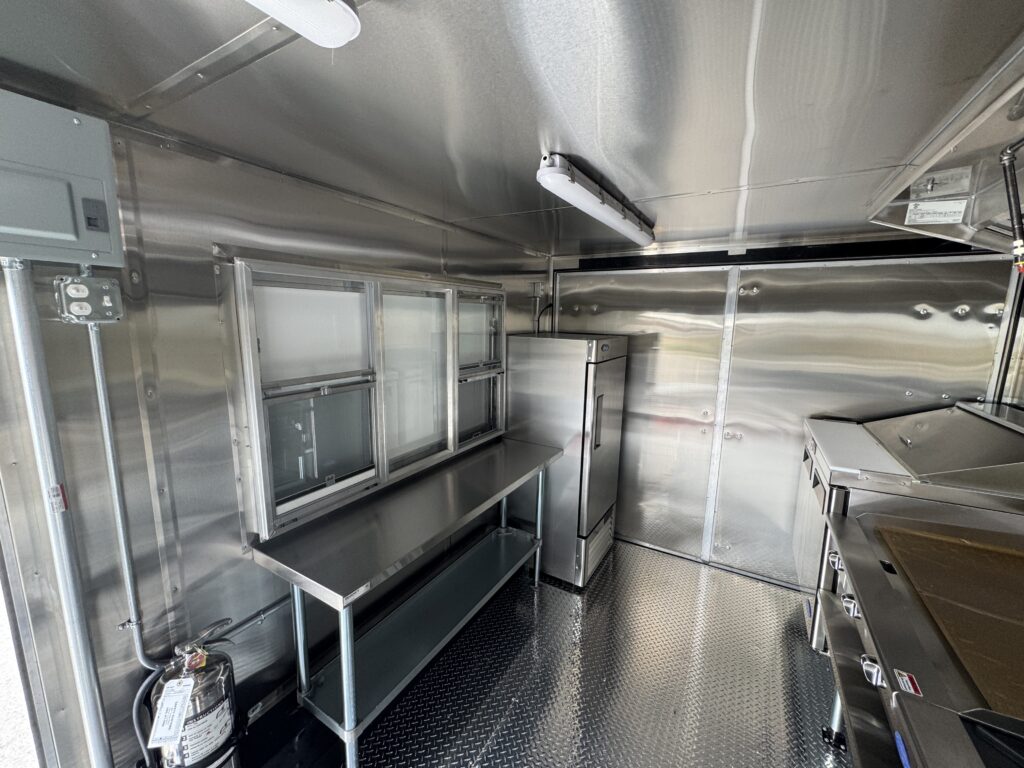
The cook line is set up for high-throughput comfort food, the kind that sells at a base area or a busy event. It runs a 48-inch LP griddle for burgers, sandwiches, and breakfast, a 40-pound fryer for fries and quick sides, and a two-burner stove for sauces and everything else. Cold storage is a 27-inch refrigerated sandwich prep table right at the line plus a reach-in refrigerator for backstock, so the cook can plate a rush without leaving the station. The interior is all stainless steel, cooking wall and every other wall, over an aluminum diamond plate floor, with LED lighting inside and out.
The whole line runs off a 12kW generator, sized to carry the griddle, fryer, refrigeration, and lighting at once without straining, which matters at a remote resort site with no shore power.
How a food trailer passes inspection in Jackson
Wyoming licensing is not the same everywhere in the state, and Teton County is a specific case worth knowing. Most of Wyoming licenses mobile food through the state Department of Agriculture Consumer Health Services, but Teton County is one of a small handful of counties with its own delegated health department. In Jackson, your trailer is licensed and inspected by the Teton County Health Department, not the state program, and a unit operating inside town limits also answers to the Town of Jackson. Call the Teton County Health Department at 307-733-6401 to get the current mobile food unit guidance and fee schedule, and confirm the commissary requirement, since those local amounts are set locally.
Fire is enforced by Jackson Hole Fire and EMS under the 2021 International Fire Code, which has a specific section for mobile food preparation vehicles. For a trailer with a griddle and fryer, expect to carry a fire suppression system with professional service on a semiannual cycle, both a Class K extinguisher for cooking oils and an ABC extinguisher, listed LP gas alarms, and hydrostatically tested and date-stamped propane tanks. A frying trailer that is not built to this standard gets sent back, so we build it in from the start. Confirm any diesel heater fuel-storage details with Jackson Hole Fire and EMS at 307-733-4732.
Water, power, and building for 6,200 feet
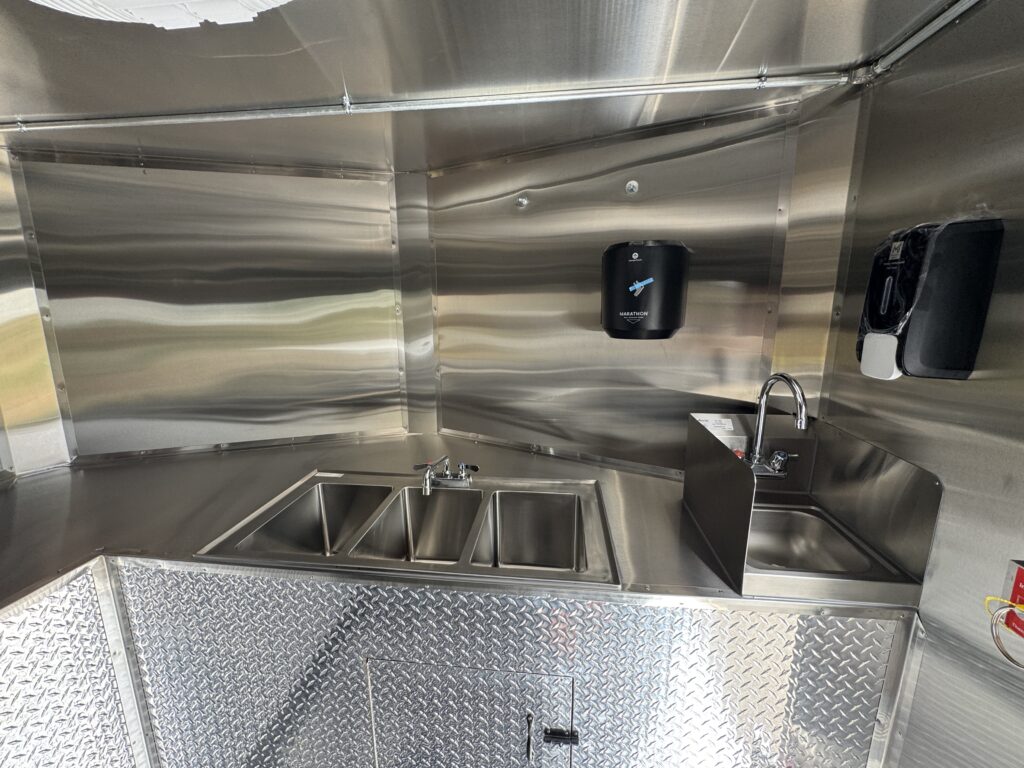
The plumbing is a hand wash sink, a three-compartment sink for wares, and an 8-gallon water heater, fed by a 30-gallon fresh tank and draining to a 40-gallon grey tank, both mounted under the trailer. Altitude is a real design factor in Jackson. At about 6,200 feet, gas appliances lose roughly 15 percent of their rated output, so the griddle, fryer, and stove all run leaner than they would at sea level. We account for that when we spec the equipment so the cook is not fighting a weak flame during a rush. Add the extreme cold, a short intense summer, and strong wind, and the service window and awning have to be built to take real weather.
Why Jackson Hole is a strong market
The demand here is unusual for a town this size, and it runs in two seasons. In winter, Jackson Hole Mountain Resort at Teton Village, Snow King Mountain in town, and Grand Targhee draw skiers who need fast food at the base and events that need catering. In summer, the valley fills with visitors: Grand Teton National Park drew more than 3.6 million visits in 2024, and visitor spending topped 800 million dollars in the gateway. On top of the tourist traffic, Teton County is the wealthiest county in the country by per-capita income, which supports a steady stream of high-end weddings, corporate retreats, and private events that book mobile catering year-round.
The event calendar gives a trailer plenty of places to be. Old West Days and ElkFest run in late May, the Jackson Hole Farmers Market fills the Town Square on Saturday mornings from June into late September, the Fall Arts Festival runs in mid-September, and the Snow King and Teton Village summer concert series and the Jackson Hole Rodeo add regular dates. Between the resorts in winter, the parks traffic in summer, and the events in the shoulder seasons, a well-built all-season trailer can work most of the year here.
Full equipment list
- Stainless steel cooking wall, with stainless steel on every interior wall
- Aluminum diamond plate floor
- LED lighting throughout the interior and exterior
- 48-inch LP griddle
- 40-pound fryer
- Two-burner stove
- 27-inch refrigerated sandwich prep table
- Reach-in refrigerator
- Diesel heater
- 5-foot service window with awning door, self-closing doors, and bug screen
- Hand wash sink and three-compartment sink
- 8-gallon water heater
- 30-gallon fresh water tank and 40-gallon grey water tank, mounted under the trailer
- 12kW generator
Walkthrough video
Frequently asked questions
Why does a ski-slope food trailer use a diesel heater?
A diesel heater draws from its own fuel supply instead of your cooking propane, vents combustion outside, and runs efficiently at altitude, putting out steady heat for a full sub-zero shift. It avoids the propane burn rate and refill logistics of a propane furnace, which is what makes it right for an all-season Jackson trailer.
Who licenses a food trailer in Jackson Hole, Wyoming?
The Teton County Health Department licenses and inspects mobile food units in Jackson, not the state program. Teton County is one of a small number of Wyoming counties with its own delegated health department. A unit operating within town limits also answers to the Town of Jackson.
Does altitude affect a food trailer in Jackson Hole?
Yes. Jackson sits at about 6,200 feet, so gas appliances lose roughly 15 percent of their rated output. The griddle, fryer, and stove should be spec’d for the derating so the cook line keeps up during a rush.
What fire equipment does a frying trailer need in Jackson?
Jackson Hole Fire and EMS enforces the 2021 International Fire Code. A griddle-and-fryer trailer needs a serviced fire suppression system, both Class K and ABC extinguishers, listed LP gas alarms, and hydrostatically tested, date-stamped propane tanks.
How do you keep a food trailer running through a Jackson winter?
With a diesel heater for the crew space and a freeze-protected water system, meaning insulated tanks and heat-protected lines. Together they let the trailer work sub-zero resort shifts that would shut down a standard summer build.
How long does Mile High take to build a trailer like this?
A custom build like this runs about six weeks, and we source the trailer so you do not have to. We build for operators across Wyoming, Northern Colorado, and the wider Mountain West and ship finished trailers to their home base.
More resources before you build
If you are planning a food trailer for a ski resort, a mountain town, or any all-season operation, we would be glad to talk it through. We source the trailer, build it out for cold-climate and high-altitude operation, and get it road and inspection ready. Reach us at milehighfoodtrucks.com or call 720-209-2653.
Jacob Varghese
Mile High Foodtrucks
720-209-2653
Recent Comments