
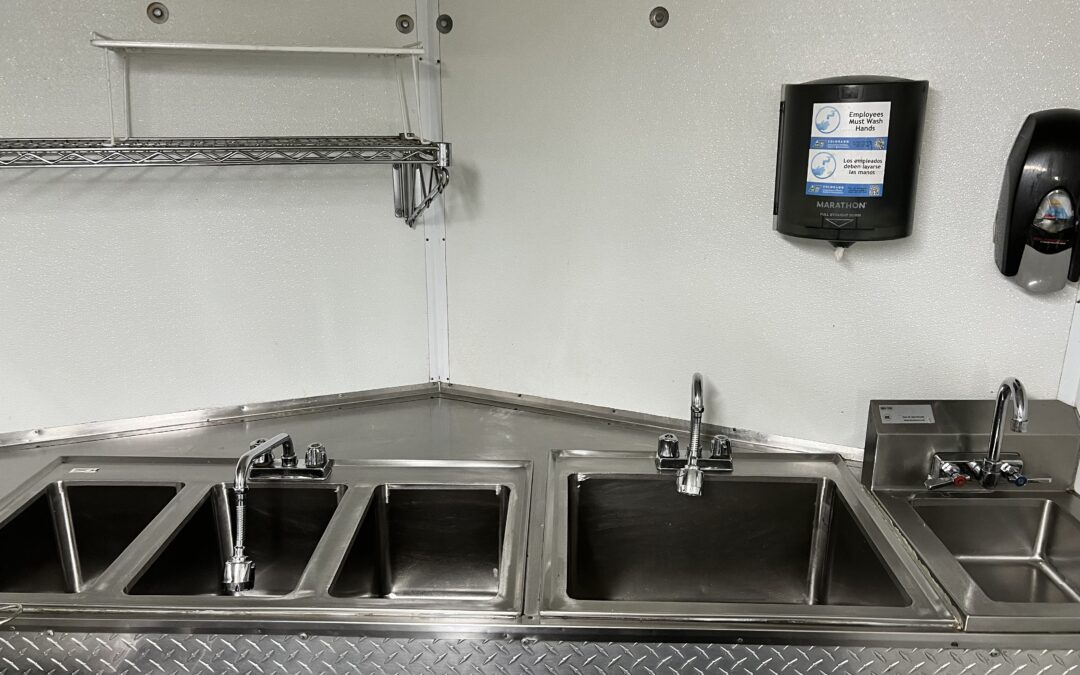
Recent Delivery: Jamaican Jerk Chicken Food Truck

Read the full build story on the Laramie jerk chicken truck delivery →
Recent Delivery: 20ft Sourdough Donut Trailer, Casper
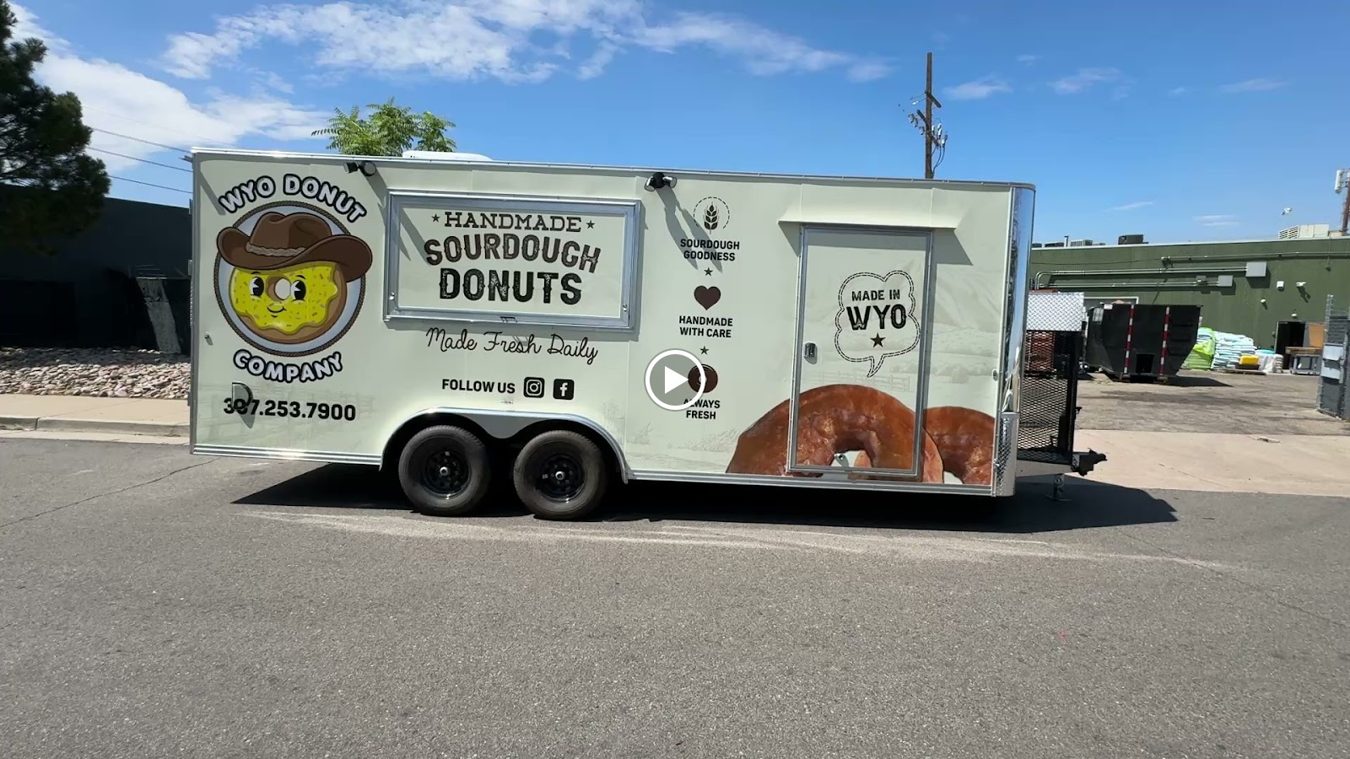
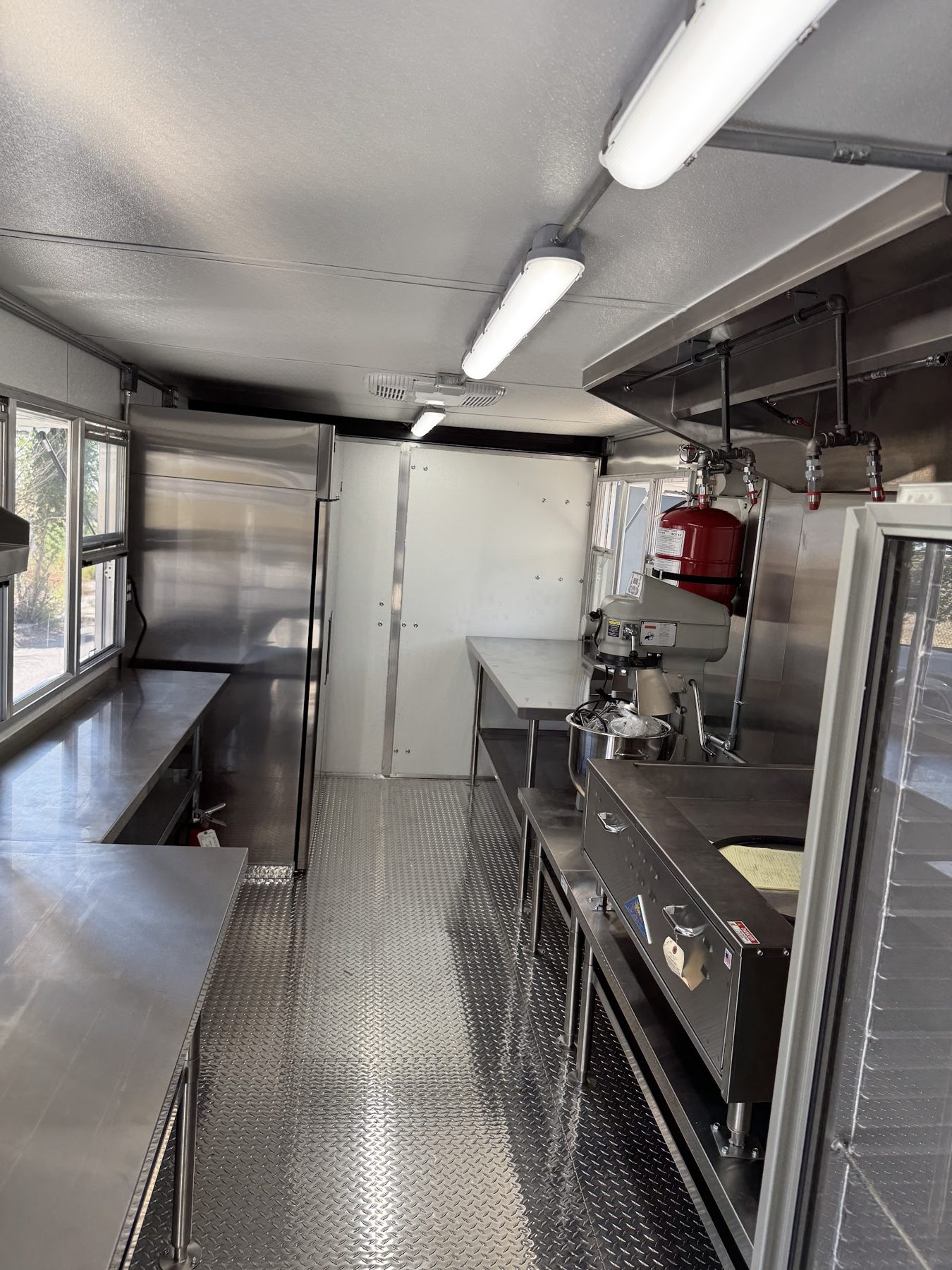
A twenty foot trailer for Wyo Donut Company with a proofing cabinet, a flat donut fryer under a six foot Type 1 hood and a twenty gallon water heater, licensed through the Casper Natrona County Health Department and the Wyoming Department of Agriculture. Read the full build story on the Casper donut trailer →
Recent Delivery: 16ft Hospital Food Truck, Cheyenne
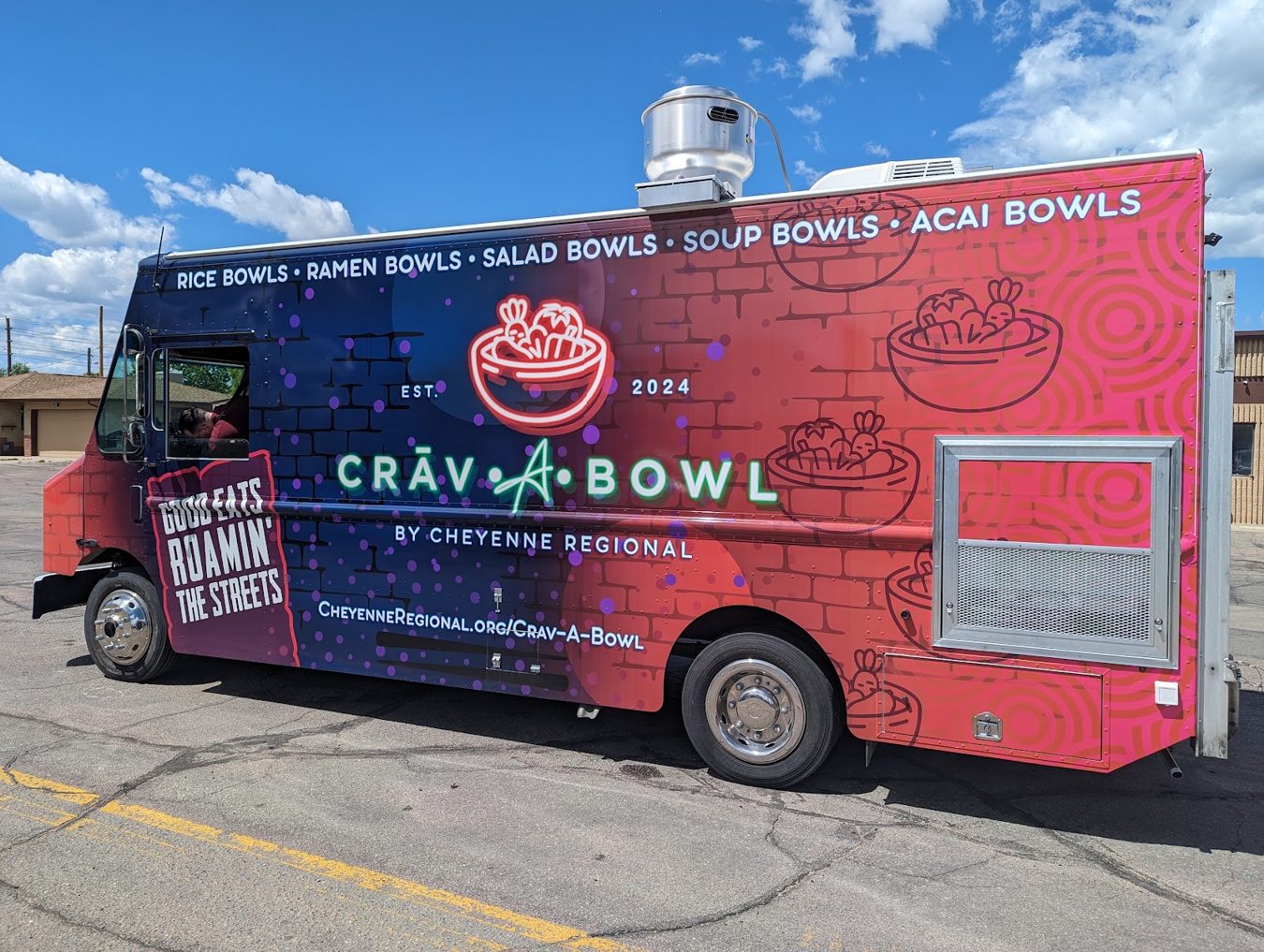
A sixteen foot bowl truck built for Cheyenne Regional Medical Center and Sodexo, with a combi oven, a nine pan hot box and three sinks, licensed through Cheyenne Laramie County Public Health, the City Clerk and Cheyenne Fire Rescue. Read the full build story on the Cheyenne hospital food truck →
Recent Delivery: 18ft Tempura Trailer, Lander
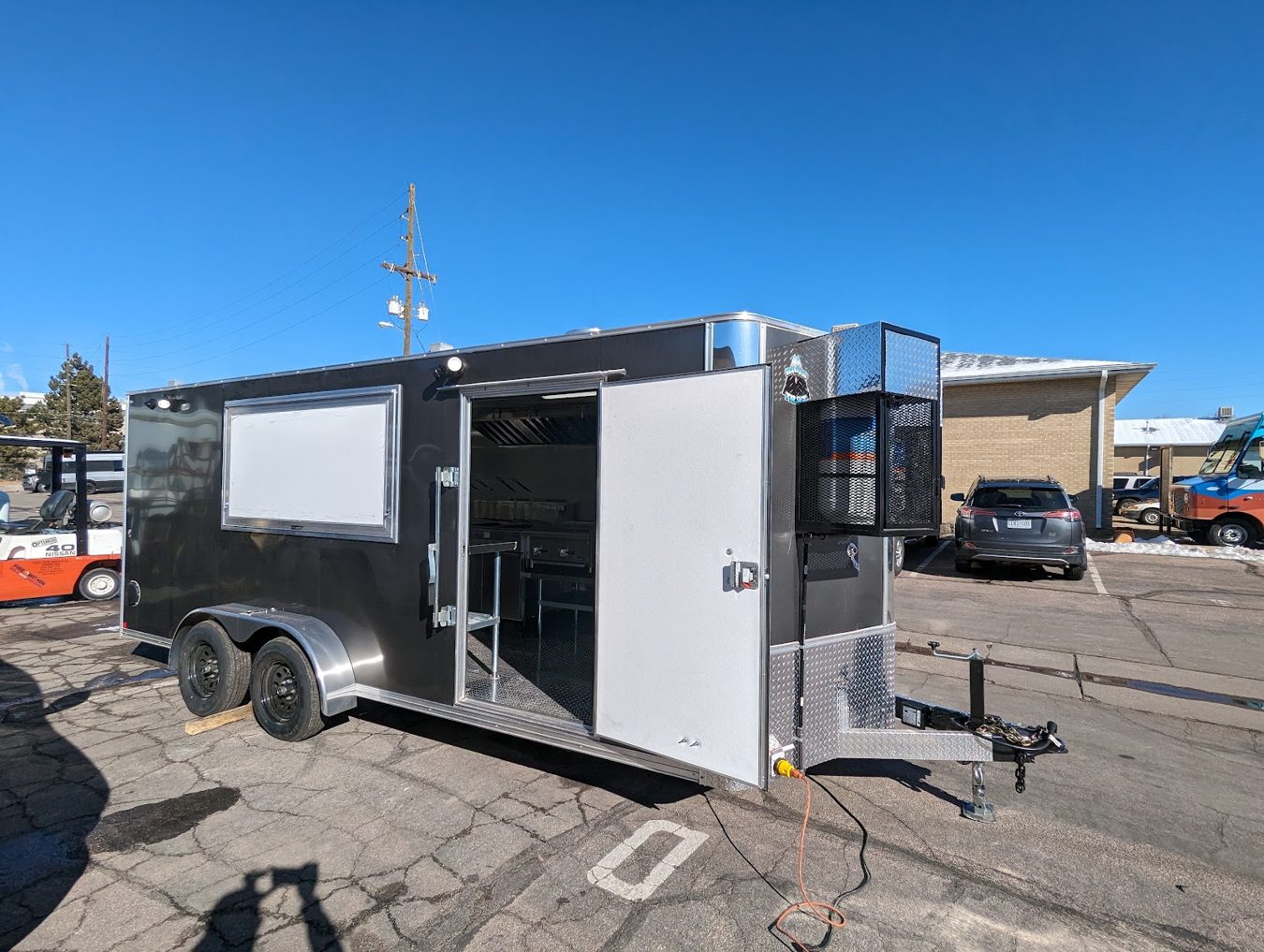
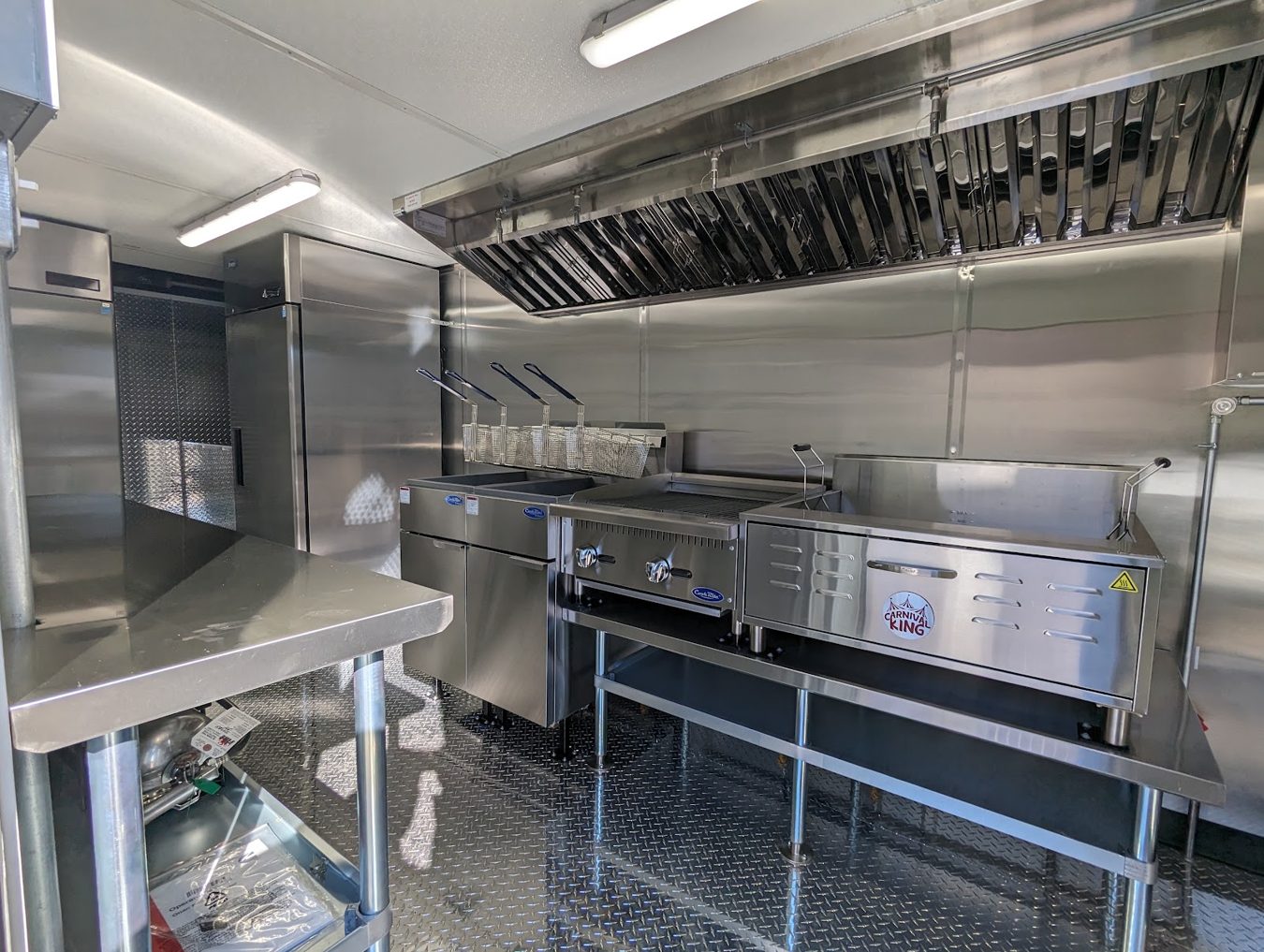
An eighteen foot trailer for Ten Tempura with two deep fryers, a flat bottom fryer and a charbroiler under an eight foot hood, licensed directly by the Wyoming Department of Agriculture because Fremont County has no local health department. Read the full build story on the Lander tempura trailer →
If you want to run a food truck in Wyoming, the licensing trips up more first-time owners than the build itself. The state splits food safety oversight between a state office and six local jurisdictions, so where you plan to operate changes which agency you deal with, what the license costs, and how the inspection works. This is the long version of what you actually need to know to go live in Wyoming in 2026, written from a builder’s seat, with the primary sources cited so you can verify the moving pieces before you write a check.
Plan review, handled. Before your county or state health office licenses a truck, it wants a plan review: the layout, the equipment list, and the water and wastewater plumbing. We provide the build documentation, plumbing schematics and equipment specs your health department asks for, and we build to pass the inspection the first time. Call 720-209-2653.
The state license: Wyoming Department of Agriculture, Consumer Health Services
The Wyoming Department of Agriculture runs food safety through a section called Consumer Health Services, usually shortened to CHS. The official agency page lists the structure clearly: roughly 20 field inspectors, two supervisors, a program manager, and an assistant program manager, all of whom cover every part of the state that is not handed off to a local health department. For a mobile food unit, the document you pull from CHS is not called a food truck permit. It is a Retail Food Establishment License, the same license category used for restaurants, processors, and any other operation that sells food to the public. The state treats a truck and a restaurant as the same animal for licensing purposes, and the fee schedule reflects that. Everywhere outside the six local jurisdictions, including Fremont County, the state inspectors are the only health contact you will have; we walked through the plan review packet, the pre opening inspection and the self contained rule on the tempura trailer we delivered to Lander.
The numbers, taken directly from CHS: $200 initial license for a new operation, a new owner, or any change of location, then $100 annual renewal in every following year. The license is not transferable, has to be renewed every year, and must be displayed in the unit. There is no tier for square footage, occupancy, or risk category. A pretzel cart and a full barbecue rig pay the same hundred bucks at renewal. CHS does not publish the application as a download, which is unusual in 2026. You have to contact the local field inspector for your county or call CHS at 307-777-7321 for licensing or 307-777-7211 for general questions to start a new license. That is genuinely how the state runs.
Plan review is part of the file. Before CHS or any of the local programs will issue a license to a new truck, they want to see the layout, the equipment list with NSF or equivalent listings, the water and waste plumbing, and the food flow from raw storage through cook line to service window. CHS does not advertise a separate plan review fee on its public page, which lines up with how most operators describe the process: plan review is bundled into the licensing process and resolved through back and forth between you and the inspector before the on-site sign-off.
Temporary food permits sit on the same fee sheet. A temporary establishment permit covers a single event up to 14 consecutive days at $50, and a temporary sampling permit covers 14 individual days within three months at the same single-location $50 fee. Food trucks that do not meet the full self-contained build standard usually end up living on temporary permits, event by event, until they upgrade. That is more expensive in the long run if you work more than four or five events a year, which is why a properly built truck is the cheaper path even before you add up the convenience of being on a real annual license.
The six local jurisdictions (not five)
Wyoming carves out six jurisdictions that run their own food licensing in parallel with CHS. The state’s own page names them: Laramie County, Natrona County, Teton County, Sweetwater County, Sublette County, and the City of Laramie. If you operate in any of these, CHS is not your licensing body. You go local. New operators get this wrong all the time because the rest of the state routes through Cheyenne and they assume the capital city does too. It does not. Cheyenne and the rest of Laramie County license through the Cheyenne-Laramie County Health Department.
Laramie County (Cheyenne and surrounding)
Cheyenne Laramie County Public Health runs the program from its Environmental Health office at 100 Central Ave, Suite 261. Phone 307-633-4090. Cheyenne is the state capital and the largest city in Wyoming at about 66,500 residents, plus F.E. Warren Air Force Base on the west side of town. On the fee schedule effective July 2025, plan review for a self contained mobile unit is $277 for a simple menu or $364 for a complex one that cools, reheats or cooks raw meat, with extra time at $87 an hour, and the application has to be in at least 30 days before construction. The food licence itself is $200 new and $100 to renew, fixed by state statute, paid at the opening inspection, and routine inspections run at least every six months. Laramie County also requires the person in charge of a mobile unit to hold a Food Protection Manager Certification from an ANAB accredited program before opening, unless it sells only prepackaged food. The City of Cheyenne adds a $75 a year food truck licence through the City Clerk, which needs the health application, a sales tax licence and a Cheyenne Fire Rescue inspection first. We walked through all of it on the sixteen foot hospital food truck we delivered to Cheyenne.
Natrona County (Casper)
Casper-Natrona County Health Department runs the program. Phone 307-235-9340. Casper is the regional energy market center on the North Platte, ~58,000 residents. The Health Department charges $125 for a mobile plan review, collects the state license fee for the Department of Agriculture, requires a certified food protection manager under a 2023 local rule, and does not let a commissary dependent unit it licenses operate outside Natrona County. Call to confirm. Casper has waived city parks vending fees for mobile vendors at most park locations; the downtown Old Yellowstone District requires a separate city vendor permit handled through Parks at 307-235-8283. See the city page. We delivered a twenty foot sourdough donut trailer to Casper in 2026 and the write up walks through the health department plan review, the state licence, the city vendor permit and the fire inspection step by step.
Teton County (Jackson)
Teton County Public Health runs the program. Health Department phone 307-733-6401, Environmental Health 307-732-8490. The application for a temporary food permit must be submitted at least 14 days in advance of the event. Out-of-state vendors are required to file the home state license and the last inspection report along with the Teton County application. Mobile unit fees are not posted publicly. From 1 October 2026 the county requires a certified food protection manager on site during operating hours at most food businesses, and inside town limits the Town of Jackson handles food trucks through an exposition permit that needs at least two vendors, at $139 a day for a for profit event with fewer than five vendors. The office is at 460 E Pearl Ave, Jackson.
Sweetwater County (Rock Springs, Green River)
Sweetwater County Public Health runs the program. Office at 333 Broadway Suite 010, Rock Springs. Phone 307-872-3930. Sweetwater publishes its fees: $200 first year, $100 renewal, annual on-site inspection. This is the same structure as the state CHS schedule, which makes Sweetwater easy to plan for compared to the others that hide their numbers.
Sublette County (Pinedale, Big Piney)
Sublette County Sanitarian’s Office runs the program. Office at 219 E Pine St, Pinedale. Phone 307-367-2314. Fees not posted publicly. This is the jurisdiction most operators forget exists. If you plan any work around Pinedale, Big Piney, or the Wind River front, this is your licensing body, not CHS.
City of Laramie
The City of Laramie runs its own food program, separate from Laramie County, and its own vending rules: no vending from streets, sidewalks or other public right of way except at spots the city manager designates beside parks, and a park vending permit at $50, valid 1 May to 1 October, for pushcarts and hand held displays. The required insurance for any city vendor permit is $1,000,000 per occurrence and $2,000,000 aggregate, naming the City of Laramie as additional insured. See the city permits page. Laramie is home to the University of Wyoming with 7,663 students on the Laramie campus as of Spring 2026 per UW Office of Institutional Analysis, plus around 10,250 unduplicated students total when you count distance learners. The market shifts hard between the academic year and the summer.
Commissary kitchens: the rule most operators miss
Wyoming’s Food Safety Rule pulls heavily from the FDA Food Code and treats every mobile unit as either fully self-contained or commissary-dependent. There is no gray middle. If your truck cannot store all food at the temperatures the Code requires, generate enough hot water to wash dishes correctly, and dispose of grey water without dumping it on the ground at the end of the day, you need a permitted commissary. The commissary itself has to be a licensed food facility under the same rule. A home kitchen does not count. That last part is the most common mistake we see.
Most Wyoming operators end up in one of three commissary arrangements: a restaurant leasing off-hours capacity (early morning prep, late-night clean), a school kitchen during the summer break when the cafeteria is unused, or a church kitchen with a formal holding agreement. Cost ranges run roughly $300 to $600 a month for a part-time arrangement in Cheyenne or Casper, considerably more in Jackson where commercial kitchen space carries a tourism-economy markup. Sweetwater, Sublette, and the smaller counties are usually the cheapest commissary markets because there is more underused commercial kitchen capacity per food business.
Pin down the commissary agreement before you finalize the truck purchase. Inspectors expect to see the signed agreement in your file. Some health departments will not issue a license without it. If you go the route of a “self-contained” truck that does not need a commissary, build to a higher standard from the start: refrigeration sized for your full menu cold chain, an actual three compartment sink with proper hot water capacity, a hand wash sink at the right location, sealed wall and floor surfaces, proper waste tanks. Our trucks are built to pass first-time on either path.
Fire, propane, and hood suppression
The Wyoming State Fire Marshal’s office enforces the International Fire Code 2021 statewide, which incorporates NFPA 96 for hood and grease duct systems and NFPA 58 for LP-gas. A few specifics that catch operators off guard:
- UL 300 wet chemical hood suppression with a current six-month service tag is required for any hood over commercial cooking equipment that produces grease-laden vapors. The most common failure is a tag that ran out two months ago because the operator forgot.
- Propane cylinders must be NFPA 58 compliant, marked, dated, in date for re-qualification, and mounted with appropriate protection. The IFC 319 cap on aggregate LP-gas capacity for a mobile food prep vehicle is 200 pounds. Most fire authorities will treat anything over this as an immediate fail unless you have a specific exemption letter.
- Portable fire extinguishers: a K-class for grease-fire risk near the cooking line, and an ABC for the rest of the cabin. Both with current annual inspection tags.
- Tethering and stabilization at the event site. A fire authority that catches a truck operating without the propane tank tethered and the unit leveled has grounds to shut down service for the day.
The shop builds every truck to these standards from the first cut. If you bought a used truck that did not get built this way, we do retrofits, and we tell you straight what is going to fail before you take it to its first inspection so you do not waste a day at the Health Department with a no-go.
The Wyoming market: where you actually sell food
Wyoming has fewer captive customers than its neighbors and a much shorter prime season, but the events you can work are large relative to the population. Real 2026 dates to plan around:
- Cheyenne Frontier Days, July 17 to 26, 2026 (130th annual). Important note: CFD food concessions go through a contracted concessionaire, not a direct vendor application to the rodeo. There are documented scam applications floating around online; CFD has had to publicly warn about this. If you want CFD, you work the concessionaire. Outside CFD, the city sees a serious tourism surge during this window that you can work elsewhere on the corridor.
- Sheridan WYO Rodeo, July 8 to 11, 2026 (96th annual). Sheridan is north Wyoming’s biggest rodeo town. Vendor info via Sheridan WYO Rodeo.
- Laramie Jubilee Days, July 4 to 12, 2026, anchored around Statehood Day on July 10. Vendor application info at laramiejubileedays.org.
- Casper Balloon Roundup, mid-July. 2025 ran July 11 to 13; 2026 dates similar. David Street Station in downtown Casper books food trucks throughout the warm season.
- Jackson Hole Farmers Market: Saturdays on Town Square June 20 through September 26, 8am to noon. Thursdays at Teton Village July 2 through August 20. This is a 100% food and drink vendor market, which is rare. Roughly 1,500 attendees per Saturday. The 2026 vendor application window ran April 1 to 30, so plan a year ahead. Market info.
- Beartrap Summer Festival on Casper Mountain. Requires Natrona County Health Department license plus your own liability insurance. Outdoor and weather-dependent.
Wyoming’s brewery scene supports a smaller but consistent food truck rotation. Accomplice Beer Company and Freedom’s Edge Brewing in Cheyenne, Black Tooth Brewing in Sheridan, and Roadhouse Brewing in Jackson all book trucks on a regular cycle. The brewery model is the closest thing Wyoming has to a year-round revenue floor for a truck that wants to stay busy outside the festival window.
Season planning matters. Most of the state runs Memorial Day through end of September. Jackson stretches it on either side because of the ski crowd and a steady tourism economy. Operators planning to work above 6,000 feet should specify high-altitude-rated propane equipment at build time, especially water heaters and any pilot-light appliances; most manufacturers consider 2,000 feet to be high altitude, and Wyoming routinely runs three times that.
Frequently asked questions
Do I need a Wyoming food truck license if my truck is licensed in Colorado?
Yes. Wyoming does not have a reciprocity agreement with Colorado. You will need a Wyoming Retail Food Establishment License from the relevant jurisdiction (state CHS for most of Wyoming, or one of the six county or city programs if you operate in their boundaries). Plan to inspect plumbing, water, propane, and electrical to Wyoming standards before your first event.
How much does a Wyoming food truck license cost in 2026?
The state CHS Retail Food Establishment License is $200 initial / $100 annual renewal. Temporary permits are $50 for up to 14 consecutive days. County programs publish their own schedules; Sweetwater is also $200/$100. Laramie County lists mobile plan review at $277 or $364 and Natrona County charges $125; Teton and Sublette do not post their fees, so confirm by phone. In the City of Laramie, trucks work private property and permitted events, since the city does not allow vending from the public right of way.
Do I need a commissary kitchen in Wyoming?
Yes, in almost every case. The Wyoming Food Safety Rule treats every mobile unit as either fully self-contained or commissary-dependent. The commissary must be a permitted food facility under the same rule. A home kitchen does not count, and that is enforced. Pin down the commissary agreement before you buy the truck.
Can I operate in Cheyenne with just the state CHS license?
No. Cheyenne sits in Laramie County, which runs its own Cheyenne-Laramie County Public Health Department program. You need a Laramie County license plus a City of Cheyenne vendor permit for public right of way or specific event venues.
What permits do I need for the Jackson Hole Farmers Market?
Teton County Public Health temporary food license at minimum, filed at least 14 days before your first market date. Out-of-state vendors include the home state license and most recent inspection report with the application. The market itself runs its own application process which closes April 30 each year for the following season. jhfarmersmarket.org.
What is the fastest way to get my truck through Wyoming inspection?
Build to the Code from day one. The trucks we deliver pass inspection the first time because we install three compartment sinks with correct hot water capacity, hand wash sinks with paper towel and soap dispensers at the right location, NSF-listed equipment, sealed and washable wall surfaces (FRP or stainless), aluminum diamond plate floors, propane systems with NFPA 58 compliant cylinders inside the 200 pound IFC 319 cap, and UL 300 wet chemical hood suppression where required. If you bought a used truck and need to retrofit to pass, we do that work too.
Cheyenne Frontier Days is the biggest event in the state. How do I get a booth?
You work through the official CFD concessionaire, not the rodeo directly. There is no direct vendor application portal for CFD food concessions. There are documented scam applications that pose as CFD vendor portals; ignore them. CFD’s official site has the current concessionaire information for the year.
Builds for Wyoming operators
Mile High Food Trucks builds custom trucks and trailers for operators across Wyoming and Northern Colorado. We work with first-time owners and existing operators expanding to a second unit. Every truck leaves the shop ready to pass Wyoming inspection on the first walk-through. Customers we have built for include:
- Cheyenne: Laramie County runs its own health program, plus a city permit. See our Cheyenne builds.
- Casper: Natrona County runs its own program, plus a city permit. See our Casper builds.
- Gillette: covered by state CHS, with a city vendor permit. See our Gillette builds.
- Rock Springs: Sweetwater County runs its own program, plus a city permit.
- Sheridan: covered by state CHS, with a city permit.
- Jackson: Teton County runs its own program, and event-heavy seasons lean on temporary permits.
- Laramie: the City of Laramie runs its own vending program with separate $1M/$2M insurance requirements.
Call to start a Wyoming build, or to walk through a used-truck retrofit if you already own a unit that needs upgrades to pass.
Recent Comments